
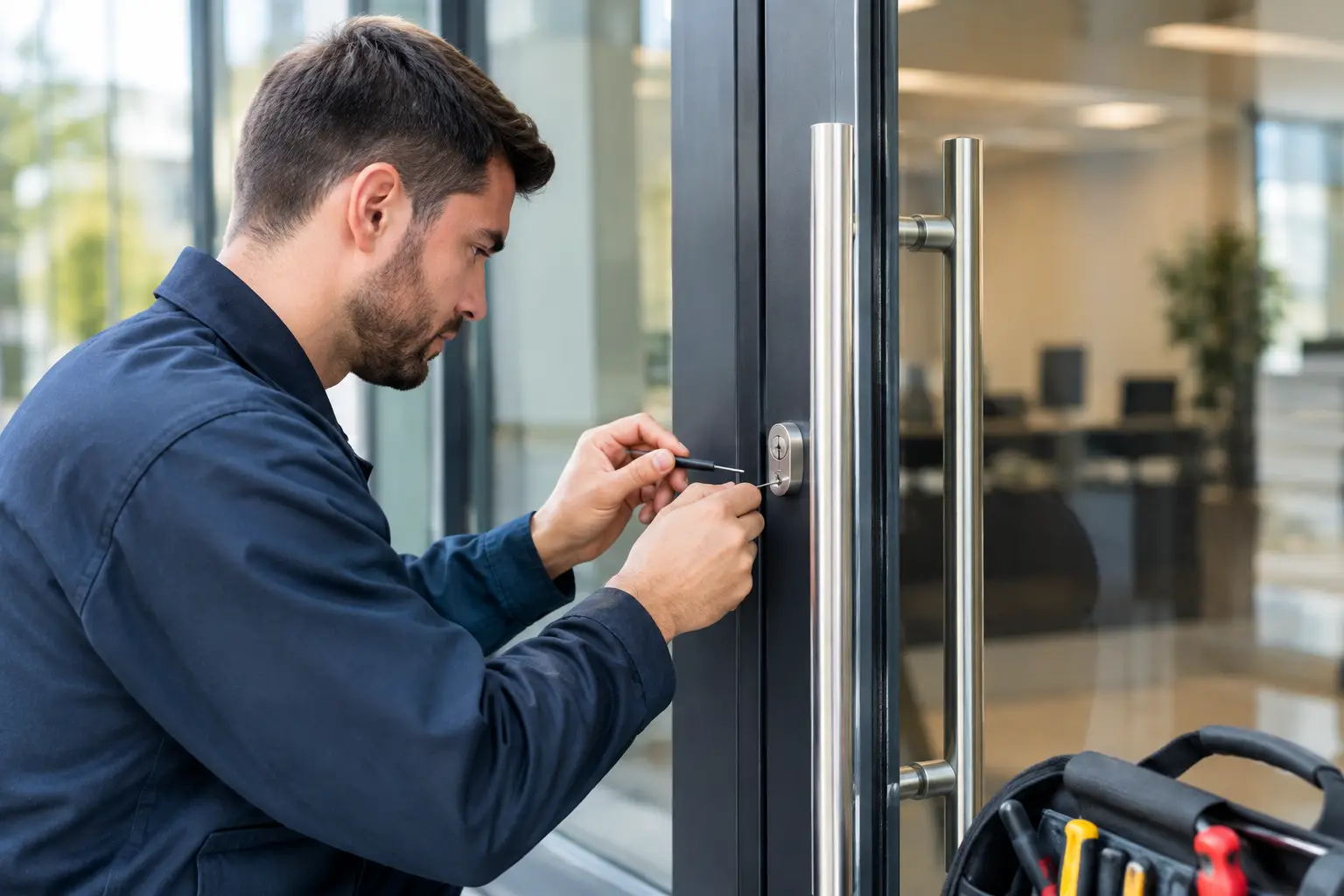
A broken storefront lock, a missing employee key, or a door that will not latch properly can stop business before the day even begins. A dependable commercial locksmith helps restore access quickly while addressing the bigger question: is your property as secure and manageable as it needs to be?
For businesses, offices, medical practices, retail stores, warehouses, condominiums, and managed properties across Broward and Palm Beach Counties, door security is about more than replacing a lock. It affects employee safety, customer access, inventory protection, emergency exits, and the ability to open and close on schedule.
What a Commercial Locksmith Can Handle
Commercial doors experience constant use. Over time, locks wear down, closers lose adjustment, keys go missing, and hardware no longer works together the way it should. A professional commercial locksmith can diagnose the full door and access issue rather than treating every problem as a simple lock replacement.
Common commercial services include lock repair and replacement, business rekeying, master key systems, high-security locks, keyless entry, emergency lockout assistance, and key extraction. Many properties also need specialized door hardware such as panic bars, emergency exit devices, magnetic locks, electric strikes, door closers, buzzer systems, and access-control components.
The right solution depends on the door, the people using it, and the level of protection required. A small office with two employees may benefit from a carefully controlled key system. A multi-tenant building or busy warehouse may need electronic credentials, scheduled access, and a clear way to remove access when staffing changes.
Rekeying or Replacing Locks: How to Decide
Lost keys do not always mean every lock needs to be replaced. Rekeying changes the internal pins of a compatible lock so old keys no longer work. It is often a practical choice after employee turnover, tenant move-outs, contractor access, or a misplaced key that cannot be accounted for.
Lock replacement may be the better decision when hardware is damaged, outdated, difficult to operate, or not suitable for the door. A lock that sticks, a lever that sags, or a deadbolt that does not align can create an access problem and a security concern at the same time. Replacing a low-grade lock with commercial-grade hardware can improve reliability, but it should be matched to the door and frame rather than selected by price alone.
For properties with several doors, a master key system can reduce the number of keys managers carry while preserving separate access levels. For example, a facilities manager can access all approved areas, while an employee key works only for designated doors. This can be highly convenient, but master systems must be planned carefully. If too many people hold a high-level key, the convenience can become a liability.
When Electronic Access Control Makes Sense
Traditional keys remain a good fit for many businesses. They are familiar, dependable, and cost-effective for limited access needs. The challenge is accountability. A copied key may be hard to track, and when someone leaves, rekeying may be necessary to protect the property.
Electronic access control gives managers more control over who can enter and when. Depending on the system, access can be managed through key fobs, cards, codes, or mobile credentials. Access may be restricted by door, time of day, or employee role. When a worker leaves, access can often be removed without changing the physical lock.
This type of system is especially useful for offices with multiple employees, properties with frequent staff turnover, common-area doors, private storage spaces, and facilities that need an access record. It is not always the right answer for every door. An exterior door exposed to heavy traffic, weather, or special fire and life-safety requirements needs properly selected hardware and professional installation.
A commercial locksmith can help determine whether a standalone keypad, a controlled electric strike, a magnetic lock, or a broader access-control system is appropriate. The goal is to make authorized entry easier without creating a weak point or interfering with safe emergency exit.
Emergency Exits Need More Than a Working Lock
A rear exit door that does not close or latch may be easy to overlook until it creates a serious problem. Emergency exit hardware must allow occupants to leave when needed while helping prevent unauthorized entry from outside. Panic bars, exit devices, door closers, alarmed hardware, and properly aligned strikes all play a role.
Do not assume a door that opens from the inside is functioning correctly in every respect. Doors can drag, closers can slam, latches can miss the strike, and exit devices can become loose after repeated use. These problems can affect security, daily operations, and emergency egress.
A qualified technician can inspect the door as a complete assembly: the frame, hinges, closer, latch, lock, strike, and exit device. In many cases, the issue is not the lock itself. Correcting alignment or replacing worn door hardware can restore reliable operation and prevent a recurring service call.
Security After a Break-In or Attempted Entry
After a break-in, attempted break-in, or act of vandalism, speed matters. The first priority is to secure the opening so the business can close safely or resume operations. That may involve replacing a damaged lock, repairing a door, rekeying affected cylinders, or installing temporary protection while a longer-term repair is arranged.
Once the immediate issue is controlled, take a closer look at how entry was gained. Was the lock forced? Was the door frame weak? Did a glass door lack appropriate protection? Was a key unaccounted for? A good security response addresses the point of failure, not just the visible damage.
Depending on the situation, an upgrade may include high-security cylinders, reinforced hardware, an improved strike, a better deadbolt, access control, or CCTV camera replacement near vulnerable entrances. More security is not automatically better. The best approach balances the risk, the value of the property being protected, the number of authorized users, and the demands of the business day.
Signs Your Business Should Schedule Service
Waiting for total failure can mean a locked-out employee, an unsecured door, or an unexpected interruption during business hours. Schedule commercial lock or door service when you notice:
- Keys that are difficult to turn, insert, or remove
- A door that will not latch consistently or requires force to close
- Loose levers, damaged deadbolts, or worn exit devices
- Unreturned keys after a staff, tenant, or vendor change
- Access cards, codes, or buzzer systems that no longer reflect current users
These are often manageable repairs when addressed early. Left alone, they can become emergency calls or create opportunities for unauthorized entry.
Choosing a Commercial Locksmith for Your Property
Commercial security work should not be approached as a one-size-fits-all repair. Before service begins, you should be able to clearly explain the problem, understand the recommended work, and know whether the issue can be repaired or requires replacement. Clear communication is especially valuable when a property manager is coordinating work for tenants, staff, or multiple locations.
Look for a licensed and insured provider with experience in both traditional locksmith services and commercial door security. A locksmith who understands access control, electric hardware, emergency exits, closers, and surveillance-related needs can help prevent gaps between separate systems and service vendors.
Availability also matters. Lock failures do not wait for regular business hours, and an unsecured opening may need immediate attention. Access Locksmith & Security provides local commercial locksmith and physical-security service with 24/7 emergency availability for businesses and property managers throughout the area.
When you call, be ready to describe the door location, the type of issue, whether the door is currently secure, and whether people are locked in or out. Photos can also help a technician identify hardware before arrival when it is safe to provide them. This helps set clear expectations and allows the right repair path to begin sooner.
A business door should never be something your team has to fight with every morning or worry about every night. If access is unreliable, keys are no longer controlled, or an exit door is not closing as it should, arranging professional service now can protect your people, your property, and tomorrow’s opening schedule.

