
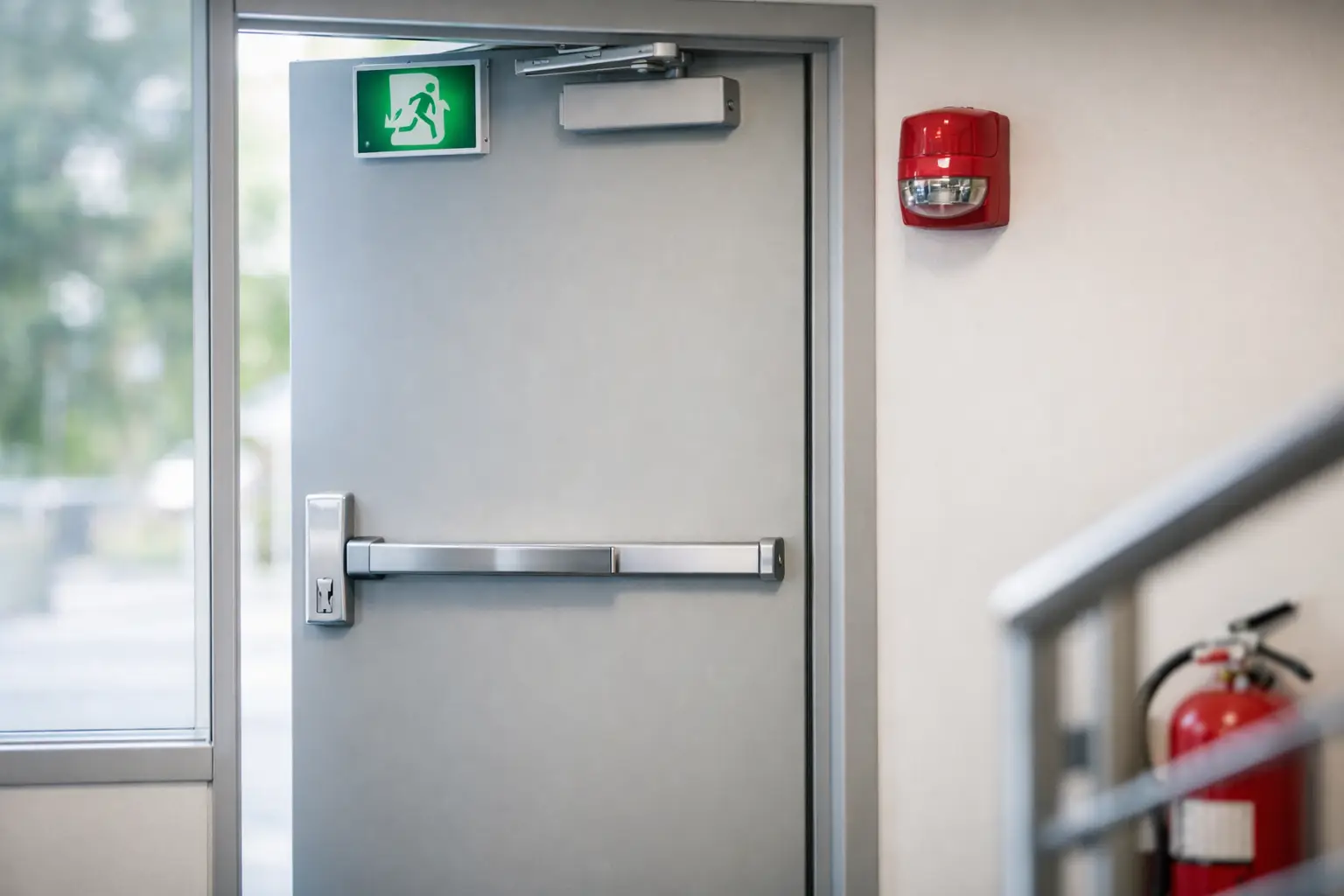
A rear exit door that sticks, a magnetic lock that will not release, or a panic bar installed on the wrong opening can turn a normal business day into a serious life-safety issue. This commercial egress hardware compliance guide helps South Florida property owners, facility managers, and business operators understand what safe exit hardware should do, where common problems occur, and when to bring in a qualified door-hardware professional.
Egress requirements are not just about avoiding a failed inspection. When employees, customers, tenants, or visitors need to leave quickly, every second and every movement at the door matters. The correct solution depends on the building type, occupancy, door location, local code requirements, and the authority having jurisdiction. A reliable assessment starts with the actual opening – not a one-size-fits-all hardware recommendation.
What Commercial Egress Hardware Must Accomplish
An egress door must allow people to exit without specialized knowledge, a key, a code, or excessive force. In plain terms, someone on the exit side should be able to recognize the door, operate the releasing hardware, and get out promptly.
That sounds simple, but commercial doors often carry multiple layers of hardware. A storefront may use an aluminum-frame door with a narrow-stile exit device. An office may have an access-control reader, electric strike, closer, lever trim, and alarm contacts. A warehouse may have a steel exit door with panic hardware and delayed egress controls. Each added component must work with the others without interfering with emergency exit.
The most common compliance failures happen when security upgrades are made without considering egress. A deadbolt is added to a rear exit. A magnetic lock stays energized after a power failure. A door closer is adjusted so tightly that staff cannot open the door easily. A keypad or card reader is treated as the only way out. These changes may appear to improve security, but they can create a dangerous condition and lead to costly corrections.
Commercial Egress Hardware Compliance Guide: The Key Components
The hardware on an exit opening should be evaluated as a complete system. The door, frame, hinges, latch, locking method, closer, electrified components, signage, and fire-rated requirements all affect compliance and daily performance.
Panic Hardware and Fire Exit Hardware
Panic hardware, often called a push bar or crash bar, is designed to release a door with a pushing motion. It is commonly required on certain assembly, educational, high-hazard, and larger occupant-load spaces. Even where it is not specifically required, it can be the practical choice for doors used by the public or by a large number of employees.
Fire exit hardware is not simply any panic bar placed on a fire-rated door. It must be properly listed for that use and installed in a way that maintains the door assembly’s fire rating. The wrong trim, latch, field modification, or incompatible closer can compromise both performance and rating. For a rated opening, details matter.
A panic device must also latch correctly when the door closes. Wedging a door open, disabling the latch, or allowing the strike to misalign can defeat the system. Staff may do this to make deliveries easier, but it can reduce security and affect fire-door performance.
Locks, Deadbolts, and Exit-Side Operation
A commercial exit door is not automatically compliant because it has a lock on the exterior. The question is what happens from the egress side. Occupants generally should not need a key, credential, thumbturn operation, or two separate actions to leave.
This is why aftermarket slide bolts, chained doors, key-operated deadbolts, and improvised security bars create frequent problems on exit routes. They may be installed after a break-in or during a staffing change with good intentions. Yet a device that prevents unauthorized entry can also prevent a lawful, safe exit.
If additional exterior security is needed, there are often better options: properly selected exit devices with secure exterior trim, reinforced strikes, high-security cylinders where permitted, access control designed for free egress, or monitored door alarms. The right answer depends on the opening and the building’s approved life-safety plan.
Magnetic Locks and Electrified Hardware
Magnetic locks and electric strikes can provide controlled entry, but they require careful design. A magnetic lock holds the door closed using electricity. If the release method, fire alarm interface, emergency release, power supply, or wiring is incorrect, occupants may not be able to leave as intended.
Electrified egress systems should be reviewed as systems, not as isolated products. A door may need to release when a person presses the exit device, when a sensor detects an approaching occupant, when the fire alarm activates, or when power is interrupted. The exact arrangement can vary based on the adopted code, the occupancy, and local approval requirements.
Do not assume a card reader, request-to-exit button, or mobile credential setup makes an electrified door compliant. Those devices can be part of a properly designed system, but they do not replace the required means of egress. A licensed, experienced locksmith and security professional can identify visible hardware issues, while electrical and fire-alarm coordination may also be necessary.
Door Closers, Clearances, and Physical Condition
A compliant exit device cannot overcome a door that drags on the threshold or a closer that slams shut. Door closers should close and latch the door reliably without making the opening unnecessarily difficult to operate. Weather conditions, building settlement, worn hinges, damaged pivots, and warped doors can all change how a door performs.
Check the door in normal operating conditions. Does it open fully? Does the latch retract when the bar is pressed? Does the door close and latch after use? Is the opening blocked by inventory, furniture, trash containers, or a delivery cart? Hardware compliance includes the usable path to and through the door.
Common Egress Problems Found in Commercial Properties
Property managers often discover egress issues during inspections, tenant turnover, renovations, or after an attempted break-in. The problem is rarely just the visible lock. It is often a combination of aging hardware, changed use of the space, and temporary fixes that became permanent.
Watch for these warning signs:
- An exit door requires a key, code, or special instruction to open from inside.
- A panic bar is loose, difficult to depress, damaged, or does not retract the latch.
- A magnetic lock remains secured when power is lost or the fire alarm is activated.
- A fire-rated door does not self-close and latch, or has been modified in the field.
- The exit route or door swing is obstructed by stored materials, displays, or equipment.
A recurring issue in retail, medical, office, and warehouse settings is the “secured back door” that employees use every day. Because staff know how to operate it, the condition may go unreported. Egress hardware must work for everyone, including a new employee, a visitor, or someone trying to leave during an emergency.
How to Approach an Egress Hardware Upgrade
Start by identifying every door that serves as part of an exit route, not only the main entrance. Note how each door is used, who uses it, whether it is fire-rated, what access-control equipment is attached, and whether it opens to a public area, corridor, stairwell, or exterior.
Next, separate immediate operational problems from larger upgrade decisions. A dragging door, failed closer, broken panic device, or damaged lever may need prompt repair. An older access-control system, a new tenant build-out, or a change in occupancy may require a broader review of doors, locks, credentials, wiring, and fire-alarm integration.
Avoid selecting hardware by appearance or price alone. A commercial exit device must match the door material, width, handing, latch style, traffic level, and use case. For example, concealed vertical-rod hardware may suit one opening but be a poor fit for a heavily used exterior door exposed to wind and moisture. In Broward and Palm Beach Counties, corrosion resistance and dependable operation in humid conditions deserve real consideration.
Documentation also helps. Keep service records, hardware specifications, inspection notes, and details of any fire-alarm or access-control changes. Clear records make it easier to troubleshoot future problems and explain the work to building management, inspectors, insurers, or incoming tenants.
When to Call a Commercial Door Hardware Professional
Call for service promptly if an exit device will not release, a door is trapped shut, a magnetic lock behaves unpredictably, or a fire-rated door no longer closes and latches. These are not maintenance issues to postpone until the next renovation.
For planned work, a site assessment can prevent expensive rework. Access Locksmith & Security helps commercial customers evaluate panic hardware, door closers, emergency exit devices, electric strikes, magnetic locks, and related access-control hardware with a practical focus on safety, security, and reliable daily operation. Final code interpretation and approval remain with the local authority having jurisdiction, especially where permits, fire alarm connections, or occupancy changes are involved.
Your exits should protect people without leaving your property exposed. If a door is difficult to operate, has been modified over time, or no longer matches how your business uses the space, address it before a routine door problem becomes an emergency.

