
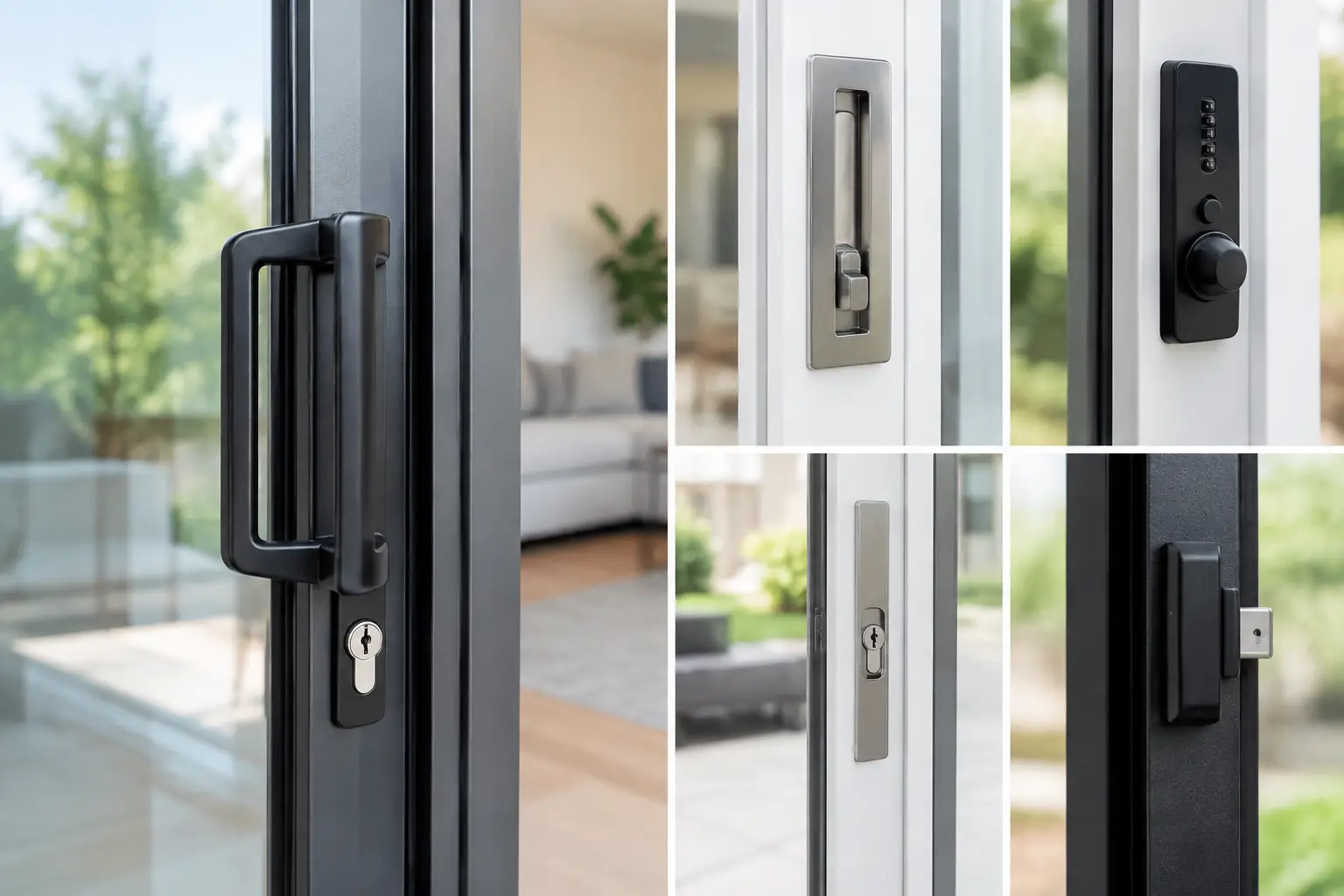
A sliding glass door should bring light into your home, not create the easiest entry point on the property. The best locks for sliding doors do more than hold the door shut. They prevent the panel from being lifted, forced sideways, or opened after someone defeats the factory latch.
For homes, condos, rental properties, and storefronts in Broward and Palm Beach Counties, the right choice depends on the door itself, who needs access, and how much security the location requires. A basic patio-door latch may be acceptable as one layer of protection, but it rarely provides the level of resistance most property owners expect from an exterior door.
Why the Factory Sliding-Door Lock Is Usually Not Enough
Most sliding doors come with a small hook-style latch operated by a thumb turn. When the door is properly aligned and the latch is in good condition, it keeps the panel closed. But many factory latches are light-duty, exposed to wear, and mounted in frames that can loosen over time.
A common problem is door movement. If a sliding panel can be lifted in its track or shifted enough to disengage the latch, the lock is not doing its full job. Worn rollers, misaligned tracks, loose strike plates, and damaged frames all affect security. Before adding a new lock, make sure the door closes squarely and cannot be easily lifted or rattled in the opening.
South Florida conditions add another concern. Humidity, salt air near the coast, and frequent use can corrode hardware or cause a door to drag. A lock upgrade works best when the complete door system is operating correctly.
1. Security Bars for Sliding Doors
A security bar is one of the most practical additions for a standard sliding glass door. It sits in the lower track or behind the moving panel, physically blocking the door from sliding open. Even if the primary latch is bypassed, the door cannot travel until the bar is removed.
This option is popular because it is simple, visible, and effective. Adjustable metal bars fit many patio doors and can often be removed quickly by someone inside. They are especially useful for ground-floor doors, vacation properties, and doors that are not used as the main daily entrance.
The trade-off is convenience. Everyone in the household must know how to remove and reinstall the bar, and it must never interfere with emergency exit. A bar should be properly sized and placed so it cannot slip out of position under pressure.
2. Keyed Patio Door Locks
A keyed sliding-door lock adds controlled entry from the exterior and can improve the protection provided by a standard latch. These locks are often installed on the door frame or as part of an upgraded handle set. They are a better choice for homeowners who use the sliding door regularly and want a lock that functions more like a traditional exterior door lock.
A quality keyed lock should be installed with reinforced mounting points and a properly aligned strike. The lock cylinder also matters. A commercial-grade cylinder or high-security keyway can reduce the risk of unauthorized key duplication and picking compared with basic residential hardware.
Not every sliding door can accept the same keyed lock. Aluminum frames, vinyl frames, impact-rated doors, and older patio doors all have different hardware limitations. Drilling into the wrong place can damage glass, compromise the frame, or void a manufacturer warranty. Professional measurement and installation are worth considering when the door is expensive or impact-rated.
3. Double-Bolt Sliding Door Locks
Double-bolt locks are designed to secure the sliding panel to the frame with two locking points rather than one. Some models use top and bottom bolts, while others secure the door at two positions along the frame. This added engagement makes it harder to pry or force the panel away from its strike area.
For a frequently used patio door, a double-bolt lock can provide a strong balance of convenience and security. It is generally more secure than a simple add-on latch while remaining easier to operate than a removable bar.
Installation quality is critical. The bolts must align precisely with their receivers, and the frame must be solid enough to support the hardware. If the door is already sagging or the track is damaged, correct those issues first. Otherwise, a new lock may bind, fail to engage, or wear prematurely.
4. Foot Bolts and Track-Mounted Locks
Foot bolts, also called kick locks, are mounted near the bottom of the sliding panel. A bolt drops into the track or a receiver in the floor area, stopping the panel from moving. They are convenient because they can often be operated with a foot rather than a key.
These locks work well as a secondary layer on doors that are opened often. They can also be useful when a homeowner wants added security without changing the existing handle set. For rental properties, a track-mounted lock may be a straightforward upgrade between tenants.
The limitation is that some foot bolts are intended for security while occupants are home, not as the only lock when the property is vacant. Hardware that locks in a way occupants cannot quickly release may create an exit concern. Choose a model that supports safe egress and follows the door manufacturer’s instructions.
5. Anti-Lift Devices
An anti-lift device does not replace a lock, but it addresses a major weakness in many sliding doors. It prevents the moving panel from being raised high enough to come out of the track. These devices are commonly installed at the top of the door frame as small blocks, screws, or purpose-built stops.
This upgrade is inexpensive compared with replacing a door, and it pairs well with virtually every other locking method. A security bar stops horizontal movement. An anti-lift device helps stop vertical movement. Together, they make a forced-entry attempt much more difficult.
The adjustment must be exact. The panel should still slide normally, but there should not be enough clearance for it to lift free. If the door has recently had rollers replaced or tracks repaired, the anti-lift device may need to be readjusted afterward.
6. Pin Locks for Added Resistance
Pin locks use a metal pin that passes through the sliding panel and into the fixed panel or frame, preventing the door from opening. Some versions are permanently mounted, while others use removable pins. Properly installed, they provide a strong mechanical barrier because the door cannot slide past the pin.
They can be a good option for homeowners seeking a secondary lock that is harder to bypass than a basic latch. However, installation requires care. Drilling through an aluminum or vinyl frame in the wrong location can weaken the material or affect how the door operates. Pin locks are best selected and fitted for the exact door configuration.
7. Smart and Electronic Locks for Sliding Doors
Smart lock options for sliding doors have improved, particularly for doors with compatible handle sets or multipoint hardware. Depending on the system, you may be able to use a keypad, credential, phone access, or scheduled codes instead of relying only on physical keys.
This can be useful for rental homes, offices, pool-area access, or properties where several authorized people need entry. The right electronic solution can also support better key control because access codes can be changed without rekeying a cylinder.
Electronic hardware is not automatically the best answer for every patio door. It needs a secure mechanical locking method underneath it, reliable power or batteries, and weather-appropriate components. For commercial sliding entrances, access control, electric strikes, magnetic locks, and emergency-exit requirements must be evaluated together rather than treated as separate upgrades.
How to Choose the Best Lock for Your Door
Start with the door’s location and use. A rarely opened ground-floor patio door may benefit most from a security bar, anti-lift device, and a well-functioning primary latch. A main household entrance may justify a keyed lock or double-bolt upgrade for easier daily access. A rental unit may need a lock that can be rekeyed between occupants, while a business may need managed access and code control.
Also inspect the condition of the door. No lock can compensate for a bent frame, broken rollers, loose glass panel, or strike that no longer lines up. If your door is difficult to lock, do not force it. Forcing the latch can damage the hardware and leave the door less secure than before.
The strongest approach is usually layered protection: a reliable primary lock, an anti-lift measure, and a secondary physical barrier suited to how the door is used. Avoid solutions that make emergency exit difficult, especially in bedrooms, occupied spaces, or commercial properties.
For a door that will not lock, has been damaged after an attempted break-in, or needs a higher-security upgrade, a qualified locksmith can inspect the frame, track, rollers, latch, and available lock options before recommending hardware. Access Locksmith & Security can help local property owners choose and install a solution that protects the door without sacrificing safe, practical access.
A sliding door should feel secure every time you close it. If it rattles, lifts, sticks, or depends on a weak latch alone, addressing it now can prevent a much more stressful problem later.

