
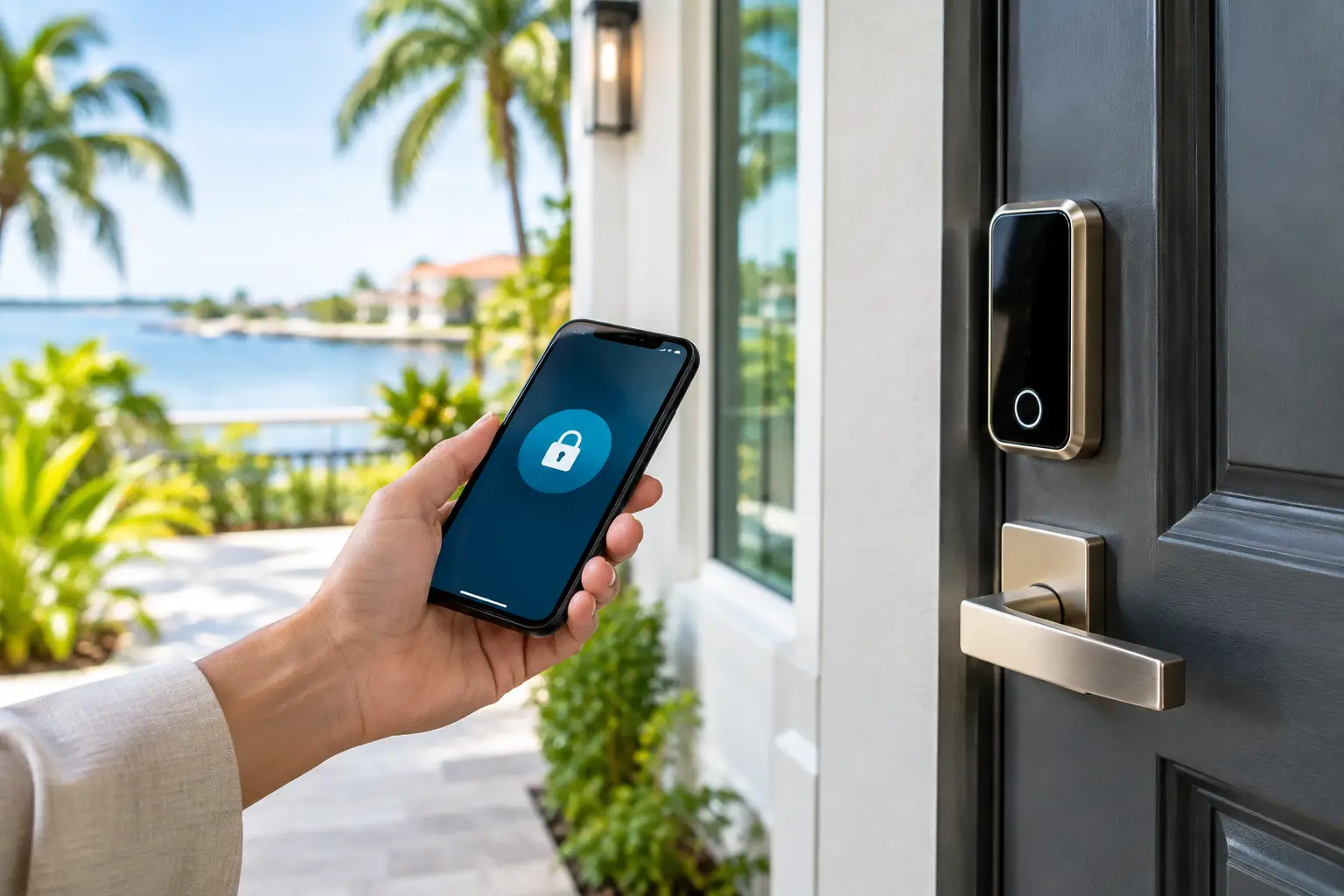
A spare key under the mat may solve a lockout, but it also creates a security risk that is easy to overlook. Smart locks give homeowners, landlords, and business owners a better way to control access without handing out extra keys or wondering who still has one. The right system can let you issue a code, check activity, secure a door remotely, and remove access when circumstances change.
That convenience only works when the lock fits the door, the property, and the people using it. A smart lock is not automatically the right answer for every entry door in Broward or Palm Beach County. Before replacing a dependable deadbolt, it helps to understand what these locks do well, where they need professional attention, and which features actually matter.
What Smart Locks Can Do for Your Property
Smart locks replace or work alongside a standard keyed deadbolt. Instead of relying only on a physical key, they may use a keypad code, mobile app, Bluetooth connection, fingerprint reader, key fob, or access-control credential. Many models still include a mechanical keyway as a backup.
For a residence, the biggest benefit is control. You can provide a temporary code to a dog walker, housekeeper, guest, or contractor, then remove it when the job is complete. Parents can come home without carrying a house key, while homeowners can confirm that a door was secured after leaving for work or travel.
For a rental property, code-based access can reduce the need to collect and copy keys between tenants. Landlords and property managers can change access credentials at turnover without replacing the full lock in every situation. That said, local lease requirements, building rules, and the type of door hardware already in place should be reviewed before selecting a system.
Businesses often need more than a residential-style keypad lock. A small office, storefront, storage room, or employee entrance may benefit from user-specific codes and audit activity. Larger facilities may need a complete access-control system with electric strikes, magnetic locks, door closers, emergency exit hardware, and centrally managed credentials. A smart lock can be useful, but it is not a substitute for properly designed commercial security.
Choosing Smart Locks That Match Your Needs
The best choice depends on how the door is used, not simply on the number of features in an app. A front door used by a family has different demands than a side entrance at a retail business or a shared office suite.
Keypad, app, or both?
A keypad is practical for people who do not want to depend on a phone. It allows individual access codes and makes it easier to grant entry to someone who may not use a particular app. It is also useful during a Wi-Fi outage, provided the lock itself has power.
App control adds another layer of convenience, especially for property owners who travel or manage rentals from a distance. Depending on the lock and setup, you may receive alerts, create scheduled codes, or secure the door from another location. Wi-Fi-enabled models generally offer more remote features, while Bluetooth models may require you to be nearby or use an additional bridge for remote control.
For many homes, a keypad plus a physical key backup is the most practical combination. For a business, the decision should be based on the number of users, the need for activity records, the door location, and emergency egress requirements.
Battery life and backup access matter
Smart locks run on batteries, and most provide low-battery warnings before power is depleted. Those alerts only help if someone responds to them. Make battery replacement part of regular property maintenance, particularly for rental units and commercial doors with frequent use.
A quality installation should also account for what happens when batteries fail, a phone is lost, or the internet goes down. Many locks have a traditional keyway, external emergency power contacts, or another local backup method. Before relying on any product, make sure every authorized user understands the backup plan. Convenience should never leave you stranded outside your own property.
South Florida conditions affect the decision
Heat, humidity, driving rain, and salt air near the coast can be hard on exterior hardware. A smart lock installed on a sheltered front entry may perform very differently from one exposed to direct sun and rain at a side gate or exterior commercial door.
Choose hardware rated for exterior use and confirm that the keypad, battery compartment, and electronic components are appropriate for the location. Door material also matters. Wood, metal, fiberglass, aluminum storefront systems, and narrow-stile commercial doors may require different lock bodies and installation methods. A lock that is technically compatible on paper may still operate poorly if the door or frame is out of alignment.
Installation Is About More Than Replacing a Deadbolt
A smart lock must throw its bolt freely into the strike plate. If the bolt rubs the frame, needs to be pushed into place, or only works when the door is lifted, the electronic motor will be working harder than it should. That can shorten battery life, cause intermittent operation, and leave the door unsecured when the lock fails to complete its cycle.
Before installing a new lock, inspect the door, hinges, frame, latch opening, and strike plate. The deadbolt should extend fully with the door closed, and the strike should be secured into solid framing with appropriate screws. If the door has shifted because of wear, weather, or damage, lock replacement alone may not solve the real problem.
A professional locksmith can also verify the backset, door thickness, handing, existing hole preparation, and compatibility with decorative hardware. This is especially valuable when converting an older door, working with high-security hardware, or installing locks on multiple rental or business doors. Access Locksmith & Security can assess the complete opening, not just the device on the door, so the finished system operates reliably.
Security Practices That Keep Convenience From Becoming a Weak Point
A smart lock is only as secure as its setup and daily use. Avoid using simple codes such as a street number, birthday, or repeated digits. Give each regular user a separate code rather than sharing one household or employee code. When someone moves out, leaves a job, or no longer needs access, remove that credential promptly.
For app-connected locks, use a strong account password and enable multi-factor authentication when the manufacturer offers it. Keep the lock’s firmware and the related mobile app current, since updates can correct security issues and improve performance. Be cautious about granting full administrator access when a temporary guest code will do the job.
Physical security still matters. A smart lock should be installed on a solid door with a properly reinforced frame. Glass sidelights, weak strike plates, damaged hinges, and poor lighting can create vulnerabilities that no phone notification will fix. For businesses, exterior cameras, access control, alarm systems, and correctly functioning exit devices should work together rather than operate as isolated upgrades.
When a Smart Lock Is Not the Best Fit
There are situations where a traditional mechanical deadbolt remains the better option. An infrequently used storage door, a location without consistent maintenance, or a door exposed to harsh weather may be better served by durable conventional hardware. Some property owners also prefer the simplicity of a mechanical lock when only a few trusted people need access.
Commercial exit doors require special care. A lock must never interfere with safe, code-compliant egress. Installing the wrong hardware on a required exit can create a serious safety problem and potential liability. Likewise, a door that needs to be fire-rated, panic-rated, or integrated with an alarm system should be evaluated as part of the full door assembly.
The goal is not to put smart technology on every door. The goal is to create dependable access that fits the property, protects the people using it, and does not introduce new problems.
If you are considering a smart lock, start with the door that creates the most daily inconvenience or security concern. A clear plan for access, backup entry, battery maintenance, and professional installation can turn that one upgrade into lasting peace of mind.

