
A key that suddenly resists turning can turn an ordinary trip outside into a frustrating delay – or leave a business unable to open on time. Before you force the key or spray the lock with the nearest household lubricant, take a moment to identify the problem. In many cases, you can fix sticky locks with a careful cleaning or adjustment. In others, the sticking is an early warning that the lock, key, or door hardware needs professional attention.
South Florida heat, humidity, salt air near the coast, frequent rain, and heavy daily use can all affect exterior door hardware. A prompt response protects more than convenience. It helps prevent a broken key, a lockout, damage to the door, and a security gap at your home or business.
First, identify where the lock is sticking
A “sticky lock” can describe several different issues, and the right solution depends on what the key and door are doing. If the key is difficult to insert, the keyway may contain dirt, corrosion, or an internal obstruction. If the key goes in but will not turn smoothly, the pins inside the cylinder may be dry, worn, or damaged. If the key turns only when you push, pull, lift, or shoulder the door, the issue is usually alignment between the latch or bolt and the strike plate.
Pay attention to whether the trouble occurs from both sides of the door and whether it gets worse during certain weather conditions. A lock that works with the door open but sticks when the door is closed points to door alignment, not necessarily a failed lock cylinder. That distinction can save you from replacing a lock that only needs the door hardware corrected.
Do not keep applying force. Twisting a key too hard can bend it, snap it in the cylinder, or damage delicate internal pins. If the key feels close to breaking, stop and use another copy if available.
How to fix sticky locks safely at home or work
Start with the least invasive option. Wipe the key clean with a dry cloth and inspect it under good lighting. Look for bent edges, worn grooves, cracks, or heavy buildup. A badly worn key can operate inconsistently even when the lock itself is in good condition. Test a spare key before assuming the cylinder has failed. If the spare works normally, have a new key made from the better copy rather than continuing to use the worn one.
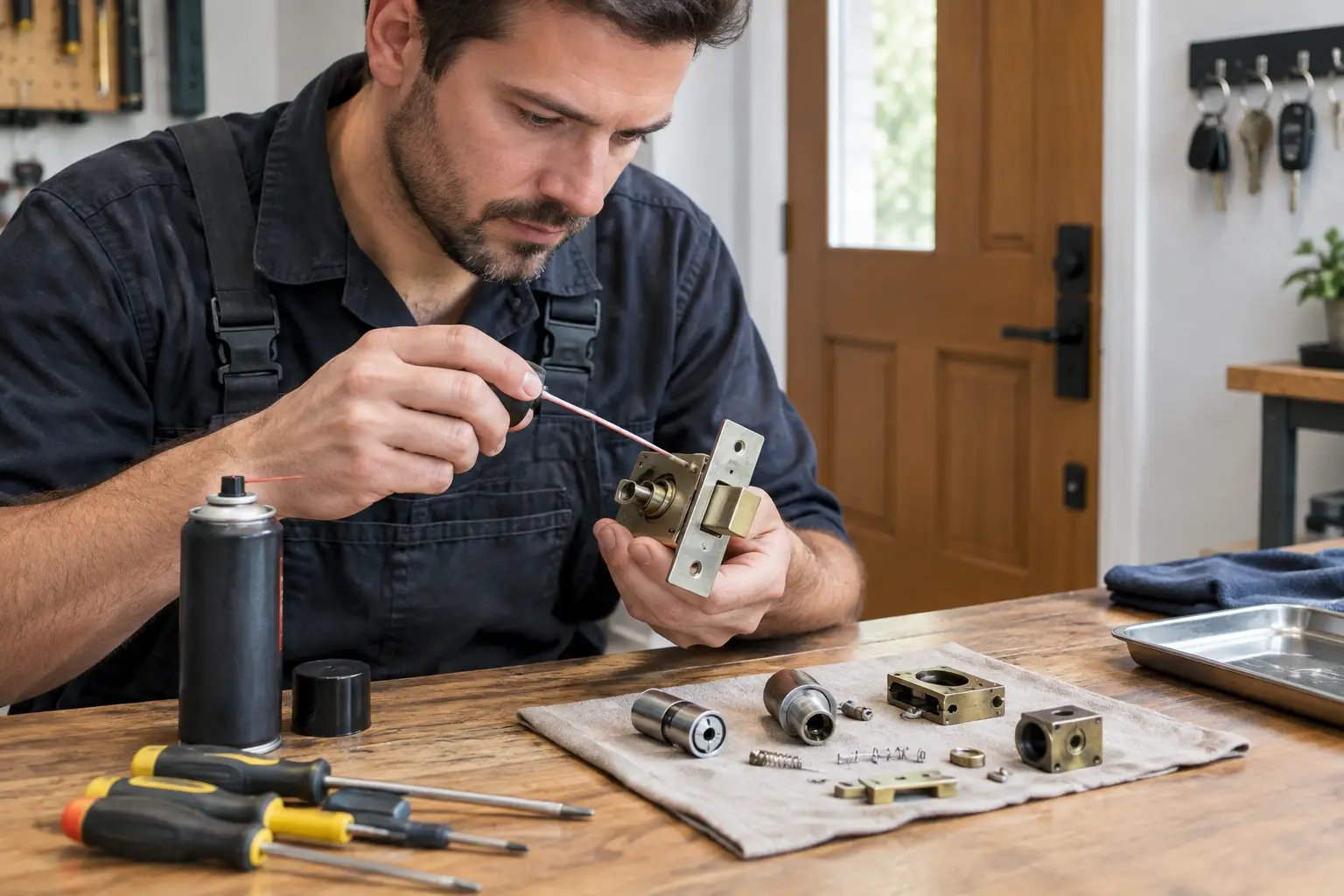
Next, clean the keyway with a lock-specific dry lubricant, such as graphite or a PTFE-based product designed for locks. Follow the product directions, using only a small amount. Insert and remove the key several times, then turn it gently to distribute the lubricant through the cylinder.
Avoid using cooking oil, grease, or heavy penetrating oils as a long-term solution. They may make the lock feel smoother for a short period, but they can attract dust and grime that eventually make the sticking worse. They can also leave a residue inside the cylinder that complicates a proper repair.
If the key turns easily with the door open but binds when closed, inspect the latch and strike plate. Look for fresh scratches on the strike plate, a latch that hits above or below its opening, loose mounting screws, or a door that rubs against the frame. Tightening loose hinge screws can sometimes improve a minor sag. However, do not widen the strike opening or aggressively file metal without confirming the cause. Removing too much material can weaken security and still fail to correct a shifting door.
For a deadbolt, try operating it while gently lifting the door, pushing it inward, and pulling it toward you. If one of those positions makes it work, the bolt is not lining up correctly with the strike. This is especially common after settling, temperature changes, door swelling, or repeated heavy use.
Common causes of a sticking door lock
Exterior locks in Broward and Palm Beach Counties often deal with moisture and corrosion. Even a quality lock can become difficult to operate when humidity, wind-blown debris, and salt exposure affect the keyway, latch, screws, or strike plate. Regular light maintenance helps, but corrosion inside a cylinder generally requires more than lubricant.
Door movement is another frequent cause. Wood doors can swell with moisture, while hinges and frames can shift over time. Commercial doors may fall out of alignment because of high traffic, a failing door closer, loose hinges, or damage from carts and deliveries. On aluminum storefront doors, a misaligned latch, pivot, or closer can create a lock problem that is really a door-system problem.
Internal wear also matters. A lock cylinder contains small pins and springs that must move precisely. After years of use, those parts can wear down, bind, or fail. A key may still work intermittently, which can make the issue seem minor until the cylinder stops turning entirely. If a lock has been forced, tampered with, or exposed to a break-in attempt, internal damage is even more likely.
When not to attempt a DIY repair
A little cleaning is reasonable when the key is intact, the cylinder is not damaged, and the door still secures properly. Beyond that point, improvised repairs can create a more expensive problem.
Call a qualified locksmith if the key is bent, cracked, or stuck; if the key turns but the latch or deadbolt does not move; if the lock is loose in the door; or if you see visible rust, damage, or signs of tampering. The same applies when a deadbolt will not fully extend into the frame. A partially engaged deadbolt may give the appearance of security without providing it.
For businesses, do not delay service on a malfunctioning exit device, panic bar, magnetic lock, electric strike, or access-control door. These systems affect both security and safe egress. A door that does not latch reliably can expose inventory, employees, tenants, and customers to unnecessary risk. A door that does not release correctly can create a more serious safety concern.
Renters should notify their landlord or property manager rather than disassembling installed hardware. Landlords and property managers should address recurring sticking quickly, especially on exterior entry doors, common-area doors, and units with older hardware. Repeated service calls may indicate that rekeying, lock replacement, hinge repair, door closer adjustment, or a broader hardware upgrade is the better long-term answer.
Repair, rekey, or replace: choosing the right solution
The best fix depends on the condition of the lock and your security needs. If the cylinder is sound but dirty or slightly misaligned, a repair and adjustment may restore smooth operation. If keys are lost, unreturned, or no longer under your control, rekeying lets you keep the existing lock hardware while changing which keys operate it.
Replacement makes more sense when the lock is badly corroded, damaged, outdated, repeatedly sticking, or not providing the protection you need. A home may benefit from upgraded deadbolts or keyless entry. A commercial property may need a more durable lever set, a properly rated exit device, restricted key control, or an access-control solution that better manages employee access.
There is a trade-off. The least expensive repair is not always the most reliable choice for a heavily used storefront, rental property, or exterior door exposed to the elements. A locksmith can assess the complete setup – lock cylinder, key condition, latch, strike plate, hinges, frame, and closer – before recommending work.
Keep locks working smoothly after the repair
Once the problem is resolved, use clean keys and avoid hanging heavy keychains from keys left in the cylinder. Check exterior doors periodically for rubbing, loose screws, and latch marks around the strike plate. Lubricate lock cylinders lightly with a product made for locks, especially after severe weather or when operation begins to feel less smooth.
For commercial properties, include doors and locking hardware in routine maintenance rather than waiting for a failure. Regular checks of closers, hinges, exit devices, electric strikes, and access-control doors can reduce interruptions and help keep the property secure.
If your lock is sticking, turning inconsistently, or leaving you unsure whether the door is truly secure, Access Locksmith & Security can assess the cause and provide clear repair or replacement options. A lock should turn smoothly, latch fully, and give you confidence every time you close the door.

