
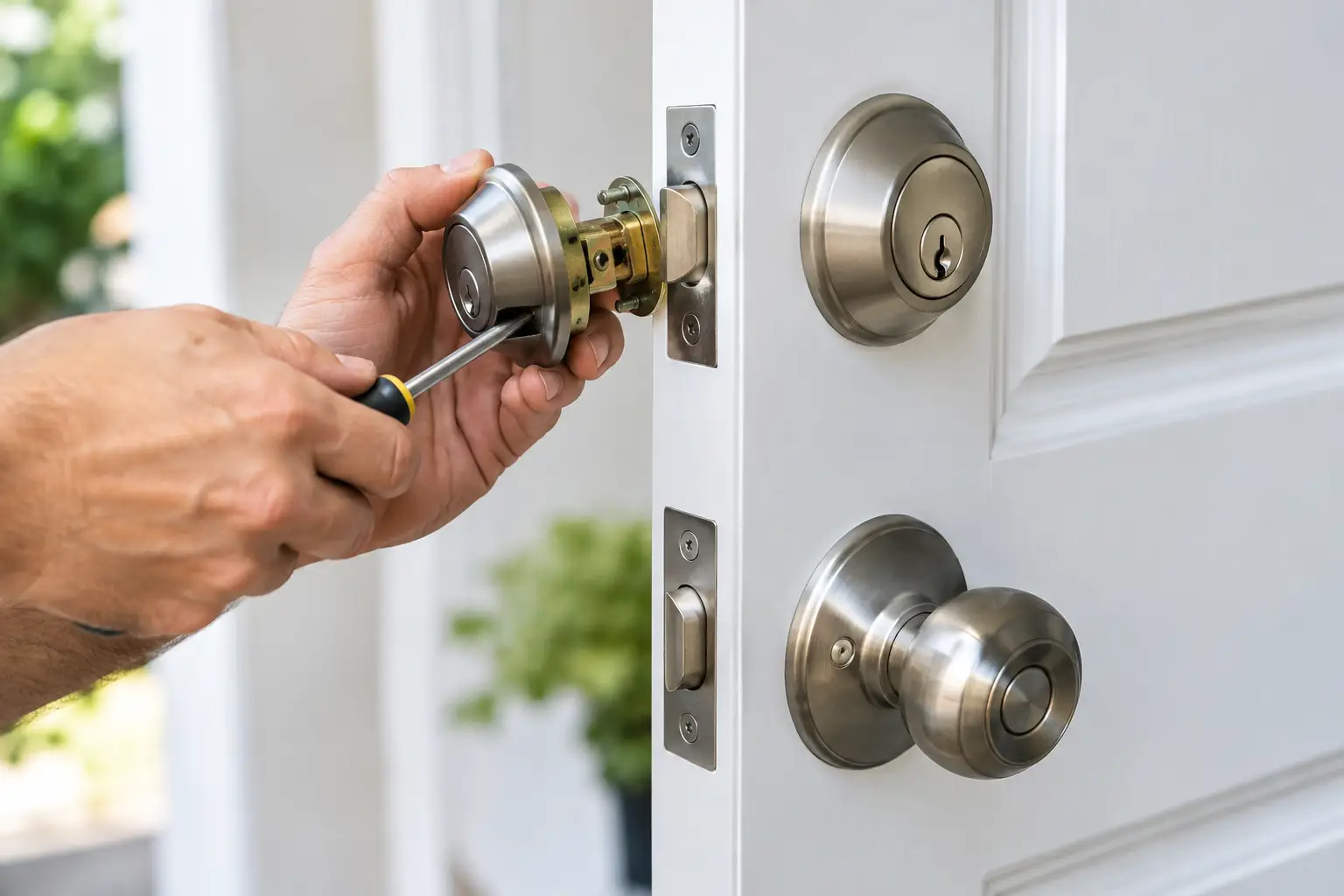
A deadbolt that turns loosely, jams halfway, or will not lock from the outside is more than an inconvenience. It can leave a home, rental unit, office, or storefront exposed at the exact time you need reliable security. Knowing how to replace a broken deadbolt can help you make a fast, informed decision, whether the answer is a straightforward hardware swap or a service call for a door or lock problem that goes deeper.
The key is not to force the lock or install a new one over an unresolved issue. In South Florida, heat, humidity, coastal air, shifting doors, and frequent use can all affect lock hardware and door alignment. A properly installed deadbolt should latch smoothly, turn with minimal resistance, and secure the door without needing to push, pull, or lift it into position.
First, Confirm That the Deadbolt Is Actually Broken
A deadbolt may appear to have failed when the real issue is a misaligned strike plate, a warped door, a damaged key, or loose mounting screws. Before purchasing a replacement, test the lock with the door open. If the bolt extends and retracts normally with the door open but catches when the door is closed, the problem is likely alignment rather than the lock cylinder.
Look at the bolt and the strike plate on the frame. A bolt that hits the top, bottom, or edge of the strike opening is being forced out of line. Tightening screws or adjusting the strike plate may solve the issue. If the door has dropped or shifted significantly, however, the hinges, frame, or door closer may need attention first.
A deadbolt is more likely to be internally damaged if the key will not turn, the thumb turn spins without moving the bolt, the bolt stays partially extended, or the exterior cylinder is loose. A key that broke in the cylinder also requires care. Trying to dig out a broken key with improvised tools can damage the lock and turn a manageable repair into a full replacement.
If there has been an attempted break-in, do not assume that only the visible lock is affected. Check the door edge, frame, strike plate, and surrounding wood or metal for cracking, bending, or pulled screws. Replacing the deadbolt is necessary, but it may not restore security unless the frame is repaired and reinforced as well.
When You Can Replace a Broken Deadbolt Yourself
A standard residential deadbolt replacement is often manageable for a property owner when the existing door and holes are in good condition. The most straightforward job involves a common single-cylinder deadbolt, where a key operates the exterior side and a thumb turn operates the inside.
Before removing anything, make sure the replacement matches the door. Most residential doors use a standard 2-1/8-inch bore hole and either a 2-3/8-inch or 2-3/4-inch backset, which is the distance from the door edge to the center of the lock hole. Measure both. Also confirm that the door thickness is compatible with the new lock, especially on older homes or custom doors.
You will generally need a screwdriver, measuring tape, and a replacement deadbolt with the proper backset and latch length. If the existing holes are oversized, damaged, or poorly positioned, a standard replacement may not fit securely. That is a point where professional help is worth it, because a lock cannot perform as intended if it is mounted loosely or held by stripped screws.
With the door open, remove the interior thumb turn screws first. Hold the exterior cylinder as you work so it does not fall. Separate the interior and exterior components, remove the latch from the door edge, and then remove the old strike plate from the frame.
Install the new latch with the word “UP” facing up, if marked. Set the exterior keyed portion in place, making sure the tailpiece passes correctly through the latch. Position the interior assembly, tighten the mounting screws evenly, and avoid overtightening. Too much pressure can bind the mechanism or damage the door surface.
Before closing the door, operate the lock several times. Then close the door and test it again without forcing it. The bolt should enter the strike plate fully and easily. Finally, test the key from outside and the thumb turn from inside. Keep a copy of the new key away from the door and label any spare keys responsibly.
Choose a Replacement That Improves Security
Replacing failed hardware is an opportunity to correct weak hardware, not just restore the same level of protection. A deadbolt should have a solid metal bolt, a reinforced strike plate, and long screws that anchor into the wall framing behind the door jamb. Short screws that only grip trim wood offer far less resistance when a door is kicked or forced.
For many homes, a quality single-cylinder deadbolt is appropriate. It allows occupants to exit quickly by turning the interior thumb turn. Double-cylinder deadbolts, which require a key on both sides, can create emergency egress concerns and may be restricted by local building or fire requirements. They should never be selected casually for an occupied residence.
Electronic and keypad deadbolts can be useful for rental properties, vacation homes, offices, and households that need to manage access without distributing multiple keys. The trade-off is that electronic locks need battery management, correct installation, and occasional programming support. A smart lock is not automatically more secure than a well-installed mechanical deadbolt. Door strength, strike reinforcement, and proper alignment still matter.
If you recently moved, lost keys, ended a tenant relationship, or experienced a security concern, rekeying may be a better option than replacing every lock. Rekeying changes which key operates the existing lock, provided the hardware is still in good condition. If the deadbolt is worn, damaged, or low quality, replacement and rekeying can be handled together.
When to Call a Locksmith Instead
There are situations where replacing a deadbolt on your own can create a security problem or leave you locked out. Call a locksmith when the door will not open, the key is stuck or broken, the bolt is jammed while the door is closed, or the lock has been damaged after a break-in. Those are not good moments to force hardware or start drilling without the right tools and experience.
Professional service is also the practical choice when the deadbolt does not line up because of door movement, frame damage, or a deteriorated strike area. A new lock will not compensate for a door that has shifted out of position. The underlying problem needs to be corrected so the deadbolt engages fully every time.
Property managers and business owners should be especially careful with commercial doors. Storefront aluminum doors, metal doors, panic exit devices, access-control doors, and doors with electric strikes or magnetic locks require compatible hardware and code-aware installation. A deadbolt added to the wrong door can interfere with emergency exit requirements, employee access, or existing security systems.
Renters should contact the landlord or property manager before changing locks unless the lease and local requirements clearly allow it. The property owner may need a key for authorized access, or the building may use a restricted keyway or master-key system. Changing the lock without approval can cause avoidable disputes and may leave the new hardware incompatible with the property’s security plan.
For urgent lock failures across Broward and Palm Beach Counties, Access Locksmith & Security can assess whether the problem is the deadbolt, key cylinder, strike plate, door alignment, or related hardware. A licensed and insured locksmith can replace the lock, rekey compatible locks, reinforce the strike area, and make sure the door secures correctly before leaving.
Do Not Ignore the Door Frame
The strongest deadbolt is only as dependable as the structure receiving the bolt. If the strike plate is bent, the screw holes are stripped, or the frame is split, installing a new deadbolt alone may provide a false sense of security. This is particularly common after a forced-entry attempt or years of slamming, swelling, and door movement.
A proper repair may involve a heavy-duty strike plate, longer structural screws, wood repair, frame reinforcement, or adjustment to the door and hinges. On metal frames and commercial openings, the repair may require specialized hardware rather than standard residential screws. The goal is simple: the bolt must enter the strike cleanly and the frame must be able to hold it under pressure.
A broken deadbolt deserves prompt attention, but it does not have to become a stressful guessing game. Secure the property as best you can, avoid forcing damaged hardware, and choose a repair that addresses both the lock and the door it protects. Peace of mind comes from knowing the door will lock properly every time you leave, return, or close up for the night.

