
A lost key, a malfunctioning gate, and a door that will not latch may look like separate problems. For a property owner or manager, they all create the same concern: who can get in, who can get out, and how quickly can the issue be resolved? The most useful physical security trends 2026 are not about adding technology for its own sake. They are about making access more controlled, visible, and dependable when something goes wrong.
For homes, retail stores, offices, multifamily communities, and warehouses in Broward and Palm Beach Counties, the best security plan still starts at the door. Newer systems can improve convenience and accountability, but they cannot compensate for worn locks, misaligned frames, failed closers, or exit doors that do not operate correctly. The strongest upgrades connect good hardware, clear access rules, and professional service.
Physical Security Trends 2026: Access That Can Be Managed
Traditional keys remain practical and reliable, especially for private homes and small businesses. But more property managers and business owners are moving toward electronic access control because it gives them a record of entry and a faster way to change permissions.
Instead of collecting keys from a former employee or wondering whether a tenant made copies, an authorized manager can remove a credential from the system. A lost key card, fob, or mobile credential can be disabled without changing every lock on the property. For a business with frequent staff turnover, multiple suites, or restricted storage areas, that can save time and reduce uncertainty.
Mobile credentials are becoming more common in 2026, particularly for offices, gated facilities, and multifamily properties. Employees or residents can use a smartphone rather than carry another card or fob. The convenience is real, but it is not the right choice for every opening. Phones run out of battery, some users prefer a physical credential, and a system must be set up with secure administrator controls. A practical approach often includes a mix of mobile access, fobs, and mechanical backup access for authorized personnel.
For commercial properties, access schedules are another meaningful improvement. A cleaning crew may need entry after hours, while a delivery driver needs access only during a set receiving window. Assigning permissions by time and door helps avoid leaving every entrance available all day. It also makes it easier to investigate an incident without relying solely on memory or handwritten key logs.
Doors and Hardware Are Getting the Attention They Deserve
Security systems are only as dependable as the physical opening they protect. In 2026, more facility operators are recognizing that door hardware is not an afterthought. A camera may show that someone tried to force a door, but a properly installed lock, strike plate, continuous hinge, closer, and frame are what help keep that person outside.
For storefronts and commercial suites, deadbolts, panic hardware, electric strikes, magnetic locks, and door closers must work together. A magnetic lock may suit a controlled interior entrance, for example, but emergency egress requirements must always be addressed. Exit hardware has to allow people to leave quickly during an emergency, even if the door is electronically secured from the outside.
This is especially important after renovations, tenant changes, or storm-related repairs. A door can appear secure while failing to latch consistently because the frame has shifted or the closer is improperly adjusted. That creates a daily access problem and can become a safety issue during an evacuation. Regular inspection and adjustment prevent small hardware failures from turning into an after-hours emergency.
Residential customers are also choosing higher-security deadbolts, reinforced strike plates, and keypad locks for exterior doors. Keypad locks can be useful for families, vacation properties, and service access, since codes can be changed when circumstances change. Still, homeowners should select hardware based on the door, the location, and the people using it. A complicated lock is not helpful if household members cannot operate it confidently in an urgent situation.
Video Systems Are Moving Toward Useful Evidence
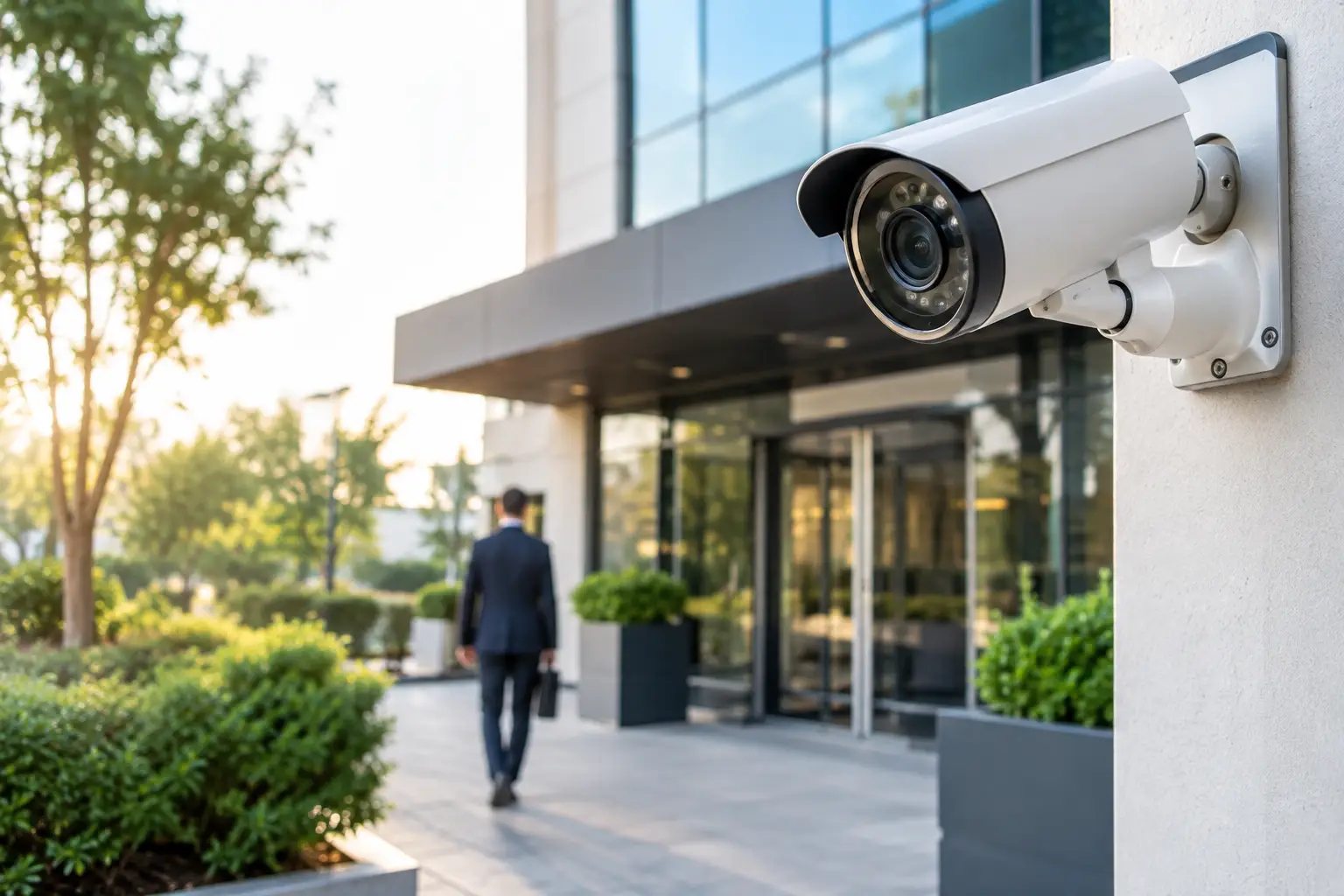
Security cameras remain a major part of physical security planning, but the focus is shifting from simply recording footage to capturing footage that can actually be used. Clear placement, dependable power, sufficient storage, and a view of the right area matter more than filling a building with cameras.
For a business, priority locations often include main entrances, rear doors, cash handling areas, loading zones, parking areas, and access-controlled doors. At a residential property, a front entry, driveway, side gate, and rear access point may provide more value than broad views of low-risk areas. Camera placement should be planned around actual traffic patterns and likely points of entry.
Video analytics and person-detection alerts are becoming more accessible, helping reduce notifications caused by rain, branches, passing cars, or animals. These features can be useful, but alerts still need human judgment. A notification should prompt appropriate action, not panic. Property owners should also consider privacy, camera angles, retention periods, and who is allowed to view recordings.
Camera replacement is often a smarter investment than trying to keep unreliable older equipment operating indefinitely. If images are unclear, recordings disappear, or the system is difficult to access during an incident, the camera system is not providing the protection it should. The right replacement plan depends on the property layout, lighting conditions, network capacity, and the level of monitoring needed.
Security Planning Is Becoming More Connected
One of the defining physical security trends in 2026 is the connection between systems that once operated separately. Access control, cameras, intrusion alarms, intercoms, gate controls, and door hardware are increasingly expected to support one another.
A buzzer system or video intercom can help a business verify a visitor before releasing a door. Access-control records can help identify when a credential was used. A camera aimed at that entrance can provide visual context if there is a dispute, theft, or attempted unauthorized entry. The goal is not to turn every building into a complicated command center. It is to reduce blind spots and make routine decisions easier.
Connected systems also introduce a responsibility that physical security providers and property owners cannot ignore: administration. Default passwords, former employees with administrator access, and undocumented override keys can create gaps. Whenever a business changes managers, vendors, tenants, or ownership, security credentials should be reviewed. That includes alarm codes, camera logins, access-control administrators, gate remotes, mechanical keys, and emergency contact information.
For smaller businesses, a simple system that the owner understands is usually better than a feature-heavy system no one knows how to manage. For larger facilities, documented procedures and designated administrators are worth the effort. The right level of technology depends on the number of users, entry points, operating hours, and the consequences of unauthorized access.
Rekeying Still Has a Major Role in 2026
Smart credentials and electronic locks have not made rekeying obsolete. Rekeying remains one of the quickest, most cost-effective ways to restore control after keys are lost, tenants move out, employees leave, or a property changes hands.
For landlords and property managers, rekeying between occupants helps ensure that old keys no longer work. For businesses, a master key system can provide employees access only to the areas required for their role while allowing authorized management to access multiple doors. When designed properly, this supports both daily operations and security accountability.
A rekey should also be considered after a break-in attempt, a missing contractor key, or any situation where key control is uncertain. Replacing all hardware is not always necessary. A qualified locksmith can assess whether the existing locks can be rekeyed, repaired, upgraded, or should be replaced due to damage or poor performance.
Prepare for Failures, Not Just Intrusions
Security planning often focuses on preventing someone from getting in. Equally important is planning for what happens when a lock, electronic reader, gate, or door closer fails. Businesses need to know who has authority to call for service, where emergency keys are secured, and how to maintain safe egress while repairs are underway.
South Florida properties also need practical planning for power interruptions, severe weather, and high traffic. Battery backup, mechanical override options, and properly maintained exit devices can keep an access problem from becoming a larger operational disruption. For apartment communities and commercial facilities, documenting these procedures helps staff respond calmly instead of improvising under pressure.
Before investing in a new lock, camera, or access-control platform, start with the openings and risks that affect your property most. Check whether exterior doors latch properly, verify who has keys or credentials, review camera coverage, and make sure emergency exits operate as intended. Access Locksmith & Security can help homeowners, property managers, and local businesses address urgent problems and plan practical upgrades that protect the people relying on the property every day.
The best security improvement is often the one that removes a known weakness before it becomes an after-hours call: a door that closes correctly, access that can be changed promptly, and a clear plan when something fails.

