
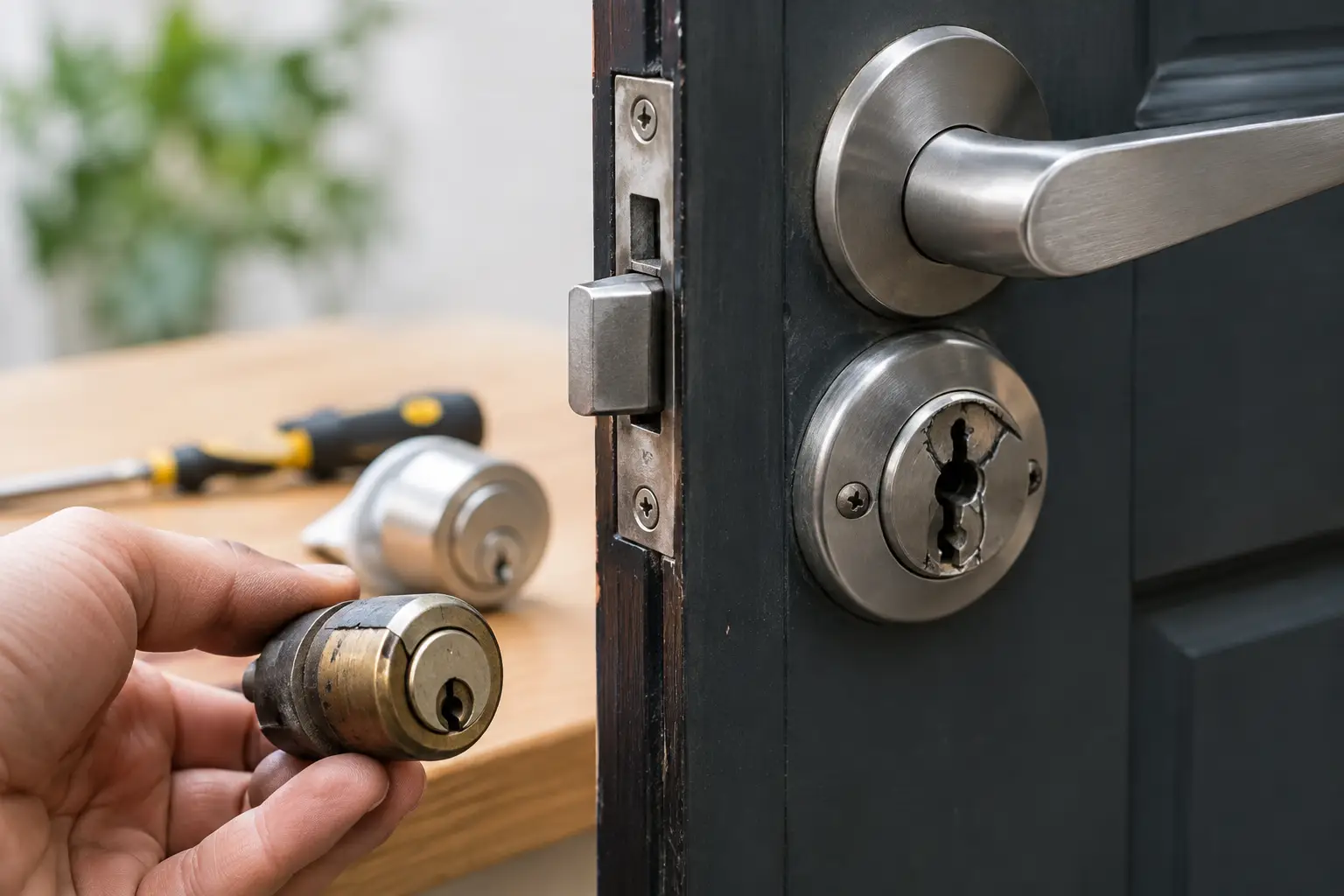
A key that suddenly sticks in the front door at 7 a.m. is more than an inconvenience. It can leave your home unsecured, delay a business opening, or strand you outside in South Florida heat and rain. Damaged lock repair addresses the problem before a worn, forced, or malfunctioning lock becomes a full lockout or a security gap.
The right solution depends on what failed, how the lock was damaged, and whether the door and surrounding hardware are still aligned. Some locks can be restored with skilled service and the correct replacement parts. Others should be replaced immediately because repair would leave the property vulnerable or create repeat problems.
What Causes a Lock to Become Damaged?
Locks wear down over time, but sudden damage is also common. A residential deadbolt may be affected by a door that has shifted from humidity, settling, or a loose hinge. The bolt then rubs against the strike plate instead of entering it cleanly. Continued force on the key or thumbturn can damage internal components.
Forced entry attempts are another frequent cause. Even if the door remains closed and the lock still turns, a kicked, pried, drilled, or twisted lock may no longer provide dependable protection. Damage can be hidden inside the cylinder or behind the exterior trim, so a lock that appears functional should not automatically be considered secure.
For commercial properties, high traffic causes a different set of issues. Storefront doors, office entry doors, panic bars, lever locks, electric strikes, and access-control hardware are used repeatedly throughout the day. A loose lever, slow latch, misaligned closer, or failing electric component can keep employees out, prevent a door from latching, or interfere with safe emergency egress.
Vehicle locks and ignitions face their own wear. A bent key, damaged keyway, broken key fragment, attempted theft, or worn ignition cylinder can stop a driver from accessing or starting the vehicle.
Signs You Need Damaged Lock Repair
A damaged lock rarely improves on its own. Small warning signs often become urgent failures at the worst possible time. Call for professional help when a key requires excessive force, turns without opening the door, spins freely, sticks in the cylinder, or comes out bent or scratched.
You should also take action if the deadbolt does not extend fully, the latch will not catch, the knob or lever feels loose, or the lock works only when the door is lifted or pushed into a certain position. These symptoms may point to a worn cylinder, broken internal mechanism, door misalignment, or damaged strike plate.
After a break-in attempt, tenant dispute, vandalism incident, or lost key situation, treat the lock as a security concern rather than a simple hardware issue. Repairing the visible damage may not be enough if the key control has been compromised or the locking system can be easily bypassed.
Do Not Force the Key
Forcing a key is one of the fastest ways to turn a manageable repair into a broken-key extraction or full lock replacement. Stop if the key will not turn normally. Avoid using pliers, excessive lubricant, screwdrivers, or improvised tools in the keyway. These methods can break pins, push debris farther inside, damage the key, or affect the door hardware around the lock.
If you are locked out, a professional locksmith can assess the condition of the lock and use the least destructive method appropriate for the situation. That approach protects your door, hardware, and budget whenever repair is still practical.
When Can a Damaged Lock Be Repaired?
Repair is often a good option when the lock body remains sound and the issue is limited to a serviceable component. A locksmith may be able to correct door alignment, reposition a strike plate, tighten loose hardware, replace worn internal parts, repair a latch mechanism, extract a broken key, or rekey a lock after a key has been lost or not returned.
Rekeying deserves special attention. If the lock is mechanically sound but you need to prevent an old key from working, rekeying changes the internal pin configuration and provides new keys. For landlords, property managers, and homeowners after a move, this can be a cost-effective way to restore key control without replacing every lock.
Commercial repair may include adjusting a door closer, servicing an exit device, correcting an electric strike alignment issue, replacing a failing lever set component, or restoring a magnetic lock installation. The goal is not only to get the door operating again. It is to make sure the door latches properly, authorized users can enter, and occupants can exit safely when needed.
Repair makes the most sense when it restores both reliable operation and the intended level of security. If either is uncertain, replacement is usually the better choice.
When Lock Replacement Is the Safer Choice
A lock should generally be replaced when its internal parts are badly worn, the cylinder has been compromised, the lock housing is cracked, or the hardware has sustained force damage. Replacement is also appropriate when the existing lock is low quality, obsolete, repeatedly failing, or no longer suited to the risk level of the property.
For example, a basic residential knob lock may be adequate for an interior room but should not be the only protection on an exterior entry door. A properly installed deadbolt or high-security lock can provide a stronger layer of protection. The best option depends on the door material, frame condition, occupant needs, and whether the property requires controlled access for several people.
Business owners may need replacement rather than repair when a mechanical lock no longer supports employee turnover, master key planning, restricted keyways, or access-control upgrades. A failing storefront lock might also be the right time to evaluate the full opening, including the door closer, panic hardware, electric strike, buzzer system, and camera coverage.
Replacement has an upfront cost, but repeatedly repairing a failing lock can cost more in service calls, downtime, tenant frustration, and avoidable security exposure. A qualified locksmith should explain the condition of the existing hardware and give a clear recommendation instead of pushing replacement where a durable repair will do.
Protecting the Door Matters Too
The lock is only one part of the security system. A strong deadbolt cannot perform as intended if the strike plate is loose, short screws are pulling out of the frame, or the door is warped. Likewise, a quality commercial lock cannot solve an issue caused by a sagging door or a failing closer.
During service, the complete opening should be checked: the lock, cylinder, latch or bolt, strike plate, hinges, frame, door alignment, and related hardware. This is especially valuable after forced entry damage. Replacing only the cylinder while ignoring a split strike area or weakened frame can leave the same vulnerability in place.
For rental properties, documenting the condition of damaged hardware also helps property managers distinguish normal wear from vandalism or misuse. Prompt repair reduces the chance that tenants will be unable to secure their unit or that a minor issue will damage the door further.
What to Expect From a Professional Locksmith
A dependable locksmith begins by identifying the cause of the failure, not simply changing hardware. You should receive a straightforward explanation of whether the lock can be repaired, whether rekeying is appropriate, and what replacement options fit your door and security needs.
For urgent situations, timing matters. Access Locksmith & Security provides licensed and insured service throughout Broward and Palm Beach Counties, including emergency assistance for lockouts, damaged locks, broken keys, and security concerns. Whether the issue is at a residence, commercial facility, or vehicle, the priority is to restore safe access without overlooking the reason the failure happened.
If replacement is recommended, ask about the grade and function of the new hardware, key control options, compatibility with existing doors, and any additional door repairs needed. Commercial customers should also confirm that the repair supports safe egress and the daily access needs of staff, tenants, or visitors.
A Damaged Lock Should Never Be Put Off
A lock that is difficult today may fail completely tomorrow. More concerning, a lock that appears to work may no longer protect the people, property, and equipment behind the door. Address the issue early, keep pressure off a sticking key, and choose a qualified local professional who can repair the problem or recommend replacement with your security in mind.

