
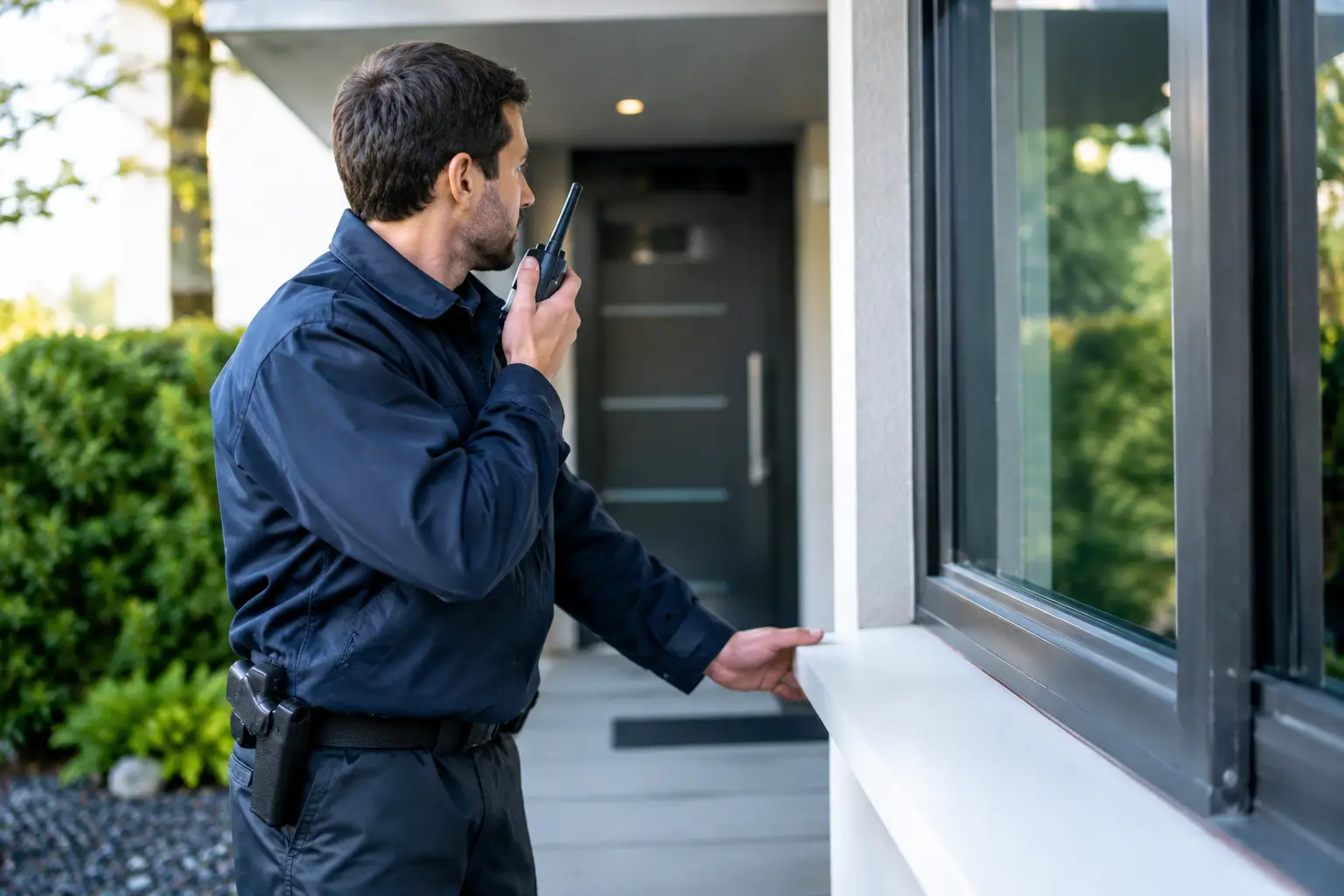
A broken lock, shattered glass, or an open door that should be closed changes the priorities immediately. A proper burglary response starts with protecting people, not repairing hardware. Whether it is your home, rental property, storefront, or office in Broward or Palm Beach County, the first decisions you make can help preserve evidence, limit further damage, and restore control of the property.
Burglary Response Starts With Safety
If you arrive and believe someone may still be inside, do not enter. Move to a safe location, keep others away from the entrance, and call 911. An unfamiliar vehicle, a damaged rear door, lights on at an unusual time, or sounds from inside can all be reasons to wait for law enforcement rather than investigate yourself.
If the property is clearly vacant and you have already entered, avoid touching anything that may have been disturbed. Do not pick up broken items, close a forced-open window, or try to clean up before police have documented the scene. Those actions may remove fingerprints, footwear impressions, or other details that could support an investigation.
There are exceptions. If rain is coming through a broken opening, a child or pet is exposed to danger, or the door cannot be secured after officers release the scene, take only the reasonable steps needed to prevent immediate harm or additional loss. Photos and short videos taken from a safe distance can document the condition before temporary repairs begin.
Call Police and Document What You Find
Police documentation is often needed for an insurance claim, and it creates a clear record of the incident. Give officers a straightforward account of what you observed: when you last secured the property, how you found it, what entry point appears damaged, and whether you noticed missing items. Avoid guessing about what happened or confronting neighbors or passersby based on suspicion.
After law enforcement has completed its initial work, document the damage and any missing property. Take wide photos of the door, windows, frames, locks, and surrounding area, then take closer photos of damaged hardware and contents. Write down serial numbers, receipts, model numbers, and estimated values where available.
For a business, also record the operational impact. That may include disrupted business hours, damaged point-of-sale equipment, compromised employee keys, missing inventory, or interrupted access to restricted areas. Clear records help with insurance and make the security repair plan more accurate.
Preserve Video and Access Records
Do not assume a security camera automatically saved the footage you need. Many systems overwrite recordings after a set number of days, and some only record motion events. Save footage from several hours before and after the incident, including views of parking areas, side entrances, loading zones, and neighboring cameras on the same system.
For commercial properties, preserve access-control activity as well. Door credential logs, key fob records, alarm events, and intercom records can help establish when a door was opened or whether a credential should be deactivated. Do not reset the system until the relevant records have been saved.
Secure the Entry Point Before the Next Risk
A burglary can expose more than the damaged door or window. If a key was stolen, a lock was bypassed, or a key code may have been seen, the property may remain vulnerable even after the visible damage is covered. The goal is not simply to make the opening look repaired. The goal is to ensure former keys, compromised credentials, and weak hardware no longer provide access.
A locksmith can assess whether the best immediate option is rekeying, lock replacement, door repair coordination, or a temporary securing solution. Rekeying changes the internal pin configuration so old keys stop working. It can be a practical choice when the existing lock is in good condition and the key itself may be compromised.
Replacement is often the safer choice when a lock has been drilled, pried, bent, or forced from its mounting. A door frame can matter just as much as the lock. A high-quality deadbolt will not perform as intended if the strike plate is loose, short screws are used, or the frame has split around the latch.
For a storefront or commercial suite, damage may involve aluminum glass doors, panic hardware, closers, electric strikes, magnetic locks, or access-control wiring. These systems should be evaluated as a whole. A temporary fix that prevents the door from closing correctly can create security issues, employee-access problems, or emergency-egress concerns.
Reconsider Who Has Access
After a break-in, property owners often focus on the damaged opening and overlook the wider key-control issue. Think through every way someone can enter: front and rear doors, garage doors, side gates, mailboxes, storage rooms, shared building entrances, and key boxes.
At a residence, this may mean rekeying exterior doors, changing garage remote programming, deleting old codes from keypad locks, and checking whether a spare key was removed. Renters should notify the landlord or property manager promptly, but they should also ask how access will be restored securely and who will receive replacement keys.
At a business, remove access for former employees, lost key fobs, vendors, and contractors who no longer need entry. If several doors use the same mechanical key, a master rekey system may reduce the risk of uncontrolled copies while keeping appropriate access for managers and staff. For some facilities, electronic credentials provide faster changes when an employee leaves or a credential is lost.
Improve the Weak Point Without Overspending
A break-in is frustrating, but it can reveal exactly where a property needs attention. That does not mean every property needs the same equipment. The right burglary response depends on the building, the entry method, daily traffic, existing hardware, and budget.
A single-family home may benefit most from reinforced strike plates, properly installed deadbolts, window locks, and better exterior lighting. A condominium unit may require coordination with the association if the door, frame, or common-entry system is involved. A rental home may need a solution that improves protection while remaining practical for landlord approval and future tenant turnover.
Commercial properties require a broader review. A rear service door that is rarely used may need a different solution than a busy customer entrance. Retailers may prioritize camera coverage and reinforced glass-door hardware, while offices may need controlled employee access and a reliable way to track credentials. Warehouses may need protected loading access, exit-device service, and surveillance coverage that captures vehicle activity.
Security upgrades should address the reason the entry point failed. If the lock was bypassed because the door did not latch, replacing only the lock may not solve the problem. If a frame was pried apart, reinforcement and correct strike installation may matter more than a more expensive cylinder. If keys were copied without authorization, a restricted keyway or electronic access system may be worth considering.
Get the Property Back to Normal Carefully
Once the immediate opening is secure, notify your insurer and provide the police report number, photos, and itemized loss information. Keep invoices for emergency boarding, locksmith work, glass repair, and related services. Ask the adjuster what documentation is needed before disposing of damaged items.
Then make a plan for the next few days. Check that all doors close and latch properly, verify that alarm notifications reach the right contacts, update emergency contact lists, and test cameras after footage has been saved. If the property will be vacant while repairs are pending, increase lighting, remove visible valuables, and make sure temporary coverings are secure.
Access Locksmith & Security provides emergency locksmith and property-security support for homeowners, businesses, landlords, and property managers throughout Broward and Palm Beach Counties. A prompt, professional assessment can help secure the immediate problem while identifying the repair or upgrade that actually fits your property.
The goal after a burglary is not to live on edge. It is to restore a secure entrance, regain control of access, and know that the next time you lock the door, it is doing the job it is supposed to do.

