
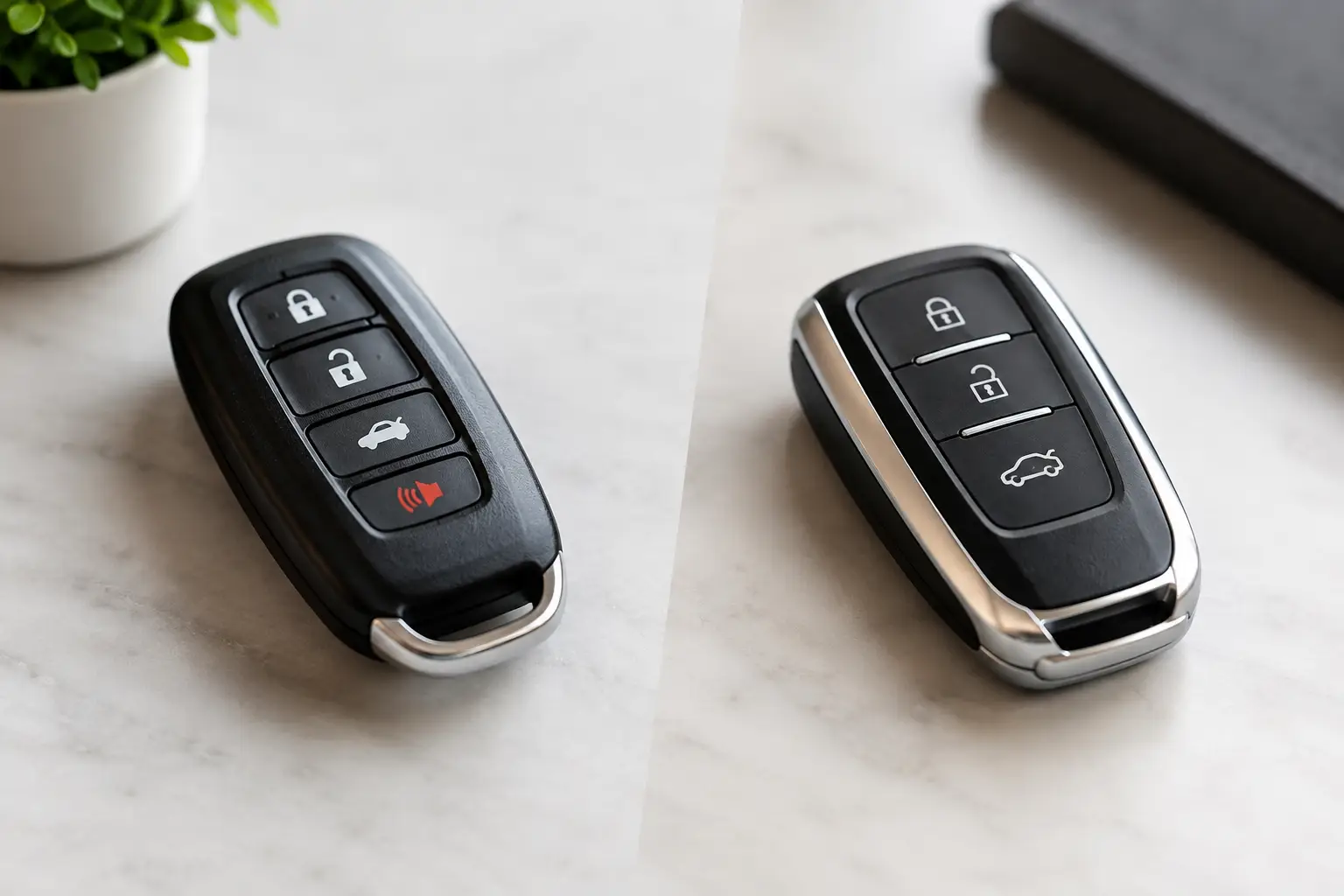
A dead remote battery in a Boca Raton parking lot can feel like a major vehicle failure, especially when the doors will not respond or the car will not start. The difference between key fobs versus smart keys matters in that moment because the right replacement, battery service, or programming method depends on the system your vehicle actually uses.
Both devices are designed to make vehicle access easier, but they do not work the same way. Knowing which one you carry can help you avoid buying the wrong replacement, understand your backup options, and get the right help quickly after a lost, damaged, or malfunctioning key.
Key Fobs Versus Smart Keys: The Practical Difference
A key fob is a broad term for a small electronic remote that communicates with a vehicle. It may lock and unlock the doors, open a trunk, activate a panic alarm, or start the vehicle remotely. Some key fobs are attached to a traditional metal key. Others contain a hidden emergency key inside the remote housing.
A smart key, often called a proximity key or push-button-start key, is more specific. It lets the vehicle recognize the key when it is nearby. With the smart key in your pocket, purse, or console, you can usually unlock the door by touching the handle and start the engine by pressing a button. The vehicle verifies that the correct programmed key is present before allowing the engine to start.
The terms are sometimes used interchangeably, which creates confusion. A smart key is usually a type of key fob, but not every key fob is a smart key. A basic remote fob may require you to press buttons and insert a mechanical key into the ignition. A smart key generally supports hands-free entry and push-button starting.
How a Standard Key Fob Works
A standard remote fob sends a radio signal when you press a button. The vehicle receives that signal and confirms that it matches an authorized remote. If it does, the car performs the requested function, such as locking the doors or opening the trunk.
Many vehicles with a traditional ignition also use a transponder chip in the key. This chip is separate from the remote buttons. When you insert the key and turn it, the vehicle’s immobilizer reads the chip and allows the engine to start only if the chip is recognized. That means a replacement may need two services: cutting the metal key and programming the transponder or remote.
This setup is familiar, practical, and often less expensive to replace than a proximity system. It also gives drivers a straightforward mechanical backup. If the remote battery dies, you may still be able to unlock the door manually and start the car with the physical key, depending on the vehicle.
The trade-off is convenience. You generally need to take out the fob, press a button, and use the key in the ignition. The remote can also stop working because of a weak battery, internal damage, worn buttons, or lost programming.
How Smart Keys Work
Smart keys use short-range communication between the vehicle and the programmed key. When you approach the car, sensors look for the key’s electronic signal. If the correct smart key is close enough, the vehicle lets you unlock the doors without pressing a remote button. Once inside, the car confirms that the key is present before enabling push-button start.
Most smart keys still contain an emergency mechanical key blade. It is easy to overlook, but it can be crucial when the fob battery dies. Many vehicles also include a designated backup starting location, such as a marked area on the steering column, center console, or start button. Holding the smart key there may allow the car to read it even with a weak fob battery. The exact procedure varies by make and model.
Smart keys provide real everyday convenience, particularly for drivers carrying groceries, work equipment, or children. They can also support features such as memory settings, remote start, or automatic locking. However, replacement is typically more involved. The key must be compatible with the vehicle, electronically programmed, and sometimes synchronized with advanced security systems.
Security: More Than a Lock Button
Neither a key fob nor a smart key should be treated as a guarantee against vehicle theft. Modern vehicle keys use electronic security measures, including rolling codes and immobilizer technology, but criminals may target vehicles through other methods. A thief may break a window, exploit a vehicle vulnerability, or use equipment designed to extend the signal from an unattended proximity key.
Relay theft is a concern primarily with some smart-key vehicles. In a relay attack, one device captures the key’s signal from inside a nearby home while another device relays it toward the vehicle. The car may mistakenly believe the key is close by. The risk depends on the vehicle’s design and the circumstances, but it is worth taking reasonable precautions.
For smart-key owners, storing keys away from exterior doors and windows can reduce unnecessary exposure. A signal-blocking pouch or container may also be useful when the vehicle is parked at home. Check that it actually blocks the signal before relying on it. Some vehicles allow you to disable passive entry or use sleep mode for the fob, so review the owner’s manual for options specific to your model.
For every vehicle, do not leave spare keys in the car, keep replacement keys controlled, and address lost keys promptly. If a key was stolen rather than simply misplaced, ask about removing that key from the vehicle’s memory. A new key alone does not always prevent an old programmed key from working.
Cost and Replacement Considerations
A basic remote fob with a mechanical key is often simpler to replace, but the final price still depends on the vehicle year, make, model, key type, and programming requirements. Some keys can be duplicated with relatively routine equipment. Others require specialized diagnostic tools, security credentials, or access to vehicle-specific procedures.
Smart-key replacement commonly costs more because the key itself has more technology and programming can be more complex. A damaged proximity fob may also need a new shell, battery, circuit board, or complete replacement. Buying an inexpensive key online does not automatically solve the problem. It may be incompatible, poorly made, previously programmed to another vehicle, or missing the correct emergency key blade.
For South Florida drivers, heat, humidity, sand, and water exposure can shorten the life of key fobs. If a fob has been dropped in water, run over, or left in extreme heat, do not assume a fresh battery will fix it. The circuit board or battery contacts may be damaged. A professional can identify whether battery replacement, repair, reprogramming, or a new key is the sensible next step.
When to Call a Professional
Call for automotive key service when your key is lost, stolen, physically broken, intermittently working, or no longer recognized by the vehicle. Professional help is also appropriate when you have a replacement fob but cannot program it, when the emergency key will not turn in the door, or when the vehicle displays a key-related warning message.
For a faster and more accurate service call, have your vehicle’s year, make, model, and location ready. If possible, share whether the car has a traditional ignition or push-button start, whether any working key remains, and whether the issue began after a battery change, water exposure, or a lost key. This information helps determine whether you need key cutting, remote programming, smart-key programming, ignition repair, or lockout service.
Access Locksmith & Security provides automotive key and remote services for drivers throughout Broward and Palm Beach Counties, with clear communication when an urgent key problem disrupts your day. If your vehicle will not recognize its key or you have lost your only working fob, getting the correct diagnosis first can prevent wasted time, unnecessary parts, and another stressful lockout.

