
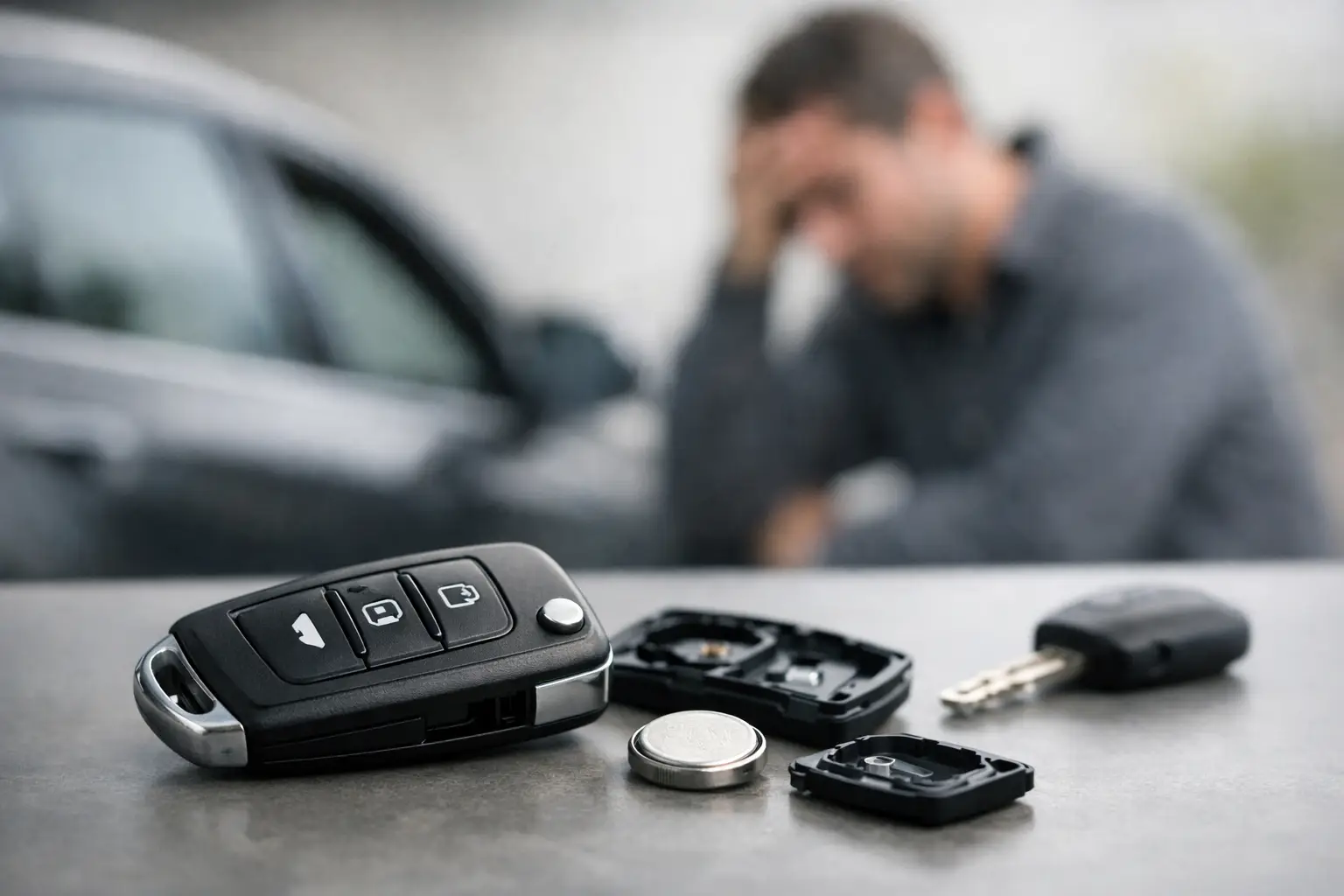
A key fob that works perfectly in the morning can become a key fob failure by the end of the day, leaving you outside your vehicle, unable to start it, or stuck with an alarm that will not respond. In South Florida, heat, humidity, accidental water exposure, and everyday wear can all shorten the life of a remote. The good news is that many fob problems have a clear cause, and a qualified automotive locksmith can often identify it without unnecessary guesswork.
Start by Identifying What the Fob Will Not Do
Not every remote-control key problem is the same. Your vehicle may fail to unlock when you press the button but still start once you are inside. A push-button-start vehicle may unlock normally yet display a “key not detected” message. Or, the fob may be completely unresponsive, with no lights, sounds, or vehicle reaction.
That difference matters. A door-lock issue can point to the fob battery, interference, or a vehicle-side lock problem. A no-start condition may involve the transponder chip, fob programming, the vehicle battery, ignition system, or the car’s immobilizer. Before replacing anything, pay attention to exactly what changed and when it began.
If you have a second programmed key or fob, try it. When the spare works, the vehicle is usually receiving a signal normally and the problem is likely limited to the original fob. When neither fob works, the issue may be with the vehicle rather than the remotes.
Common Causes of Key Fob Failure
A weak or dead battery
A drained coin-cell battery is the most common reason for a fob to stop working. Warning signs often include reduced operating range, needing to press a button more than once, or intermittent response. Some fobs have a small LED that becomes dim or does not light at all.
Battery replacement is simple on many models, but it should still be done carefully. Use the correct battery type, install it in the proper direction, and avoid touching electronic contacts unnecessarily. A loose battery, bent contact, or incorrectly seated cover can create the same symptoms as a dead battery.
Physical damage inside the fob
Keys spend a hard life in pockets, purses, cup holders, and on crowded key rings. A fob dropped on pavement may look fine outside while its circuit board, solder points, battery terminals, or button contacts have been damaged inside. Cracked cases can also allow moisture and dirt to reach the electronics.
Water exposure is especially common near pools, beaches, and during heavy Florida rain. Do not keep repeatedly pressing the buttons after a fob gets wet. Remove it from service, dry the exterior, and have it inspected. Corrosion can continue to spread even after the fob appears to work again.
Worn buttons or a damaged key shell
Sometimes the electronics are still functional, but the rubber button pad has worn through or the small button switch beneath it no longer makes reliable contact. In other cases, the plastic shell separates and the circuit board shifts out of position. Replacing the shell or repairing the button assembly may be more practical than replacing and programming an entire fob.
This is one reason a visual inspection helps. If a button feels soft, stuck, loose, or different from the others, the fob may need physical repair rather than reprogramming.
Lost programming or transponder trouble
Modern car keys do more than operate door locks. Many contain a transponder chip that communicates with the vehicle’s anti-theft system. On push-button-start vehicles, the fob’s proximity functions must also communicate correctly with the car.
A fob can have fresh batteries and working buttons but still fail to start the vehicle if the transponder is damaged, the fob is no longer programmed, or its internal electronics have failed. Programming is vehicle-specific. Do-it-yourself instructions found online may work for some older models, but many late-model vehicles require professional diagnostic equipment and security credentials.
Signal interference or distance issues
If your fob works in one location but not another, radio-frequency interference may be involved. Parking garages, large electronic systems, nearby radio equipment, and even another device on a crowded key ring can occasionally interfere with the signal.
Move closer to the vehicle and try again from a different side. If the fob works only from a few feet away after a new battery is installed, that may indicate weakening fob electronics or a vehicle receiver issue. It is not a problem to ignore, particularly if you rely on the fob for daily access.
A vehicle-side electrical problem
When every programmed remote stops working at once, the fobs may not be the cause. A weak vehicle battery, blown fuse, faulty body control module, door-lock actuator issue, antenna problem, or receiver failure can prevent the car from responding.
This is where replacing fobs without testing can become expensive. A professional can evaluate whether the remote is transmitting and determine whether the vehicle is receiving and recognizing the signal. Accurate diagnosis protects you from paying for a replacement key that does not solve the problem.
What to Do When Your Key Fob Stops Working
First, stay calm and avoid forcing the vehicle door or ignition. Most fobs include a concealed mechanical emergency key. Look for a release tab on the fob case, then remove the key blade. Many vehicles also have a covered manual door-lock cylinder near the driver’s handle.
Use the mechanical key to enter the vehicle if necessary. On some push-button-start models, the vehicle can still start when the fob is held against or placed near a designated backup reader location. That location varies by make and model, so check the owner’s manual or contact a professional rather than guessing. Do not attempt to bypass the immobilizer or take apart the ignition.
Next, try the spare fob if one is available. If it works, replace the battery in the failed fob and inspect the case for damage. If the spare does not work either, or if you are locked out away from home, the fastest path is usually mobile locksmith service.
Avoid these common mistakes: prying open the case with a sharp tool that damages the board, installing the wrong battery, purchasing an unverified aftermarket remote before confirming compatibility, or assuming a dealership is the only option. Some aftermarket fobs are reliable when matched and programmed correctly, while others create ongoing range, fitment, or programming problems. The right choice depends on the vehicle, the fob style, and whether you need basic remote functions or full smart-key capability.
When Professional Key Fob Service Is the Right Call
Professional help makes sense when the fob is lost, broken, water-damaged, or no longer recognized by the vehicle. It is also the safer option when a replacement needs cutting, programming, or transponder setup. Many drivers need service after purchasing a used vehicle with only one key, which creates a stressful situation if that only fob fails.
A qualified automotive locksmith can often provide mobile key fob replacement, remote programming, transponder key service, and ignition-related diagnosis at your location. For vehicle owners in Broward and Palm Beach Counties, Access Locksmith & Security can assess the fob and the vehicle system, explain the available options, and help restore dependable access without leaving you uncertain about the next step.
For commercial drivers, property managers, and families sharing a vehicle, consider making a working spare before an emergency happens. A spare does not eliminate every key fob failure, but it can prevent a small battery or remote issue from becoming a missed appointment, a delayed delivery, or an after-hours lockout.
Protect Your Replacement Fob
Once your fob is working again, a few habits can extend its service life. Keep it away from standing water, avoid leaving it in direct sun on the dashboard, and use a protective case if it is frequently dropped. Replace the battery when range begins to decline instead of waiting for total failure.
If your fob is attached to a large, heavy key ring, reducing the weight can also help protect the key blade, ignition components, and fob housing. Most importantly, keep the spare in a secure, accessible place rather than inside the vehicle.
A failed fob is frustrating, but it does not have to turn into a security problem or a long delay. Knowing whether you are dealing with a battery, damaged remote, programming issue, or vehicle-side fault helps you make a faster decision and get back on the road with confidence.

