
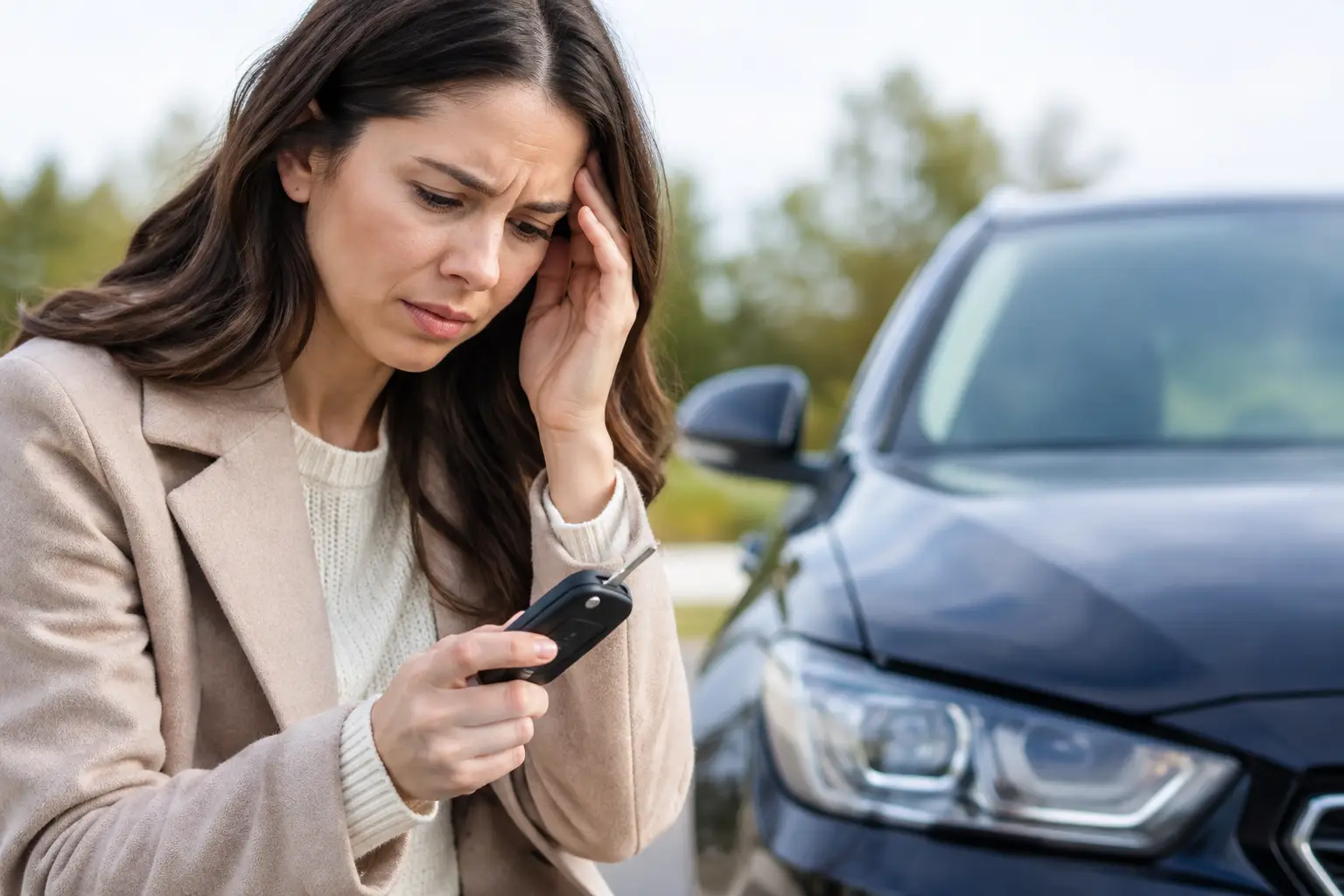
A car key failure rarely happens at a convenient time. It shows up when you are leaving work in Fort Lauderdale, picking up a child in Boca Raton, or parked outside your home in Deerfield Beach with no way to start the vehicle. Whether the problem is a broken key, a dead remote battery, a damaged transponder, or a failing ignition, the right next step can protect your vehicle and get you moving again without unnecessary damage or delays.
What Car Key Failure Can Look Like
Not every key problem looks the same. A traditional metal key may turn loosely, stick in the ignition, or snap while you are trying to unlock the door. A remote or smart key may stop locking the vehicle, fail to unlock it, or display a “key not detected” message even when it is inside the cabin.
Modern vehicles use several layers of security. The metal blade opens a mechanical lock, while a transponder chip, remote fob, or proximity sensor communicates with the vehicle’s immobilizer system. If any part of that system is damaged, worn out, unprogrammed, or out of power, the vehicle may not start.
This is why a key that appears fine from the outside can still cause a no-start situation. It is also why replacing a key is not always as simple as cutting a new metal blade.
Common Reasons Car Keys Stop Working
Wear is one of the most common causes. Keys are used repeatedly, carried with heavy key rings, dropped, exposed to moisture, and left in hot vehicles. Over time, a metal blade can wear down enough that it no longer matches the lock pins or ignition components correctly.
Remote fobs have their own failure points. A weak battery is often the simplest explanation, especially when the remote works only at close range or requires repeated button presses. However, a new battery will not solve problems caused by broken internal contacts, water damage, cracked circuit boards, or a remote that has lost programming.
A damaged transponder chip can be more frustrating because the key may still unlock the doors but will not start the engine. The vehicle recognizes the mechanical key, but the immobilizer does not receive the correct electronic signal. In some cases, the dashboard security light may stay illuminated or flash when you attempt to start the car.
The problem may also be inside the vehicle rather than in the key. A worn ignition cylinder, damaged ignition switch, low vehicle battery, or faulty keyless-entry receiver can create symptoms that resemble a failed key. Proper diagnosis matters because forcing a key or replacing parts based on a guess can make the repair more expensive.
Heat, Water, and Physical Damage Matter
South Florida drivers deal with conditions that can be hard on electronic keys. Heat can shorten battery life and weaken adhesives inside older fobs. Humidity and rain can corrode contacts after a key is dropped in water or left exposed. A key fob that goes through a washing machine may work briefly, then fail days later as moisture reaches the circuit board.
A cracked fob case should not be ignored just because the buttons still work. The case protects the chip and electronics inside. Replacing the shell early may prevent a complete key failure later.
What to Do When Your Key Will Not Start the Car
First, stay calm and avoid forcing anything. If a metal key will not turn, do not twist it aggressively or use pliers. A broken key inside the ignition can turn a straightforward service call into key extraction and ignition repair.
If you have a remote fob or smart key, try the spare key if one is available. This can quickly narrow down whether the issue is with the key itself or the vehicle. For a conventional remote, replacing the fob battery may be reasonable if you have the correct battery type and can open the case without damaging it.
For many push-button-start vehicles, there is an emergency backup method for a weak fob battery. The exact process varies by manufacturer, but it may involve holding the fob against the start button or placing it in a designated backup location. Check the owner’s manual if it is available. Do not assume the procedure is the same across makes and models.
If the key is stuck in the ignition, make sure the vehicle is fully in Park and the steering wheel is not under pressure. Gently moving the steering wheel while lightly turning the key can sometimes release a steering lock. If it does not release easily, stop. Continued force can damage the ignition cylinder or snap the key.
When You Need Automotive Locksmith Service
Professional help is the safer choice when the key is broken, missing, stuck, electronically unresponsive, or no longer recognized by the car. An automotive locksmith can determine whether the issue involves the key blade, transponder chip, remote fob, ignition, or door lock before recommending a repair.
Depending on the vehicle and condition of the existing key, service may include cutting a replacement key, programming a transponder key, replacing or programming a remote fob, extracting a broken key, or repairing an ignition problem. The best solution depends on the year, make, model, key type, and whether any working keys remain.
Having one working key often makes replacement easier. When all keys are lost, the locksmith may need to create and program a new key directly for the vehicle. This requires the right equipment and vehicle-specific knowledge, particularly for late-model smart keys and proximity systems.
At Access Locksmith & Security, automotive locksmith service is designed to give drivers in Broward and Palm Beach Counties a clear answer quickly. With more than 19 years of experience, licensed and insured technicians can address emergency lockouts, replacement car keys, remote programming, key extraction, and ignition-related access problems with transparent communication throughout the process.
Avoid These Expensive Mistakes
A car key issue can tempt drivers to take shortcuts. The wrong shortcut may leave the vehicle less secure or cause damage that costs far more than a proper repair.
Do not glue a broken key back together and insert it into the ignition. Even if it holds long enough to turn once, glue can transfer into the lock or keyway. Do not use a screwdriver, coat hanger, or other improvised tool to open a locked vehicle. Modern door mechanisms, weather stripping, wiring, and side-curtain airbag systems can be damaged easily.
Be cautious with online replacement keys as well. Some aftermarket fobs are compatible, but quality varies, and the key still may need professional cutting and programming. Ordering the lowest-cost option can be a false savings if it fails early, does not match the vehicle correctly, or cannot be programmed.
Also, do not leave a damaged key as your only key. A fob that works intermittently or a blade that sticks is providing a warning. Addressing it before it fails completely gives you more options and usually less stress.
How to Reduce the Risk of Future Key Problems
The most practical protection is a tested spare key. Keep it somewhere secure and separate from the primary key, not hidden inside the vehicle. For households with multiple drivers, make sure each regular driver knows where the spare is stored and how to use it.
Replace remote batteries when range begins to decline rather than waiting for complete failure. Protect fobs with a properly fitted case, keep them dry, and avoid hanging unusually heavy key chains from an ignition key. If your vehicle uses a smart key, avoid storing it near sources of strong electronic interference when possible.
If you notice the ignition becoming difficult to turn, the doors requiring repeated attempts to unlock, or the remote working only inconsistently, arrange service before you are stranded. A small warning sign is often the best time to prevent a larger access problem.
Your vehicle key is more than a piece of metal or a remote control. It is the credential that gives you safe access to your transportation. When it starts showing signs of failure, prompt, qualified service can protect your time, your vehicle, and your peace of mind.

