
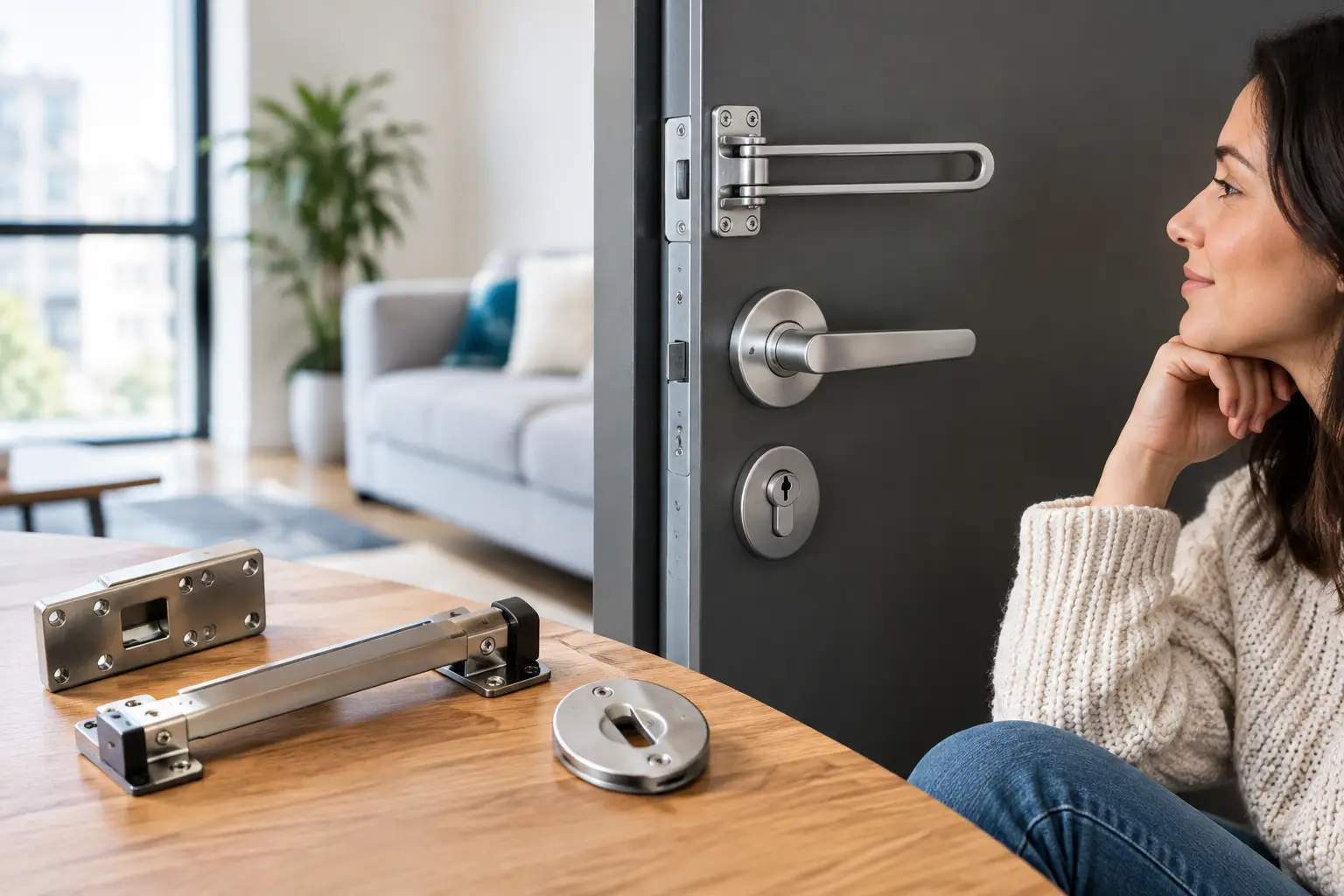
A locked apartment door should not depend on a thin strike plate held in place by short screws. The best apartment door reinforcements strengthen the points that take force during an attempted break-in: the lock opening, door frame, hinges, and the door itself. For renters, the right choice also has to respect the lease, avoid unnecessary damage, and allow a quick exit in an emergency.
Most apartment security upgrades are not about making a door look intimidating. They are about correcting weak hardware and creating more time, noise, and resistance if someone tries to force entry. A qualified locksmith can assess the door, frame, existing lock, and property rules before recommending a practical upgrade.
Start With the Door Frame and Strike Plate
The strike plate is the small metal plate on the frame where the latch or deadbolt enters. On many apartment doors, it is light-duty hardware installed with screws that only reach the trim or a shallow section of the frame. When a door is kicked or forced, this area can split before the lock itself fails.
A heavy-duty reinforced strike plate is often one of the most effective improvements a renter can make. It is longer and stronger than a standard plate, spreading force across more of the frame. When installed correctly with long screws that reach the wall stud behind the frame, it gives the deadbolt and latch a much stronger anchor point.
This upgrade is especially worthwhile if the door feels loose when locked, the deadbolt does not line up cleanly with the opening, or the wood around the strike plate is cracked. A plate alone cannot repair a damaged frame, though. If the frame is split, soft from moisture, or pulling away from the wall, it needs professional attention before new hardware is installed.
Use Longer Screws Only When They Fit Correctly
Replacing short strike-plate screws with longer security screws can improve resistance, but installation matters. Screws that are too long, poorly placed, or forced into a metal frame can cause damage and create alignment problems. Apartments with steel frames, concrete construction, or fire-rated doors may require specific hardware and methods.
Before altering the frame, ask the landlord or property manager for approval. In many buildings, the entry door and frame are part of the property’s controlled fire and life-safety system. A locksmith can help identify an appropriate reinforcement that does not compromise the door’s operation.
Reinforce the Lock Area of the Door
A solid deadbolt is only as strong as the material surrounding it. Some apartment doors have a thin wood skin, a hollow core, or a worn opening around the lock cylinder. In those situations, a door reinforcement plate, sometimes called a wraparound plate or door armor plate, can add useful protection.
This hardware fits around the deadbolt and latch area, strengthening the section of the door most likely to split under force. It is particularly useful when there are cracks around the lock, visible dents, or old holes from previous lock changes. It can also improve the fit of the lock when a door has been repaired more than once.
Not every apartment door needs a wraparound plate. A well-maintained solid-core or metal door with a properly installed deadbolt may benefit more from frame reinforcement than from adding more hardware to the door. The goal is to address the actual weak point, not add equipment that creates a poor fit or conflicts with building hardware.
Choose a Quality Deadbolt When the Lease Allows It
If your apartment only has a spring-latch lock in the knob or lever, ask management whether a deadbolt can be installed. A deadbolt provides better resistance because it does not retract from pressure on the latch. For most residential doors, a single-cylinder deadbolt is the common choice: it uses a key outside and a thumbturn inside.
A double-cylinder deadbolt requires a key from both sides. While it may seem more secure near glass, it can delay escape during a fire or emergency. It may also be restricted by building codes, fire rules, or lease requirements. For that reason, it is rarely the best default for an apartment entry door.
For renters moving into a unit with an existing deadbolt, rekeying can be as valuable as replacing the lock. You do not know how many former tenants, contractors, cleaners, or acquaintances may still have old keys unless the property has formally changed the locks. Confirm the building’s policy first, then have an authorized locksmith rekey or replace the cylinder when appropriate.
Add a Portable Door Jammer for When You Are Home
A portable door jammer can be a useful second layer for renters who want added security without permanent drilling. These devices brace against the floor and the door, helping resist inward force while you are inside. They are popular for apartments, hotel rooms, and temporary living situations because they can usually be removed when you leave.
A jammer is not a replacement for a working deadbolt or a strong door frame. It only works when it is properly seated on a stable surface, and it may not perform well on slippery tile, thick rugs, uneven floors, or outward-swinging doors. It also needs to be removed quickly when you leave.
Never use a device that traps occupants inside or interferes with emergency egress. Everyone in the home should know how the device releases, including older children and guests. If the door is designated as a required exit, check with property management before relying on any added interior security device.
Do Not Overlook Hinges, Viewers, and Sliding Doors
For an inward-swinging apartment door, the hinges are normally inside the unit and less exposed. Still, loose hinge screws or a sagging door can weaken the entire assembly and prevent the deadbolt from fully engaging. Longer hinge screws that reach the framing may help in a wood frame, but they should be selected and installed carefully to avoid damaging the jamb.
If the door swings outward and the hinges are exposed, security hinges or non-removable hinge pins deserve attention. This is a more specialized situation and often requires landlord approval, especially in multifamily buildings with standardized doors.
A door viewer or approved video doorbell can also reduce the need to open the door to an unknown visitor. This is not reinforcement in the physical sense, but it supports safer decisions. Check building rules before installing any camera or device that records shared hallways, neighbors’ doors, or common areas.
For apartments with a patio slider or balcony door, do not put all your attention on the front entry. A properly fitted sliding-door bar can prevent the panel from opening when locked. Keep the track clean, confirm the primary lock works, and avoid improvised wood dowels that can shift, splinter, or interfere with emergency access.
How to Select the Best Apartment Door Reinforcements
Start with what your door actually needs. If the frame is weak, prioritize a reinforced strike plate and proper fasteners. If the door is damaged around the deadbolt, consider a reinforcement plate. If you need added peace of mind while home and cannot modify the door, a reliable portable jammer may be the better fit.
The strongest setup is usually a combination of a properly functioning deadbolt, a reinforced strike area, and a door that closes and aligns correctly. Hardware cannot perform as intended when the door rubs the frame, the latch barely catches, or the deadbolt has to be forced into place.
Before buying hardware, review these practical questions:
- Does your lease allow lock, frame, or door modifications?
- Is the entry door fire-rated or part of a managed access system?
- Does the door swing inward or outward?
- Is the frame wood, metal, or concrete-mounted?
- Can every occupant exit quickly during an emergency?
- Does the lock align fully when the door is closed?
These details determine whether a simple reinforcement kit is appropriate or whether the property needs a professional repair. They also prevent a well-intended upgrade from creating a security, maintenance, or fire-safety issue.
When to Call a Locksmith or Property Manager
Contact property management right away if the door frame is cracked, the lock is loose, the deadbolt will not extend fully, the strike plate is pulling out, or there are signs of attempted forced entry. Photograph the damage and avoid relying on a temporary fix for a compromised entry door.
For a renter-approved upgrade, a licensed and insured locksmith can inspect the hardware, explain compatible options, and install reinforcements without guesswork. Access Locksmith & Security serves Broward and Palm Beach County residents with responsive lock repair, rekeying, high-security lock, and door-hardware service when apartment security needs immediate attention.
Your apartment door should close smoothly, lock fully, and give you confidence each time you come home. A few well-chosen reinforcements, installed with permission and with emergency exit needs in mind, can make that confidence far more justified.

