
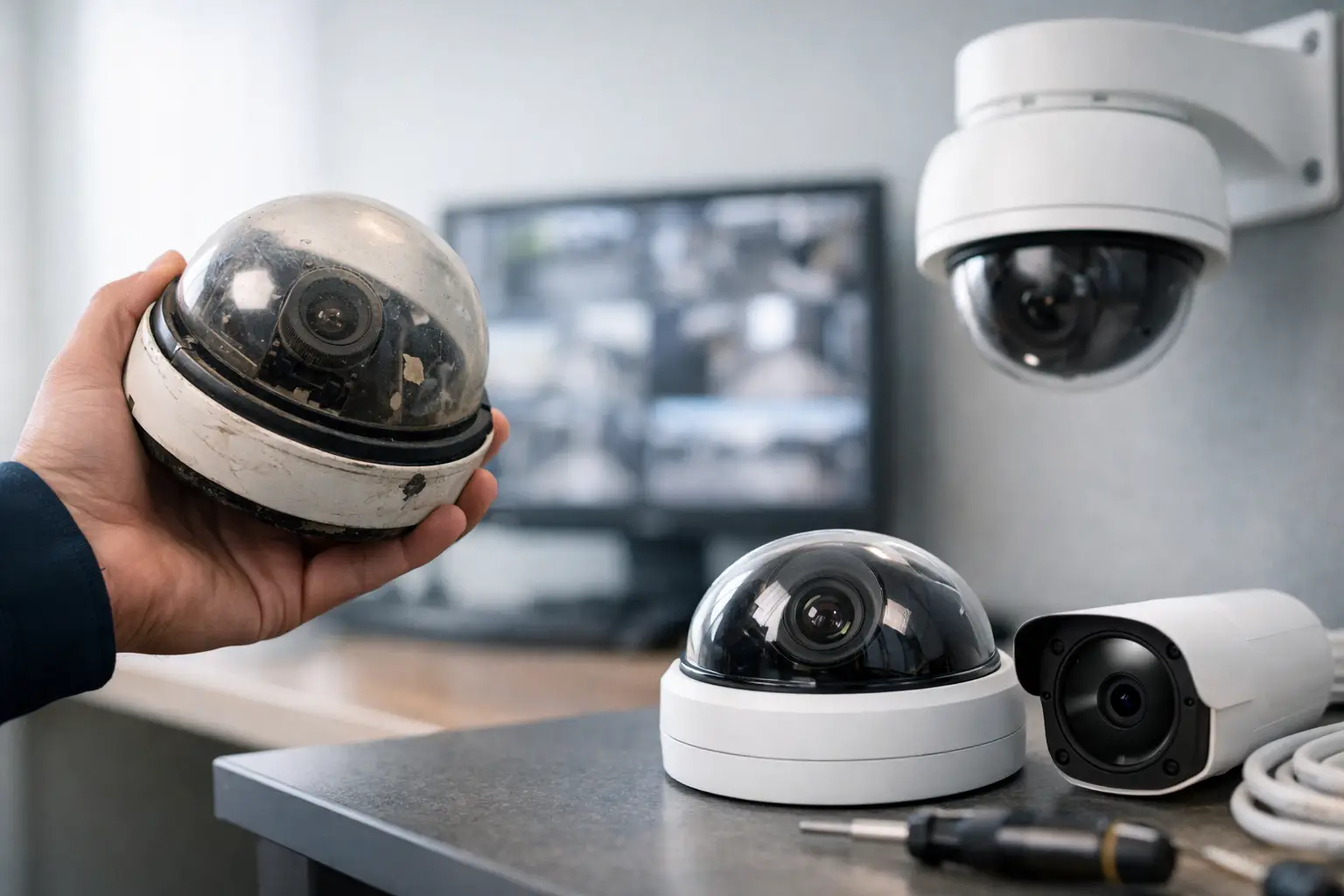
A camera system can appear to be working right up until the moment you need clear evidence. A dark parking lot, a missing delivery, an employee-access dispute, or damage after a storm quickly exposes weak coverage and unreliable recordings. When you need to replace a security camera system, the goal is not simply newer equipment. It is dependable visibility at the doors, gates, driveways, counters, and common areas that matter most.
For homeowners, landlords, and businesses in Broward and Palm Beach Counties, an upgrade is often prompted by a specific problem: blurry faces, dead cameras, no recording when an incident occurred, or an app that nobody can access. Addressing those issues early gives you more control over your property and fewer surprises when security matters.
Signs It Is Time to Replace Your Security Camera System
Age alone does not always mean your cameras need replacement. A well-installed system may continue to serve a smaller property for years. But security technology, storage needs, network requirements, and image quality change quickly. If your current equipment cannot provide usable footage when it counts, repairing one piece at a time can become more expensive than planning a replacement.
Poor image quality is one of the clearest warning signs. Cameras that produce grainy video, washed-out images, glare from headlights, or indistinct faces may record activity without giving you useful identification. This is especially common at entrances and driveways where lighting changes sharply between day and night. Modern cameras can improve resolution, low-light performance, and contrast, but correct placement still matters as much as the camera itself.
Frequent failures also deserve attention. A camera that drops offline, a recorder that stops saving video, damaged connectors, and intermittent power issues can create major gaps in coverage. In South Florida, prolonged heat, humidity, salt air near the coast, heavy rain, and storm exposure can wear down outdoor housings, wiring, and power components. Replacing a single failed camera may be reasonable. Repeated service calls across an aging system usually indicate a broader problem.
You may also be outgrowing your existing layout. A property changes over time. A new gate, renovated office, added storage area, tenant turnover, or expanded parking can create blind spots your original system was never designed to cover. Cameras should support how people actually enter, exit, work, and move around the property – not how the building looked years ago.
What a Camera Replacement Should Solve
A camera upgrade should start with the problem you need it to solve. More cameras are not automatically better. A system with the right views, reliable recording, and easy retrieval is more valuable than a larger system full of poorly positioned devices.
For a residence, priorities may include a clear view of the front door, driveway, side gate, backyard access, and package delivery area. Landlords and property managers may need coverage of building entrances, mail areas, parking lots, shared corridors, dumpsters, and maintenance access points. Business owners often need reliable views of customer entrances, cash-handling areas, delivery doors, employee-only areas, and exterior approaches.
Think about what you would need to see after an incident. Can the system capture a face at an entrance? Can it show a license plate at the correct distance and angle? Can you tell which direction a person traveled? Can authorized staff retrieve the footage without guessing where it was saved? These questions shape the camera type, placement, lighting, recorder capacity, and retention period.
A professional site review can identify coverage gaps that are easy to overlook. A camera mounted too high may show the top of a hat instead of a face. A camera aimed through glass may suffer from nighttime reflection. A wide-angle view can cover a large area but may not provide enough detail for identification at a distance. The right design balances broad awareness with focused views of critical access points.
Choose the Right Features for Your Property
When replacing older CCTV equipment, choose features based on daily operating needs rather than a long list of specifications. High-resolution cameras can provide clearer identification, but they also require sufficient network capacity and storage. Larger files can shorten recording retention if the recorder or hard drive is undersized.
Night vision is equally important. Many security events occur after business hours or when a property is less active. Cameras should be selected and positioned for the lighting conditions at each location. Exterior lighting, infrared capability, glare control, and camera angle all affect nighttime footage. A camera that looks excellent at noon may be ineffective when headlights, shadows, or porch lights enter the frame.
Remote viewing can be useful for owners, managers, and authorized staff who need to check a property while away. However, app access should be set up carefully. Use strong, unique passwords, limit permissions to the people who need them, and remove former employees or tenants from access promptly. A camera system is part of your property security, so its digital access should be treated with the same care as keys, alarm codes, and access-control credentials.
Storage planning matters as well. Ask how long footage should be kept and who may need to access it. A small home may need a different retention period than a busy commercial property with multiple cameras and regular deliveries. Local recording can offer dependable onsite access, while cloud-based options may provide an additional layer of backup. The best choice depends on your privacy needs, internet reliability, budget, and how quickly you need footage available.
Repair, Expand, or Fully Replace?
Not every issue calls for a complete replacement. If the recorder is current, cabling is in good condition, and only one or two cameras have failed, targeted repair or expansion can be a practical option. In some cases, existing wiring may support newer cameras, reducing installation work and cost.
A full replacement makes more sense when the system uses outdated recording technology, has recurring failures, lacks usable nighttime video, or cannot support the number of cameras your property now requires. It can also be the smarter choice when equipment from different generations has been pieced together over time. Mixed components may work temporarily, but they can complicate troubleshooting, remote viewing, recording quality, and future service.
For commercial properties, consider related security improvements at the same time. Cameras work best alongside properly secured doors, access-control systems, electric strikes, magnetic locks, emergency exit devices, and door closers. A clear camera view of a door is helpful, but it is even more valuable when the door hardware is functioning correctly and access events can be verified.
Avoid Common Camera Replacement Mistakes
The lowest equipment price is not always the lowest total cost. A poorly selected or poorly installed system can leave blind spots, create unreliable recordings, and require early replacement. Before approving a project, make sure the scope accounts for camera locations, mounting surfaces, cable routes, power, recorder placement, network access, storage capacity, and testing.
Avoid placing every camera at the highest possible point. Height can discourage tampering and expand the field of view, but it can also reduce facial detail. Avoid assuming one camera can cover a whole parking area with identification-level clarity. And avoid waiting until after a theft or vandalism incident to find out that footage was not recording or cannot be retrieved.
It is also wise to consider privacy and policy requirements. Cameras should protect your property without being placed in private areas where people reasonably expect privacy. Businesses should communicate surveillance practices as appropriate and define who is authorized to view or export video. Clear procedures help protect employees, tenants, customers, and the business itself.
Professional Security Camera Replacement in South Florida
Replacing cameras involves more than mounting new devices. Proper installation includes selecting useful viewing angles, protecting outdoor connections, confirming recording quality, setting up authorized access, and verifying that footage can be retrieved when needed. It should also account for the unique demands of Florida weather and the way your property operates after hours.
Access Locksmith & Security provides CCTV surveillance camera replacement and integrated physical-security services for homes and businesses throughout Broward and Palm Beach Counties. With more than 19 years of experience, licensed and insured service, and clear communication from start to finish, the focus is on a system that protects the property you manage – not equipment that only looks good on a spec sheet.
If your cameras are failing, leaving blind spots, or producing footage you would not trust after an incident, do not wait for the next problem to prove the system is no longer enough. A timely assessment can turn an uncertain security weakness into clear, dependable coverage and greater peace of mind.

