
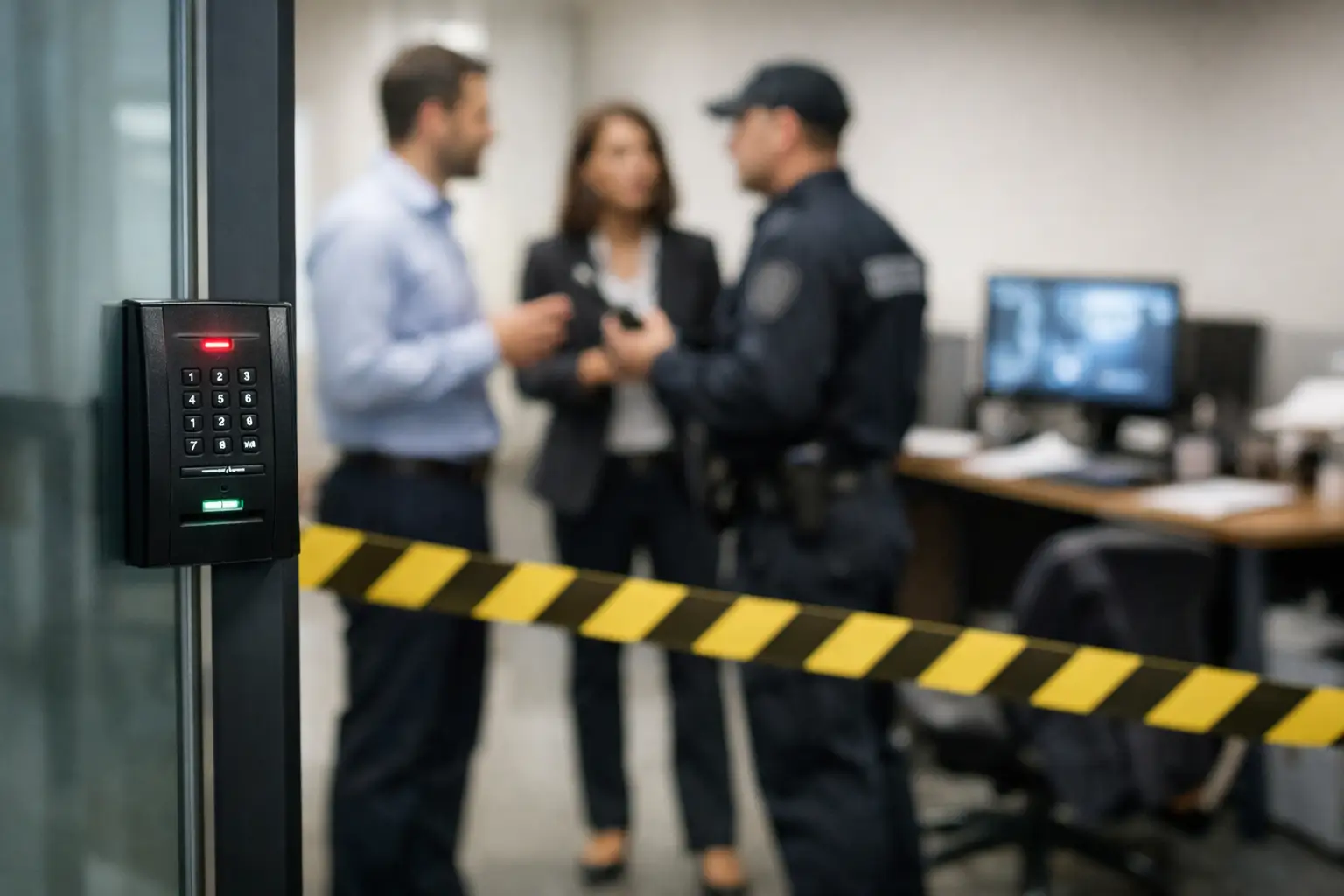
A missing master key, a former employee whose code still works, or a damaged rear door can become an office access breach before anyone notices. The immediate concern is not only what may have been taken. Your responsibility is to protect employees, customers, sensitive records, inventory, and the building itself while keeping the business operating safely.
A fast, organized response limits uncertainty. It also gives you a clearer picture of whether you are dealing with a simple door failure, an unauthorized entry, or a larger physical-security problem that needs police involvement and professional repair.
Secure the Site Before Normal Operations Resume
If there is an active threat, signs of forced entry, suspicious activity, or someone still inside the building, call 911 first. Do not confront an intruder or ask employees to inspect an unsafe area. Preserve the scene as much as possible until law enforcement has assessed it.
Once the immediate danger has passed, restrict access to the affected area. Assign one manager or responsible employee to control who enters and leaves. This prevents well-meaning staff from disturbing evidence, moving damaged hardware, or creating confusion about who had access after the incident.
Check exterior doors, rear exits, side entrances, interior offices, storage rooms, server closets, and key cabinets. Look for bent door frames, damaged deadbolts, loose hinges, broken glass, malfunctioning closers, pried electric strikes, and doors that no longer latch securely. A door that appears closed but does not fully latch is not secure.
If a lock, strike plate, magnetic lock, panic bar, or access-control reader has been damaged, arrange for temporary or permanent securing right away. Depending on the door and occupancy requirements, that may mean repairing the hardware, rekeying the lock, replacing the cylinder, or restoring an electronic access point. Emergency exits must remain code-compliant and operable from the inside, even while you are addressing a security issue.
Contain the Office Access Breach
The right containment step depends on how entry occurred. If a physical key is lost, stolen, or unaccounted for, do not assume it will be returned. Rekeying affected locks changes the key combination inside the lock cylinder so old keys no longer work. It is often a practical response when the hardware itself is in good condition.
If the missing key opened multiple doors, review the entire key system. A single lost master key can expose private offices, supply rooms, file storage, and exterior doors. In some cases, rekeying only one lock leaves the rest of the property vulnerable. A locksmith can help identify which cylinders share key access and recommend whether selective rekeying or a revised master-key system makes more sense.
For electronic access systems, disable the affected credential immediately. That may be a key fob, access card, mobile credential, keypad code, or remote control. Remove former employees, contractors, and vendors who no longer need entry. Change shared codes, especially if they were used by several people or posted near a door for convenience.
Do not overlook mechanical overrides. Many keyless locks, maglock systems, and controlled doors still have a physical key cylinder for emergency access or management use. If that override key has been compromised, it needs the same attention as any other lost key.
Protect Egress While You Improve Entry Control
Security upgrades should never trap people inside. Door hardware for commercial properties has to balance controlled entry with safe exit. Panic devices, emergency exit hardware, door closers, electric strikes, and magnetic locks must work together correctly.
For example, simply adding a stronger lock to an exit door may create an egress issue if it prevents occupants from leaving quickly during an emergency. A qualified commercial locksmith can evaluate the door, frame, occupancy use, and existing hardware before recommending repairs or upgrades. This matters especially for offices with public-facing areas, medical suites, warehouses, and multi-tenant buildings.
Document What Happened and What Was Exposed
Clear documentation supports your police report, insurance claim, internal review, and future prevention plan. Start a written timeline while details are fresh. Record when the issue was discovered, who was notified, which doors or access points were involved, and what temporary measures were put in place.
Save available camera footage before it is overwritten. Pull footage from exterior cameras, reception areas, hallways, loading zones, parking lots, and any location that may show the person entering or leaving. Keep the original files if possible, and avoid editing the only copy.
Review access-control reports as well. Electronic systems may show the date, time, door, and credential used for an entry attempt. Those records are useful, but they do not always tell the full story. A door held open, a tailgating incident, a forced door, or a borrowed key may not appear as a normal credential event.
Make a practical inventory of what may have been exposed. This could include laptops, client files, employee records, checks, cash drawers, medication, tools, keys, vehicle fobs, or equipment. If computers or records contain sensitive information, involve your IT provider and follow your company’s privacy and notification requirements. Physical entry can create a digital risk when devices, passwords, or network equipment are accessible.
Find the Weak Point, Not Just the Damaged Lock
A quick repair may restore the door, but the incident should also prompt a wider review. Many breaches are caused by ordinary access gaps that have grown over time: an old employee code was never deleted, a key was copied without approval, a rear door does not close fully, or staff prop open an entrance during busy periods.
Walk the property from the outside as if you were arriving after business hours. Pay attention to visibility, lighting, signage, door gaps, hardware condition, and areas hidden from employees or cameras. Then review the interior. Sensitive records, cash, servers, medications, and high-value equipment may need separate access control rather than relying only on the building’s main entry door.
Four improvements often provide meaningful protection when matched to the property’s needs:
- Rekeyable commercial locks or restricted keyways for better control over physical keys.
- Keypad, card, fob, or mobile access systems that let management remove credentials without collecting keys.
- Properly installed door closers, electric strikes, magnetic locks, and exit devices that keep controlled doors secured and usable.
- CCTV coverage focused on entry points, parking areas, reception zones, and other locations where footage can clarify an incident.
There is no single best setup for every office. A small professional suite may benefit most from controlled keys and a dependable door closer. A larger operation with shift workers, vendors, and multiple entry points may need electronic access control with individual credentials and an audit trail. The goal is to make access manageable, not needlessly complicated for your staff.
Set Clear Access Rules for Employees and Vendors
Technology and locks work best when employees understand the rules behind them. Decide who can issue keys, authorize copies, assign door codes, add credentials, and approve after-hours access. If too many people have authority to make changes, accountability disappears quickly.
Use individual access credentials whenever possible instead of a shared office code. Individual credentials make offboarding easier and provide better information after an incident. Shared codes are convenient, but once a code has been given to former employees, contractors, delivery personnel, or friends of staff, it is difficult to know who still has it.
Create a simple offboarding checklist for employees and vendors. It should include collecting keys, fobs, cards, parking remotes, alarm codes, and any mechanical override keys. Disable electronic access on the person’s final day, not weeks later. For high-turnover businesses, this discipline can prevent a small oversight from becoming a serious security issue.
Also remind staff not to prop open secured doors or allow unknown people to follow them inside. Courtesy can create risk when employees assume someone belongs in the building. A polite request to check in at reception is often enough to prevent tailgating without making the workplace feel unwelcoming.
Get Professional Help When Access Cannot Wait
A compromised office door should be treated as an urgent operational issue. If the building cannot be secured, a key is missing, a lock is damaged, or an access-control door is failing, prompt service helps protect the property and reduce downtime.
Access Locksmith & Security provides commercial locksmith and physical-security service throughout Broward and Palm Beach Counties, including emergency lock repair, rekeying, access control, electric strikes, magnetic locks, door closers, exit devices, and CCTV replacement. With more than 19 years of experience, licensed and insured service, and 24/7 availability, the focus is on restoring secure access with clear communication and dependable workmanship.
After the door is secured, give your team one clear instruction: access is controlled, credentials are personal, and any lost key, malfunctioning door, or suspicious entry must be reported immediately. That simple expectation is often where lasting protection begins.

