
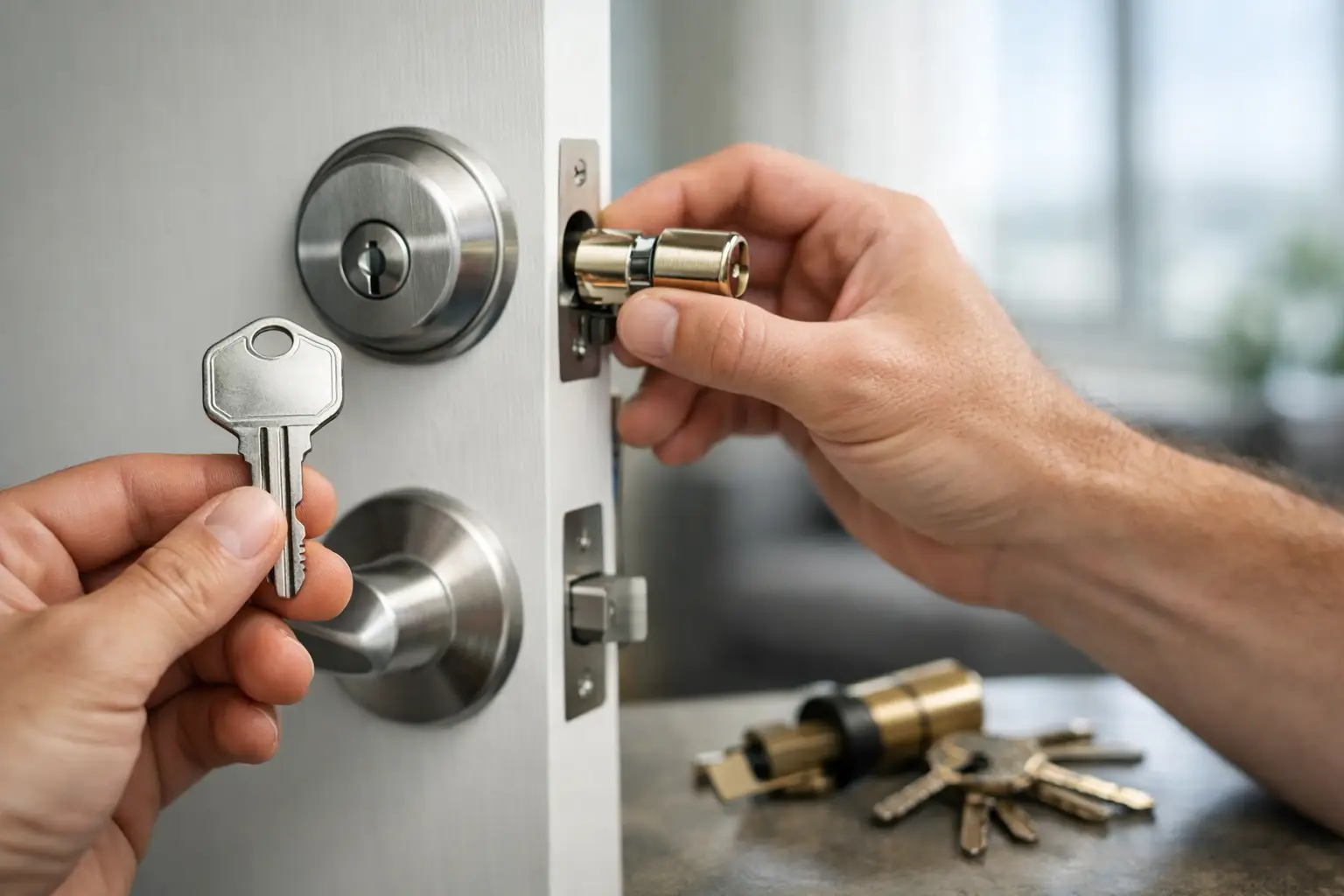
A key can leave your possession in seconds, but the security question it creates can last much longer. When locks change after a move, a staff departure, a lost key, or a break-in, the goal is not simply to get a new key in hand. It is to know exactly who can access your home, business, vehicle, or managed property.
For property owners and managers in Broward and Palm Beach Counties, a lock change is often a practical reset. The right solution may be rekeying, replacing a damaged lock, upgrading the hardware, or changing how access is managed altogether. The best choice depends on the condition of the door, the level of risk, and how many people need authorized access.
When Should Locks Change?
Some situations call for immediate action. Others give you time to plan an upgrade. Knowing the difference helps you protect the property without spending money on hardware you do not need.
A newly purchased home is one of the most common reasons to change locks. Even when the seller turns over every key they have, you cannot know whether a neighbor, contractor, dog walker, former tenant, or relative has another copy. Rekeying the home before moving in gives you control from day one.
Rental properties need the same attention between tenants. A landlord may receive keys back at move-out, but key duplication is easy and difficult to track. Rekeying between occupants helps protect the next tenant while allowing the existing lock hardware to remain in place when it is still in good condition.
Lost or stolen keys should be treated based on the circumstances. A house key lost in a parking lot with no identifying information may present less risk than a key ring lost with an address, work badge, vehicle registration, or mailbox key. If someone could connect the key to your property, changing the keying should move up the priority list.
After a break-in or attempted break-in, the visible damage is only part of the problem. A bent latch, loose strike plate, cracked door frame, or misaligned deadbolt can make a replacement lock perform poorly. The door, frame, hinges, and hardware should be assessed together so the repair restores real security rather than only covering the damage.
Commercial properties have additional reasons for a lock change. Employee turnover, a missing master key, a vendor dispute, or a change in occupancy can all affect access control. A single former employee with a key may create exposure at multiple doors, storage areas, offices, or gates. In these cases, a planned rekey or master key system adjustment can be more efficient than replacing every lock.
Rekeying vs. Replacing: What Is the Difference?
Rekeying changes the internal pins of a lock so the old key no longer works. The lock cylinder remains, but a new key is required. It is often the most cost-effective option when the existing locks are reliable, compatible, and in good physical condition.
Replacing a lock means installing new hardware. That is usually the better choice when the lock is worn out, damaged, corroded, outdated, or not providing the level of protection you need. A replacement can also make sense when you want to move from a basic knob lock to a deadbolt, add keyless entry, install a high-security cylinder, or match hardware across a newly renovated property.
The decision is not always either-or. A home may need a replacement lock on a damaged rear door and rekeying on the remaining doors. A business may rekey office doors while upgrading the main entrance to an electronic access-control system. A qualified locksmith can inspect the hardware and explain what is necessary, what is optional, and what can wait.
Signs Replacement Is the Better Choice
If a key sticks, the latch does not fully extend, the deadbolt turns loosely, or the lock requires force to operate, the issue may be more than a key problem. Florida humidity, salt air in coastal areas, frequent use, door movement, and aging hardware can all affect lock performance.
Replacement is also worth considering when the hardware offers little resistance to common forced-entry methods or when the door has no proper deadbolt. For commercial doors, problems with closers, panic hardware, electric strikes, magnetic locks, or exit devices should be handled promptly. These components affect both security and safe emergency egress.
How Locks Change at Homes, Rentals, and Businesses
The process should start with the reason for the change. If the concern is unknown key copies, rekeying may solve it quickly. If the concern is physical damage or weak hardware, replacing and reinforcing the lock area may be the smarter response.
At a residence, the locksmith should identify every exterior access point that matters: front doors, side doors, garage entry doors, patio doors, gates, mailbox locks, and storage areas. Homeowners often secure the main entry but overlook the door between the garage and the home, which deserves the same level of attention.
For landlords and property managers, consistency matters. Rekeying multiple units to a controlled system can reduce the number of keys in circulation and simplify maintenance access. At the same time, tenant privacy and clear key-control procedures remain essential. The right arrangement should allow authorized maintenance access without leaving former keys active.
Businesses need a broader view of access. Front doors, employee entrances, stockrooms, offices, server rooms, supply closets, gates, and exit doors may all have different security needs. A small retail store may benefit from a restricted keyway and a stronger storefront cylinder. A larger facility may need electronic credentials, audit trails, buzzer systems, cameras, and door hardware that works with day-to-day traffic.
Keyless entry can be useful, but it is not automatically the best answer for every property. It can reduce the need to collect physical keys and make employee access changes easier. However, electronic hardware needs dependable installation, power planning, user management, and a clear process for lost codes or credentials. Mechanical locks remain a strong option when properly selected and maintained.
Do Not Forget the Door Around the Lock
A quality lock cannot overcome a weak door frame or an improperly installed strike plate. When locks change following damage or a security concern, inspect the full opening. The deadbolt should align correctly, the strike should be securely fastened, the frame should not be split, and the hinges should be appropriate for the door.
On commercial properties, door closers and exit hardware deserve particular attention. A door that does not close and latch consistently may leave the building unsecured, interfere with access control, or create a problem during an emergency. Repairs should preserve proper operation, not just make the door appear functional.
What to Do If You Need a Lock Change Now
If you are locked out, dealing with a broken key, responding to a break-in, or concerned that an unauthorized person has a key, avoid forcing the lock or making a quick hardware decision under pressure. Document any damage, keep the area secure if possible, and use a licensed and insured locksmith who can evaluate the whole issue.
Be ready to explain what happened, which doors or keys are involved, and whether there is an immediate safety concern. For businesses, identify whether the affected key is part of a master system or opens restricted areas. This information helps the locksmith arrive prepared and prevents an incomplete fix.
Access Locksmith & Security provides residential, commercial, and automotive locksmith service throughout the local South Florida area, including urgent lock changes, rekeying, lock repair, key extraction, and security hardware support. Clear communication matters when access is at stake, especially when a lost key or damaged door affects more than one person.
A lock change is a chance to remove uncertainty from your property. Whether you rekey a single home door, replace damaged hardware, or update access across an entire facility, the right move is the one that leaves you knowing who has access when the work is complete.

