
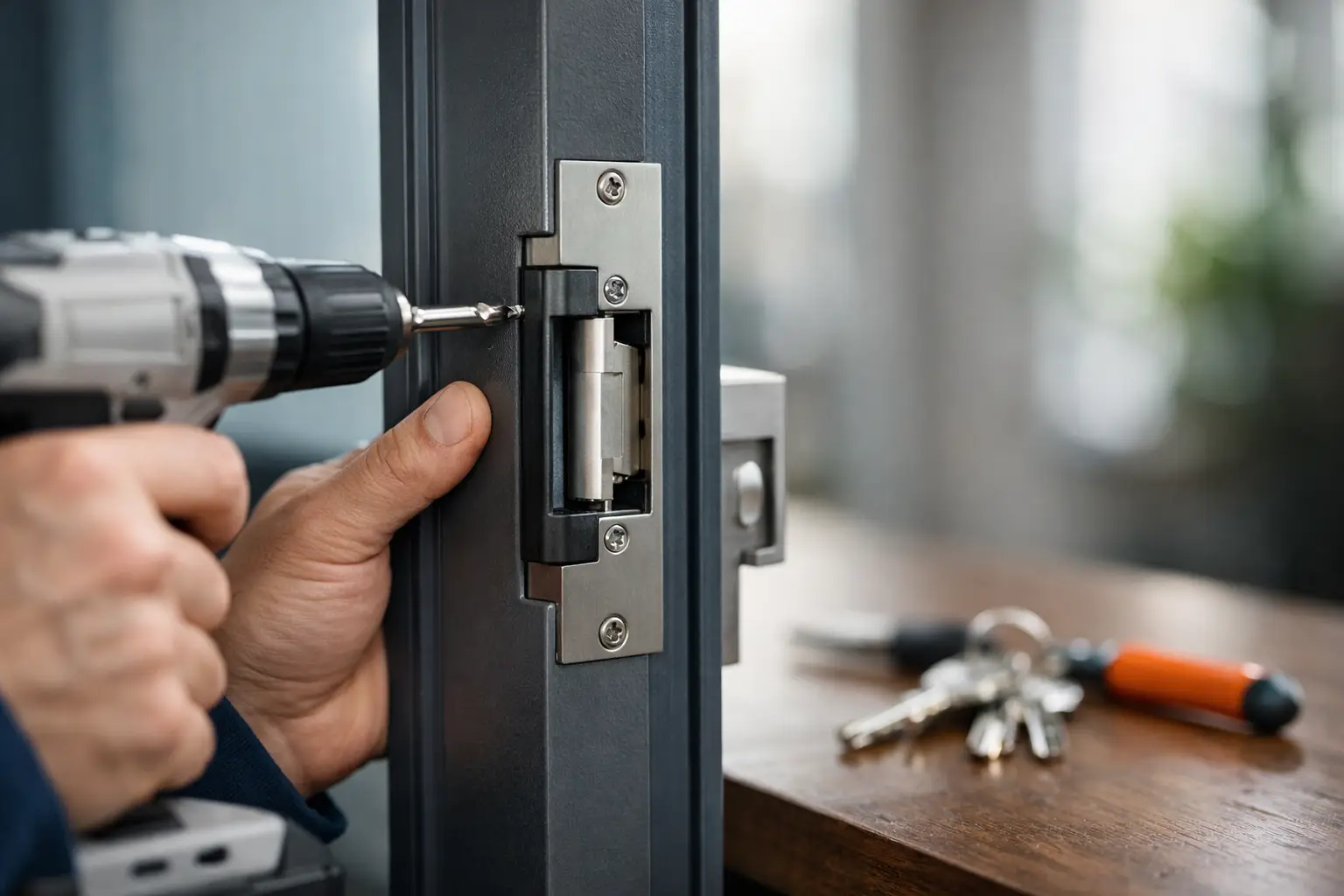
A front office door that must stay secure but still admit employees, tenants, vendors, or approved visitors needs more than a standard keyed lock. Electric strike lock installation gives the door controlled entry through a buzzer, keypad, card reader, intercom, or access-control system while preserving normal operation from the secure side.
For South Florida businesses, apartment buildings, medical offices, schools, warehouses, and managed properties, this can be a practical security upgrade. The result depends on more than the strike itself. Door condition, frame material, wiring route, fire and life-safety requirements, existing hardware, and the way people use the entrance all affect whether the system performs reliably.
What an Electric Strike Does
An electric strike replaces or modifies the fixed strike plate in the door frame. Instead of physically changing the lock on the door, it releases the latch when it receives the appropriate electrical signal. A person can then pull the door open without using a mechanical key.
This setup is common at controlled entrances because it can work with several types of authorization. A receptionist may press a release button after speaking with a visitor. Employees may use credentials at a card reader. A property manager may connect the strike to a keypad, fob system, or video intercom.
The key distinction is that the electric strike works with the door latch. It is not the same as a magnetic lock, which holds the door shut with an electromagnet. Each option has a place, but a strike is often preferred when a property wants to retain existing panic hardware or a standard mechanical lock function.
Is Your Door a Good Candidate?
Before scheduling electric strike lock installation, start with the door itself. A strike cannot make up for a sagging door, a loose closer, a bent frame, or hardware that does not latch consistently. If the latch misses the strike opening or requires people to push hard on the door, the underlying alignment issue should be corrected first.
Most commercial hollow-metal doors and frames are good candidates, provided the frame can be properly prepared and wired. Aluminum storefront doors may require a specific narrow-style strike and careful fitting. Wood doors can also work, though the frame construction and security reinforcement need close attention. Glass storefront systems have additional limitations, especially when they use specialty deadlatches or patch fittings.
The door function matters just as much. A busy main entrance needs hardware rated for frequent cycles and a release method that visitors can use without confusion. A low-traffic office suite may have different needs than a multi-tenant building where delivery drivers, staff, and guests arrive throughout the day.
Choosing Fail-Secure or Fail-Safe Operation
One of the most important decisions is how the strike responds during a power loss.
A fail-secure electric strike remains locked when power is interrupted. It requires power to release the latch. This is often used on exterior doors where maintaining security during an outage is a priority, while authorized occupants can still exit through normal door hardware.
A fail-safe electric strike unlocks when power is lost. This may be required or preferred in certain access-control and life-safety applications, but it is not automatically right for every door. A fail-safe setup can leave an entrance unsecured during an outage unless the broader system includes backup power and is designed for that purpose.
The correct choice depends on the opening, occupancy type, local code requirements, and how emergency egress is handled. It should never be selected solely because one option sounds more secure. A door must allow people to leave safely and without special knowledge or a credential when code requires it.
The Installation Details That Protect Reliability
A professional installation starts with an inspection of the complete opening, not just the lock cutout. The technician checks the latch type, backset, frame depth, door swing, hinges, closer, weather conditions, and available power source. They also confirm whether the door needs a standard, heavy-duty, narrow, or specialty electric strike.
The frame is then prepared to fit the selected strike precisely. Cutting too much material from a metal or aluminum frame can weaken the opening, create a poor fit, or leave the latch exposed. Proper mounting, reinforcement where needed, and clean alignment help the hardware resist forced entry and repeated daily use.
Wiring deserves equal attention. Low-voltage cable must be routed and protected so it is not pinched by the door, exposed to damage, or affected by unreliable splices. On an exterior South Florida opening, moisture, heat, corrosion, and wind-driven rain are real concerns. Appropriate components and protected connections help prevent intermittent releases and early equipment failure.
Finally, the installer tests the door under real operating conditions. The latch should engage without slamming the door. The strike should release promptly from every authorized control point. The door closer should shut the door fully after each use, and the inside exit path should remain clear and code-appropriate.
Pairing an Electric Strike With Access Control
An electric strike can be a simple buzzer-release solution or part of a larger access-control plan. The right level depends on how much control the property needs.
A small office may only need a desk-mounted release button and an intercom for visitors. A professional building may benefit from credentialed access so management can add or remove employee access without collecting physical keys. A property with multiple entry points may need a system that tracks events, supports scheduled access hours, and works with security cameras.
There is a trade-off. More features can provide better oversight, but they also require proper programming, dependable power, and support when staff changes or access rules need updating. The best system is not necessarily the one with the longest feature list. It is the one your team can operate confidently every day.
Common Problems After a Poor Installation
When an electric strike is installed without addressing the full door opening, problems often appear quickly. The most common complaint is a door that buzzes but will not open. This may be caused by latch pressure, poor alignment, an incorrect strike model, weak power, or a door closer pulling the latch too tightly into the keeper.
Another issue is unreliable locking. If the latch does not fully engage when the door closes, the strike cannot provide the protection the property expects. A worn latch, loose hinges, damaged closer, or improperly fitted frame can all contribute.
Some installations also create life-safety concerns by changing an exit door without considering panic hardware, fire-rated components, or local requirements. This is why commercial door hardware should be evaluated as a system. A properly functioning credential reader is not enough if the door cannot provide safe, lawful egress.
When to Call a Professional
Electric strikes involve door hardware, low-voltage wiring, access control, and potentially fire and egress requirements. While a basic kit may look straightforward, an incorrect installation can damage an expensive frame, leave a door unsecured, or create an unsafe exit condition.
A qualified commercial locksmith can assess the opening before work begins, recommend compatible equipment, correct alignment issues, and test the finished installation. For properties in Broward and Palm Beach Counties, Access Locksmith & Security can help evaluate electric strikes alongside door closers, panic hardware, keyless entry, magnetic locks, intercoms, and broader access-control needs.
If your entrance is difficult to manage with keys alone, start by looking at how people enter, how they exit, and what happens when power is lost. A well-planned electric strike system should make authorized access easier without asking you to compromise the security and safety your door is supposed to provide.

