
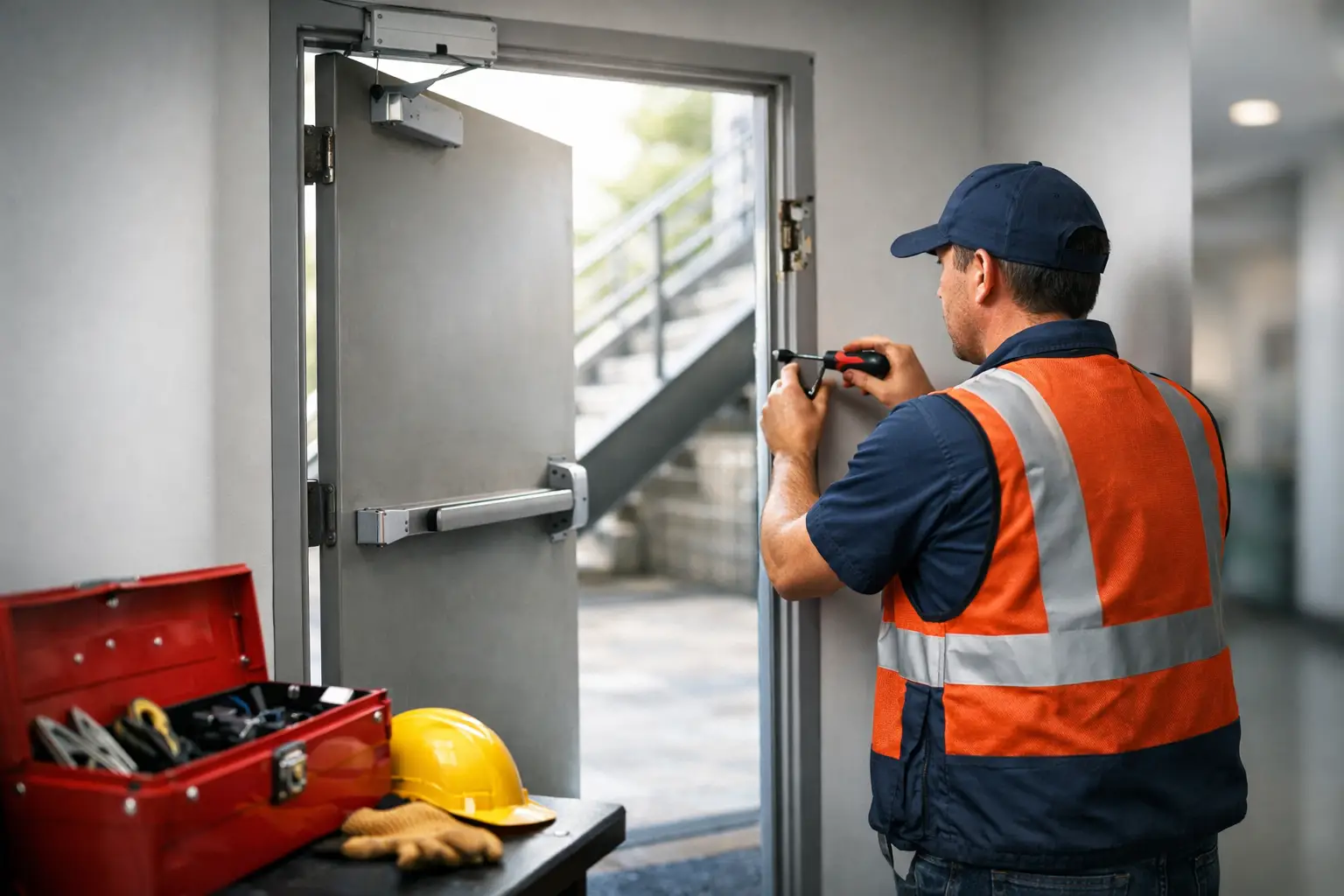
A rear exit door that sticks, a panic bar that will not release, or a closer that slams shut is not a routine maintenance issue. Emergency exit door repair is about protecting the people inside your building while keeping the property secure after hours. When a door cannot provide quick, reliable egress, it needs prompt attention from a qualified commercial door and security professional.
When an Exit Door Problem Becomes an Emergency
An emergency exit should open from the inside with one straightforward motion. Employees, customers, tenants, and visitors should not need a key, special knowledge, extra force, or help from another person to get out. If that basic function fails, the situation can create immediate safety concerns and potentially disrupt your business operations.
A broken exit device can also leave your property exposed. For example, a door may release from the inside but fail to latch securely after closing. That creates a different problem: unauthorized access, theft risk, weather intrusion, and an unsecured building overnight. Safe egress and reliable security have to work together.
Warning signs you should not ignore
Call for service promptly if the panic bar feels loose, binds, does not retract the latch, or requires repeated pushing before the door opens. Other concerns include a door rubbing the frame, a closer that leaks or will not control the door, a latch that misses the strike, damaged hinges, a failed electric strike, or a magnetic lock that does not release as intended.
Pay attention to changes that seem minor. A door that starts dragging across the threshold can eventually prevent the latch from aligning. A bent panic bar may still work for a few days, but it can fail under pressure when people need it most. Exit doors are used hard, and small mechanical issues rarely improve on their own.
What to Do While You Wait for Emergency Exit Door Repair
Do not disable, wedge open, chain, or block an exit door to work around a malfunction. Those shortcuts can create a serious life-safety hazard and may leave the building unprotected. Instead, keep the affected area clear and notify the people responsible for the property.
If the door will not open from the inside, move occupants away from that exit and direct them to another approved exit path while arranging service. If the door will not lock or latch, increase supervision of the area and secure the property through an appropriate temporary measure that does not interfere with required egress.
When you contact a technician, be ready to explain whether the door is locked shut, open but unsecured, difficult to open, or damaged after an impact or attempted break-in. It also helps to identify the hardware involved, such as a panic bar, crash bar, magnetic lock, electric strike, door closer, keypad, or access-control reader. Clear details help the service team arrive prepared.
Why Emergency Exit Doors Fail
Exit door failures often involve more than the lock itself. Commercial doors are systems made up of the frame, hinges, closer, latch, strike, exit device, power components, and access-control hardware. A problem in one component can affect the whole opening.
Door alignment and hardware wear
Heavy foot traffic, repeated slamming, humidity, corrosion, and settling can pull a door out of alignment over time. When the latch no longer meets the strike correctly, people may have to push, pull, or lift the door to get it open. That extra force wears down the panic hardware and can turn a simple adjustment into a more significant repair.
Worn hinges, loose mounting screws, damaged thresholds, and failed closers also change how a door sits in the frame. Repair may involve realigning the door, replacing hinges, adjusting the strike, repairing the closer, or restoring the exit device so it latches and releases correctly.
Access-control and electrical issues
Many South Florida businesses use electric strikes, magnetic locks, keypads, card readers, buzzer systems, or other access-control components at secondary entrances and exits. These systems must be installed and serviced carefully so they provide security without preventing people from exiting when necessary.
A power outage, damaged wiring, failed relay, worn reader, or malfunctioning release component can make an electronically controlled door unreliable. The right solution depends on the system design and the door’s role in the building. A technician should diagnose the mechanical and electrical sides of the opening rather than replacing parts based on guesswork.
What a Professional Repair Visit Should Include
A proper emergency exit door repair starts with a full operational check, not just a quick look at the visible problem. The technician should test the door from both sides, inspect the panic hardware, confirm latch engagement, examine hinges and the closer, and look for frame or strike misalignment.
For doors with electronic access, the service process may also include checking power, release functions, wiring connections, electric locking hardware, and the interaction between the access-control system and the door. The goal is to identify the root cause, explain the repair clearly, and restore dependable operation.
At Access Locksmith & Security, commercial service is approached with both safety and property protection in mind. That means addressing the immediate problem while identifying hardware wear or alignment issues that could cause another failure soon after the repair. For business owners and property managers, clear communication matters: you should know what failed, what was repaired, and whether a replacement should be planned.
Repair or Replacement: How to Make the Right Call
Many exit door problems can be repaired. A loose panic bar, misaligned strike, worn closer, damaged hinge, or faulty electric strike may only require adjustment or replacement of the affected component. Repair is often the practical choice when the door and hardware are otherwise in good condition.
Replacement is worth considering when hardware is badly damaged, repeatedly failing, obsolete, corroded beyond dependable use, or no longer appropriate for the door’s traffic level. A busy retail exit, medical office, warehouse, restaurant, or multifamily property may need commercial-grade hardware designed for frequent use and exposure to South Florida’s heat, moisture, and salt air.
Cost should not be the only factor. A less expensive repair can make sense for a newer device with an isolated issue. But repeated service calls, unreliable latching, and difficult-to-source parts can make replacement the more responsible long-term decision. A qualified technician can explain the trade-off before work begins.
Keep Your Exit Doors Ready Before a Failure
The best time to inspect exit hardware is before an emergency. Facility managers should have staff report doors that drag, slam, stick, rattle, fail to latch, or need unusual force to operate. Regular checks are especially useful after storms, tenant turnover, construction work, delivery impacts, or attempted forced entry.
Make sure exit paths stay clear, door hardware remains visible and accessible, and unauthorized modifications are not made by staff or vendors. If your building uses access control, schedule periodic testing of the electronic components along with the physical door hardware. Local building, fire, and occupancy requirements can vary, so consult the appropriate authority or qualified professional when compliance questions arise.
A dependable emergency exit door should do one thing without hesitation: let people out when they need to leave, then secure the building when the door closes. Acting quickly when that performance changes protects your occupants, your business, and your peace of mind.

