
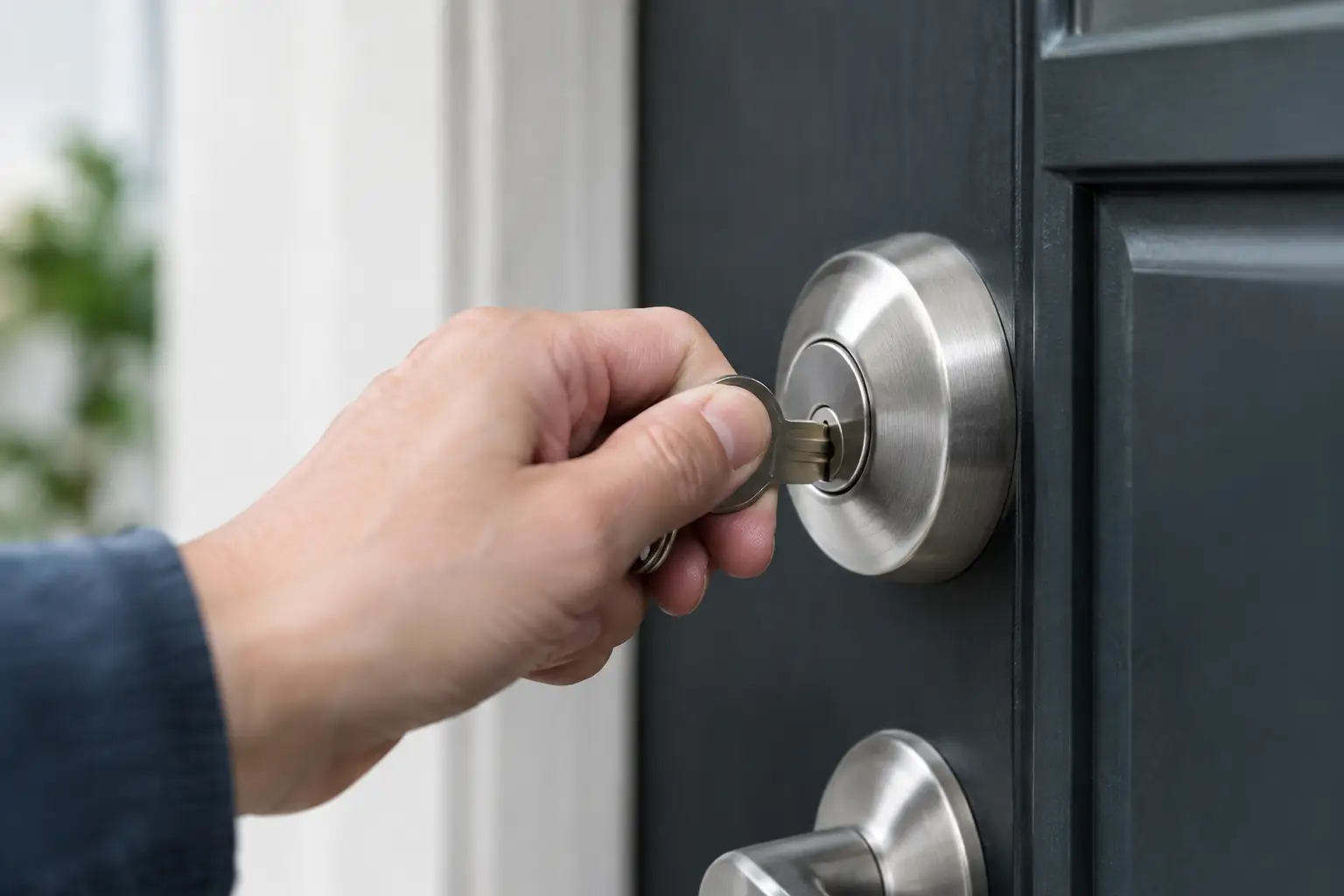
A key that rotates without opening the door can turn a normal arrival home into an urgent problem. If you are asking, “why does my key turn,” the answer is usually not the key alone. Something inside the lock, latch, door alignment, or hardware may no longer be moving as it should.
The most useful clue is what happens when you turn the key. Does it rotate normally but the door stays shut? Does it spin freely through a full circle? Is the key hard to turn, or does the handle feel loose? Those details help identify whether you may have a simple door-alignment issue or a lock that needs professional repair.
Why Does My Key Turn but Not Unlock the Door?
In a working lock, turning the key moves an internal part called a cam or tailpiece. That part retracts the latch or releases the deadbolt, allowing the door to open. When the key turns but nothing happens, the connection between the key cylinder and the locking mechanism may be worn, loose, broken, or disconnected.
This is different from a key that will not turn at all. A key that will not turn may point to a dirty or damaged keyway, a misaligned door, or a problem with the lock pins. A key that turns without unlocking more often points to hardware behind the cylinder.
A loose or broken tailpiece
The tailpiece is a small metal component on the back of many lock cylinders. It transfers the key’s rotation to the lock mechanism. If it bends, breaks, slips out of position, or was installed incorrectly, the key can turn while the deadbolt or latch remains in place.
This is common on older residential deadbolts, storefront locks, and locks that have been repaired with mismatched parts. It can also happen after a forced entry attempt or repeated use of a key that requires excessive pressure.
A worn lock cylinder or internal cam
A cylinder has several moving parts that must stay connected and properly aligned. With age, the cam can wear down or the retaining components can loosen. You may notice that the key suddenly has more play than usual, turns farther than it used to, or only works if you hold the knob or handle in a certain position.
Do not assume the problem will correct itself because the lock works occasionally. Intermittent operation is often a warning that a component is close to failing completely. Repairing it before a full lockout is usually less disruptive than dealing with a door that will not secure or open.
A failed latch, deadbolt, or lock body
Sometimes the key cylinder is doing its job, but the problem sits deeper in the door. A failed mortise lock, deadbolt body, latch assembly, or multipoint locking system can prevent the bolt from retracting even when the key rotates.
This is especially common with commercial aluminum storefront doors, older exterior doors, and doors with specialty hardware. In these cases, replacing only the cylinder may not solve the problem. A locksmith needs to inspect the full lock assembly and determine which component has failed.
Door misalignment and pressure on the bolt
South Florida heat, moisture, settling, and frequent use can affect how a door sits in its frame. If the deadbolt or latch is pressing tightly against the strike plate, the key may turn only partially, feel stiff, or turn without fully releasing the door.
Try gently pushing or pulling the door while turning the key. If the lock opens only when you lift the door, pull it toward you, or push it inward, the door and strike plate may be out of alignment. That does not necessarily mean the lock is broken, but continued forcing can damage both the key and the internal mechanism.
A loose handle or disconnected linkage
On some knob-and-lever locks, the key unlocks the outside handle but the handle itself no longer retracts the latch. The key may appear to work, yet the door remains closed because a spindle, spring, or linkage inside the handle has failed.
Look for a handle that droops, spins, pulls away from the door, or feels unusually loose. This is not a situation to fix with more force. Loose hardware can leave a door unable to latch securely after it is opened, creating a safety and security concern.
What to Do When Your Key Spins in the Lock
A spinning key can feel like an emergency, particularly when you are locked out, trying to secure a business, or dealing with a vehicle ignition issue. Start by avoiding the common instinct to keep turning harder. Force can snap the key, strip internal parts, or make a repair more extensive.
First, confirm you are using the correct key and try a spare if one is available. A worn copy may rotate differently from the original, though a spare will not correct a broken lock mechanism. Next, relieve pressure on the door by pushing, pulling, or slightly lifting it while turning the key gently. If the latch or deadbolt is binding against the frame, this may allow it to release.
If there is a thumbturn on the inside and someone can safely access it, check whether the deadbolt can be operated from that side. Do not attempt to remove lock screws from the exterior while the door is closed. Many lock components are under tension, and an incomplete repair can leave the door more difficult to open or impossible to secure.
For a commercial door, avoid propping it open or defeating an emergency exit device to work around a lock problem. Business doors may be connected to access control, electric strikes, magnetic locks, door closers, or alarm systems. An improvised fix can interfere with security and, in some cases, safe egress.
When to Call a Locksmith Right Away
Call for professional service when the key spins freely, the door will not open, the lock is damaged after a break-in, or you cannot secure the property. Immediate help is also the right choice when a business entry is blocked, an exit device is not functioning correctly, or a vehicle key turns in the ignition but the car will not start.
A qualified locksmith can open the door with the least possible damage, inspect the cylinder and internal hardware, and explain whether repair, rekeying, or replacement is the practical option. The right solution depends on the lock type, its condition, the door material, and whether the issue affects your property’s security.
For example, a loose cylinder tailpiece may be repaired quickly. A worn deadbolt on an exterior door may be better replaced, especially if the hardware is old or has already failed more than once. For a rental property or commercial space with several keys in circulation, rekeying after the repair may provide more control over who still has access.
Access Locksmith & Security provides residential, commercial, and automotive locksmith service throughout Broward and Palm Beach Counties, including urgent lockouts, lock repair, key extraction, rekeying, and door hardware service. A licensed, insured technician can assess the actual failure rather than guessing based on the symptom alone.
Preventing Another Lock Failure
Locks usually give warning signs before they fail. Pay attention when a key starts catching, a deadbolt needs extra force, a handle becomes loose, or a door must be pushed into place before it will lock. Addressing those changes early can prevent a lockout and reduce wear on the key.
Use a clean, undamaged key and avoid hanging heavy keychains from keys left in a door or ignition. Do not use oil, cooking spray, or household lubricants inside a lock. These products can collect dirt and create a sticky buildup. If a lock needs lubrication, use a product designed for lock hardware and follow the manufacturer’s guidance.
For property managers and business owners, regular inspection matters even more. High-traffic doors, exit devices, access-control doors, and aluminum storefront entries experience repeated stress throughout the day. A small adjustment to a closer, strike, latch, or cylinder can prevent an access issue from becoming a lost business day or a security exposure.
A turning key is not always a major failure, but it is always worth taking seriously when the door does not respond. The safest next step is to stop forcing the hardware, protect the door from further damage, and have the lock checked before the problem leaves you locked out or unable to secure the property.

