
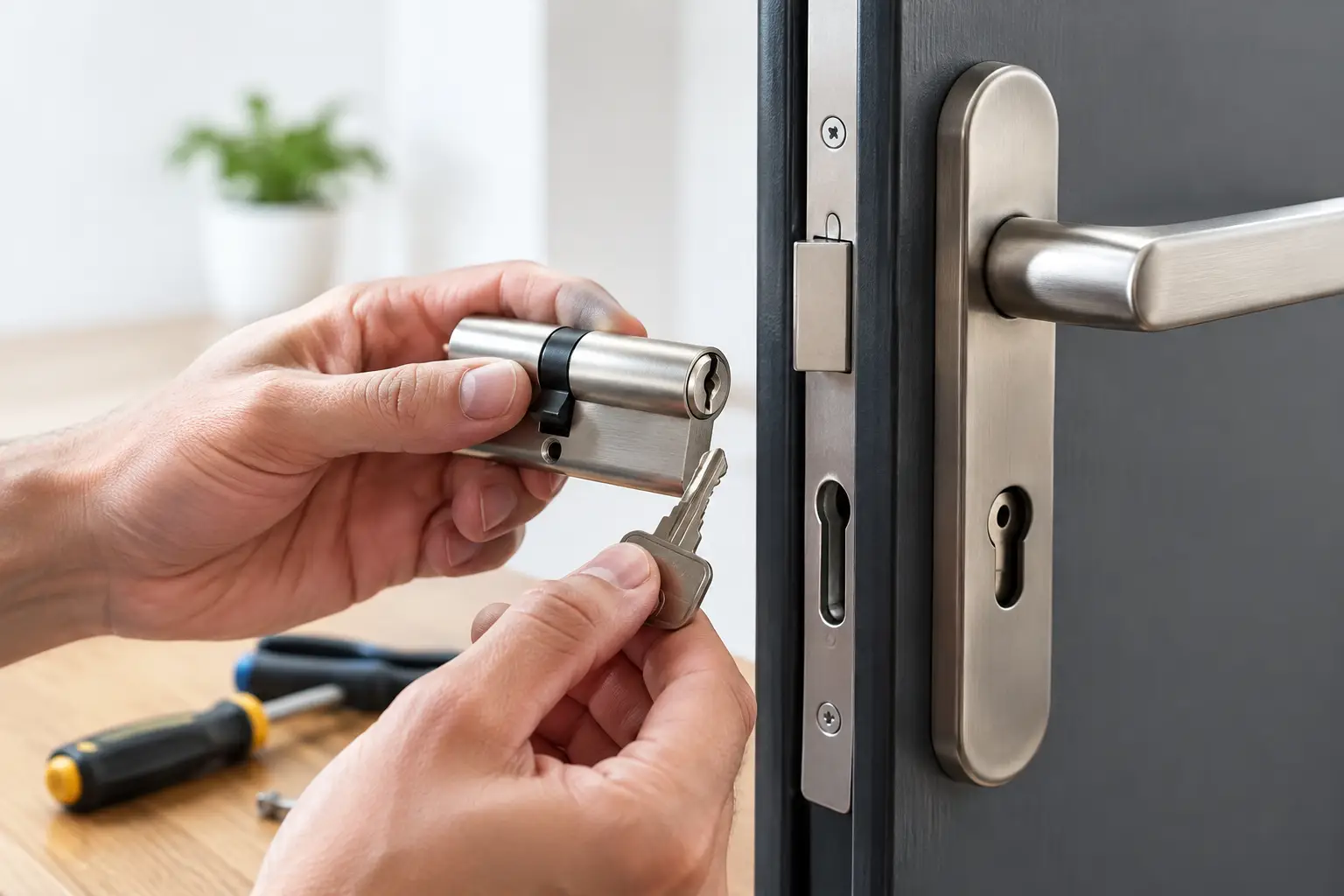
A front-door key that suddenly sticks, turns loosely, or only works after several attempts is more than an inconvenience. It can be an early warning that it is time to change door lock cylinder before a routine trip outside becomes a lockout or a security concern. For homeowners, landlords, and business owners in South Florida, the right response depends on the lock type, the condition of the door, and who may still have a key.
What a Door Lock Cylinder Does
The cylinder is the keyed portion of many deadbolts, knob locks, lever locks, and commercial door locks. When the correct key enters the keyway, internal pins line up and allow the cylinder to turn. That turning motion operates the lock mechanism.
Changing only the cylinder can be a practical solution when the rest of the lock is in good condition. It lets you replace the key operation without necessarily replacing the exterior trim, interior thumb turn, lever, or complete deadbolt. That can save time and preserve matching hardware on a home, office, storefront, or multi-unit property.
Still, a cylinder is only one part of the door security system. A new cylinder will not correct a loose strike plate, a warped door, a failing deadbolt bolt, or a lock installed in a damaged door frame. A qualified locksmith checks the whole opening, not just the keyhole.
When You Should Change a Door Lock Cylinder
A cylinder change makes sense whenever you need new key control and the lock body itself remains serviceable. The most common reason is a lost or unreturned key. If a former tenant, employee, contractor, housekeeper, pet sitter, or previous owner may have a working key, changing the cylinder removes that uncertainty.
It is also a good option after a break-in attempt. Even if the door was not opened, a forced keyway or damaged cylinder can become unreliable. The damage may be visible as scratches around the keyway, a key that will not insert smoothly, or a cylinder that spins without moving the bolt.
Consider prompt service if you notice any of these signs:
- The key must be jiggled, lifted, or pushed hard to turn.
- The key comes out only with effort or gets caught in the cylinder.
- The cylinder turns but the deadbolt or latch does not operate correctly.
- The lock is loose in the door or the keyway is visibly damaged.
- Multiple keys that once worked now fail intermittently.
Florida heat, humidity, salt air near the coast, and frequent use can all affect door hardware over time. Lubrication may help a clean, lightly sticking keyway, but it is not a cure for worn internal pins, damage, or poor door alignment. Forcing the key can break it inside the lock and turn a planned repair into an urgent service call.
Change the Cylinder, Rekey the Lock, or Replace Everything?
These services solve different problems, and choosing the right one prevents unnecessary expense.
Rekeying changes the internal pin configuration so old keys no longer work and new keys operate the existing lock. It is often the most efficient choice when the cylinder is functioning properly and you simply need to regain control of who has keys. Rekeying can also be useful for bringing several compatible locks under one key, which is valuable for homeowners and property managers.
Changing the cylinder means installing a new keyed component. This is often necessary when the existing cylinder is damaged, severely worn, incompatible with the desired key system, or part of a lock that accepts interchangeable cores. Many commercial facilities use interchangeable core systems because authorized staff can change key access quickly without removing the entire lock.
Replacing the entire lock is the better choice when the hardware is failing, outdated, poorly installed, or no longer provides the security level your property needs. For example, a basic residential knob lock may not be enough for a primary exterior door. A commercial aluminum storefront door may need a properly matched mortise cylinder, panic hardware adjustment, electric strike work, or a new access-control solution rather than a simple cylinder replacement.
The trade-off is straightforward: rekeying is often less invasive and less costly, while a cylinder or full lock replacement may be necessary for reliability, compatibility, or stronger security. The correct answer starts with an inspection of the existing hardware.
Choosing the Right Replacement Cylinder
Door lock cylinders are not universal. Before purchasing or installing one, the lock type and measurements must match. Residential deadbolts commonly use rim cylinders or cylinders built into a specific lockset. Commercial doors may use mortise cylinders, rim cylinders, key-in-lever cylinders, or interchangeable cores. Each has different dimensions, cam configurations, tailpieces, and keyway options.
A cylinder that looks similar can still be wrong for the door. A mismatched tailpiece may keep the deadbolt from throwing fully. An incorrect mortise-cylinder length can leave the cylinder protruding too far or sitting recessed in the door. Either condition can affect security and daily operation.
Security level also matters. If you are replacing a cylinder after a lost key, a standard quality cylinder may be appropriate. If you are upgrading protection after repeated access issues or a burglary attempt, ask about restricted keyways, high-security cylinders, reinforced deadbolts, and properly secured strike plates. Restricted key systems can limit unauthorized duplication and give landlords or business managers stronger control over who receives keys.
For commercial properties, key management is often as important as the cylinder itself. A master key system can give employees access to assigned areas while management retains access to all approved doors. However, a poorly planned system can create operational headaches later. It should be designed around real staff roles, tenant needs, emergency access, and future expansion.
Why Door Alignment Must Be Checked First
Many lock complaints are actually door-alignment problems. If a door has settled, swelled, or shifted on its hinges, the deadbolt may rub against the strike plate. The user then feels resistance at the key and assumes the cylinder is bad.
Changing the cylinder without correcting the alignment can leave the new part under the same strain. Over time, that strain wears down keys and internal components. A professional service visit should include checking the hinges, latch and bolt movement, strike location, door gap, and condition of the frame.
This matters especially for exterior doors exposed to rain, sun, and changing temperatures. It also matters for commercial doors with door closers, magnetic locks, electric strikes, exit devices, or access-control readers. Those systems must work together. Security should never interfere with safe, code-conscious egress.
Can You Change a Lock Cylinder Yourself?
Some homeowners can replace a straightforward residential cylinder with the correct tools and exact replacement part. The project becomes more difficult when the lock is older, the mounting screws are stripped, the door is misaligned, or the cylinder uses a specialized cam or tailpiece.
The bigger risk is not usually removing the old cylinder. It is installing a replacement that appears to work while the door is open but fails when the door is closed. Always test the key, latch, deadbolt, thumb turn, and door closure repeatedly before relying on the lock. Never leave the property with only one untested key.
For rental homes, condominiums, and commercial buildings, there may also be property rules, fire-code considerations, or master-key requirements. Property managers should confirm their key-control policy before changing cylinders independently. A rushed hardware choice can create access problems for maintenance teams, tenants, or emergency responders.
Get Clear Answers Before the Work Begins
When you call for lock service, describe what the key is doing, whether the door is currently locked, and whether anyone else may still have a key. If you can, provide photos of the lock and door edge. That information helps identify whether the likely solution is rekeying, cylinder replacement, full lock replacement, or a door-hardware repair.
Access Locksmith & Security provides licensed and insured locksmith service for residential and commercial customers throughout Broward and Palm Beach Counties, with clear communication about the condition of the hardware and the available options. For urgent issues, fast service matters, but so does making sure the repair protects the property after the technician leaves.
A dependable lock should turn smoothly, latch correctly, and leave you confident about who has access. If your key is warning you that something is wrong, address it before that small problem decides the timing for you.

