
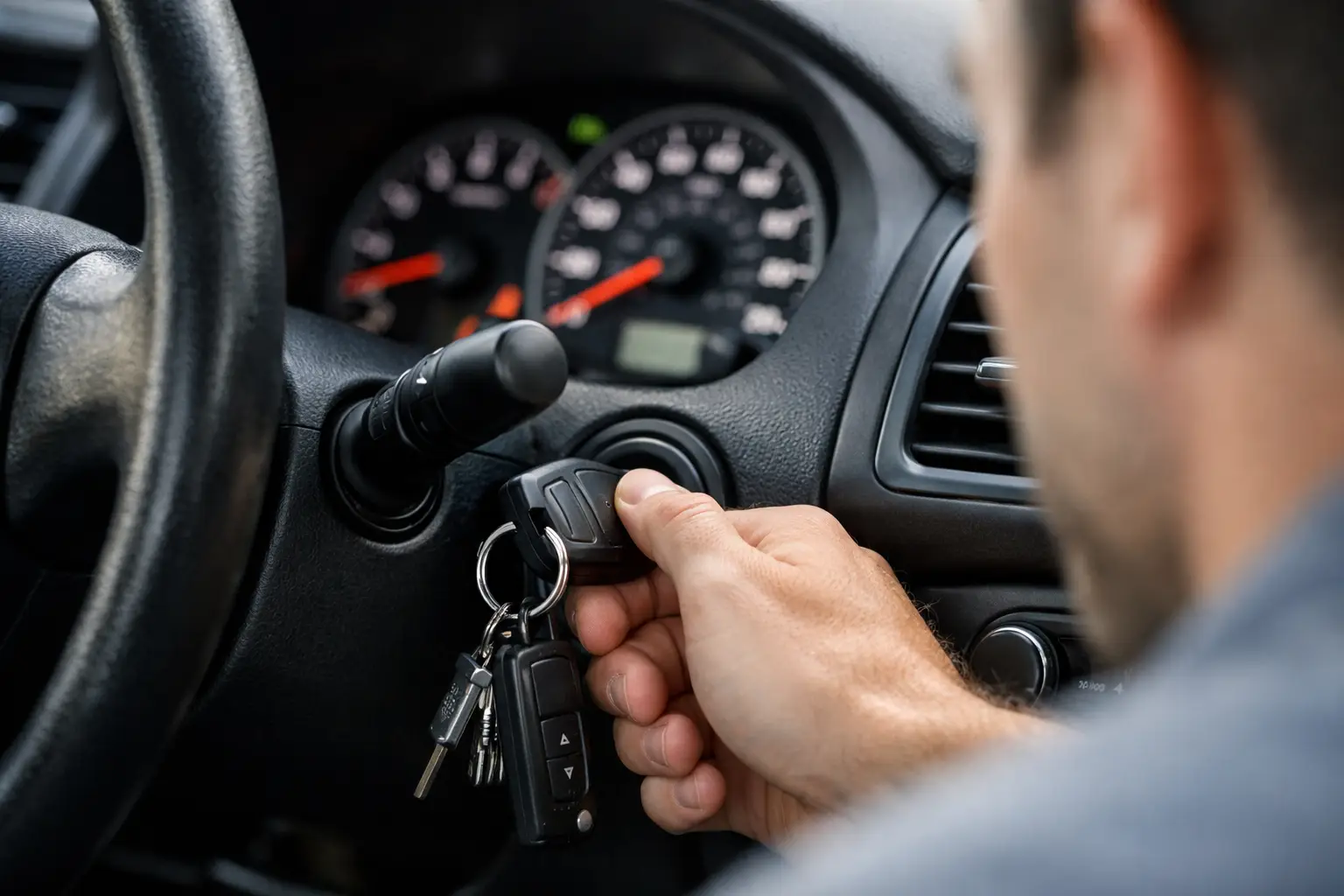
A key that will not turn or come out can stop your day in a parking lot, driveway, or outside your business. If you are asking what causes a stuck ignition, the answer may be as simple as pressure on the steering wheel or as serious as a worn ignition cylinder. The safest response is to pause before forcing anything. Turning too hard can snap the key, damage the ignition, and turn a repair into a more involved vehicle lockout.
Start by Identifying How the Ignition Is Stuck
“Stuck ignition” can describe several different problems, and the details matter. Your key may slide into the ignition but refuse to rotate. It may turn to the accessory position but not start the vehicle. Or the engine may be off while the key remains trapped in the ignition.
These symptoms point to different parts of the vehicle. A steering-wheel lock, worn key, ignition cylinder, shift-interlock system, weak battery, or damaged electronic key can all be involved. Knowing which symptom you have helps you avoid unnecessary damage and get the right service faster.
The steering wheel is locking the key in place
A locked steering wheel is one of the most common reasons a traditional ignition key will not turn. It often happens after the wheel is turned sharply when the vehicle is parked. The steering lock puts pressure on the ignition mechanism, making the key feel completely frozen.
Keep light, steady pressure on the key in the normal start direction while gently moving the steering wheel left and right. Usually, one direction will have a little more movement than the other. Do not jerk the wheel or twist the key with excessive force. If it does not release with gentle movement, stop rather than risk breaking the key.
The vehicle is not fully in Park
Automatic vehicles are designed to prevent the key from being removed unless the shifter is fully in Park. If the gear selector is slightly out of position, the key may remain stuck even though the engine is off. A worn shifter, failing shift-interlock component, or a simple obstruction around the console can create the same problem.
With your foot on the brake, firmly set the parking brake and move the shifter into Park again. Then try turning the key to the off position. Avoid repeatedly forcing the key. If the shifter feels loose, will not settle into Park, or the vehicle display does not recognize Park, the issue may need automotive or transmission-related diagnosis in addition to locksmith service.
What Causes a Stuck Ignition in the Lock Cylinder?
The ignition cylinder contains small internal components that must line up precisely with the cuts on your key. Over years of use, those parts can wear down. In South Florida, daily driving, sand and debris, humidity, and frequent use can all contribute to problems, especially on vehicles with older mechanical keys.
A worn, bent, or damaged key
A vehicle key does more work than most drivers realize. Keys wear slowly each time they are inserted and turned. Eventually, the cuts along the blade may no longer lift the ignition cylinder components into the correct position. The key may work only after several attempts, need to be wiggled, or turn in the door but not in the ignition.
A bent key, cracked key head, or key with a damaged transponder can cause similar symptoms. Take a close look at the blade under good lighting. If it is visibly bent or badly worn, do not keep testing it in the ignition. A weakened key can break off inside the cylinder.
If you have a spare key, try it once. A spare that turns normally is a strong sign that your daily-use key is worn. It is still wise to have a properly cut replacement made before the problem returns at an inconvenient time. Copying a severely worn key may reproduce its worn pattern, so a qualified automotive locksmith may need to cut a key to the correct vehicle specifications.
A worn or failing ignition cylinder
An ignition cylinder can wear internally even when the key looks fine. Drivers may notice that the key must be positioned just right, moved slightly up or down, or tried several times before it turns. These are warning signs, not quirks to ignore.
Internal wafers, springs, and the cylinder housing can become worn, damaged, or misaligned. Foreign material can also interfere with their movement. On some vehicles, a cylinder failure can leave the key trapped; on others, the key may turn without properly activating the vehicle.
At this stage, forcing the key is particularly risky. A locksmith can assess whether the cylinder can be repaired, rebuilt, or replaced and can determine whether new keys need to be programmed. The correct solution depends on the vehicle’s make, model, year, and ignition design.
Dirt, debris, or the wrong lubricant
Pocket lint, dust, small fragments of metal, and debris can get into a keyway over time. A key that is dirty or sticky can bring more contaminants into the ignition. While it is tempting to spray household oil or heavy lubricant into the cylinder, that can attract dirt and make the problem worse later.
Do not insert tools, paper clips, or another key to probe inside the ignition. Those attempts can damage delicate internal parts or push debris farther in. If the keyway appears obstructed, professional cleaning and inspection are safer than improvised fixes.
Electronic Problems Can Feel Like a Stuck Ignition
Not every ignition problem is mechanical. Modern vehicles often use transponder keys, remote-head keys, key fobs, push-button start systems, and electronic steering locks. In these vehicles, the key may turn physically but the car will not start, or the start button may fail to respond even though the fob is inside the vehicle.
A weak key-fob battery, damaged transponder chip, programming issue, vehicle battery problem, or electronic steering-lock fault may be the cause. A dashboard message such as “key not detected,” “steering lock,” or “shift to park” is useful information to share when requesting service.
Push-button vehicles do not have a conventional key cylinder, but they can create a similar access problem. Check the owner’s manual for the vehicle’s designated emergency start location, which is often near the start button or center console. If the vehicle still will not recognize the key, a locksmith with automotive programming capability can test the key and help determine whether a replacement or programming service is appropriate.
What Not to Do When Your Ignition Is Jammed
The fastest way to worsen a stuck ignition is to treat it like a stuck jar lid. Vehicle keys and ignition cylinders are precision components. Excessive twisting can shear a key blade inside the cylinder, while pliers can bend the key and ruin a part that may otherwise have been usable.
Avoid these common mistakes:
- Do not force the key, strike it, or use pliers for extra leverage.
- Do not spray penetrating oil, glue, or household lubricants into the ignition.
- Do not attempt to remove a stuck key with sharp tools or improvised hooks.
- Do not continue driving if the key repeatedly catches, binds, or requires wiggling.
If a key breaks in the ignition, keep all pieces. The remaining portion may help a locksmith identify the correct key profile and remove it with the least disruption to the ignition assembly.
When to Call an Automotive Locksmith
Call for professional help when the steering-wheel release method does not work, a spare key produces the same result, the key is trapped, or the cylinder feels rough or loose. You should also call if the key has broken, the vehicle will not recognize a programmed key, or you are stranded away from home.
A qualified automotive locksmith can provide key extraction, ignition repair or replacement, vehicle key cutting, transponder programming, and remote-key service. This can be especially useful when a dealership appointment is unavailable or towing the vehicle would add unnecessary time and cost. For some electronic or transmission-related issues, the locksmith may identify a condition that requires a mechanic or dealership, but an accurate inspection can prevent guesswork.
Access Locksmith & Security provides automotive locksmith service for drivers throughout Broward and Palm Beach Counties, including emergency help for ignition and key problems. With clear communication and experienced service, the goal is to protect your vehicle from further damage and help you regain access as quickly as possible.
A sticky key is often an early warning, not a problem that will fix itself. Address it while the vehicle is safely parked, keep a tested spare key available, and get help before a worn key or failing ignition leaves you stranded.

