
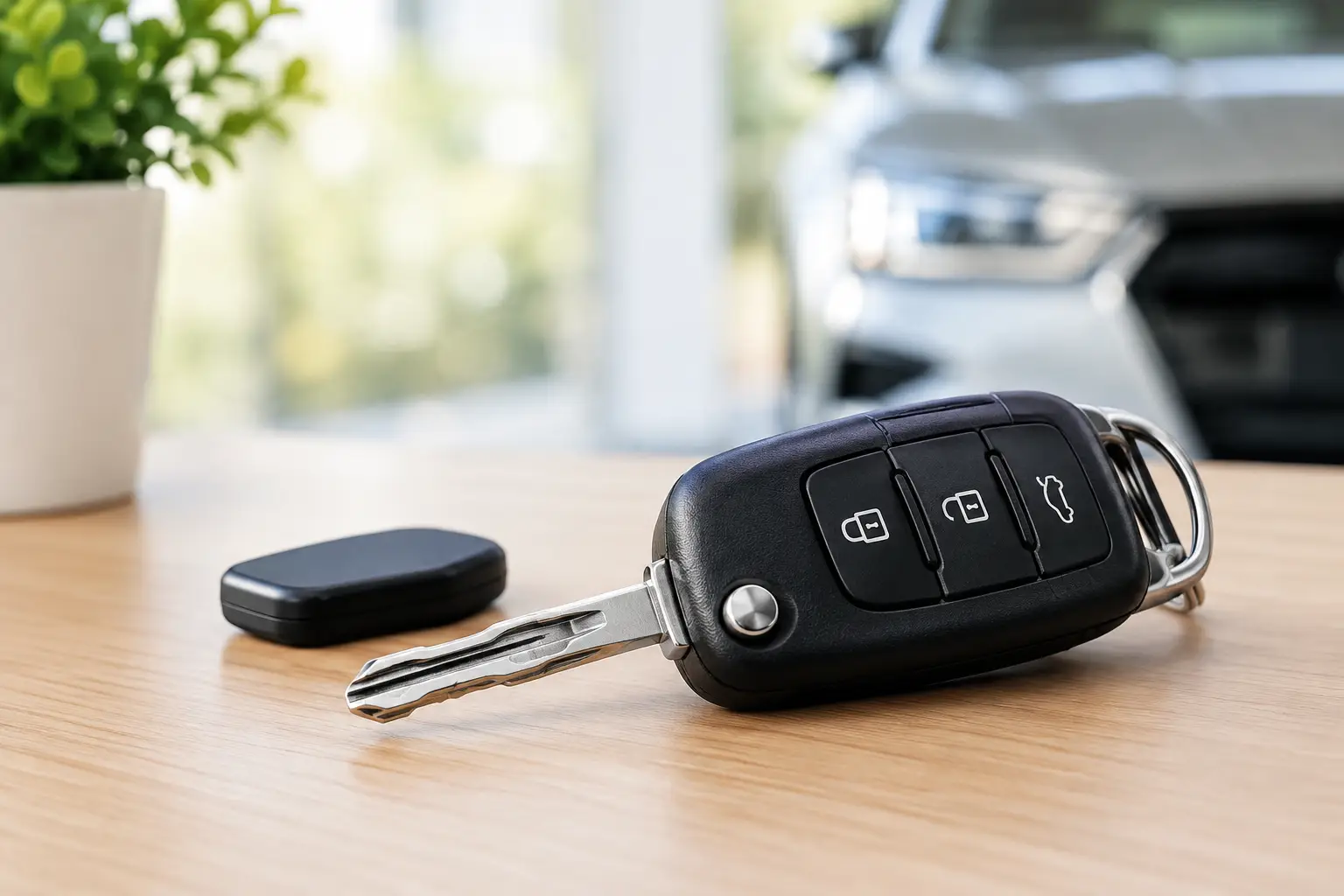
A lost car key can become a much bigger problem when the vehicle will not start with a basic metal replacement. Many modern vehicles rely on transponder keys to confirm that the key in the ignition is authorized. When that electronic match is missing, damaged, or incorrectly programmed, the engine’s anti-theft system may prevent the vehicle from starting.
For drivers in Broward and Palm Beach Counties, the practical concern is simple: you need the right key, programmed correctly, without unnecessary delays or confusion. Understanding how these keys work can help you make a better decision when you need a spare, lose your only key, or face a no-start situation.
What Are Transponder Keys?
A transponder key has two parts: the metal blade that turns the ignition or operates the door lock, and a small electronic chip inside the key head. The chip communicates with the vehicle’s immobilizer system using a unique coded signal.
When you insert the key and turn the ignition, the vehicle reads that signal. If the code matches the information stored in the car, the vehicle allows the engine to start. If it does not match, the key may still turn in the ignition, but the engine may crank briefly and shut off or not start at all.
This technology became common because it adds another layer of theft protection. A copied metal key alone is often not enough to operate a vehicle equipped with an immobilizer. The vehicle must recognize the chip as well as the physical key.
Not every vehicle uses the same system. Some older vehicles use a basic chip key, while newer models may use remote-head keys, flip keys, smart proximity fobs, or push-button start systems. The programming process, available replacement options, and cost depend on the make, model, model year, and key type.
How Transponder Key Programming Works
Programming links a specific key chip to a specific vehicle. A locksmith uses professional diagnostic and programming equipment to communicate with the vehicle’s computer and add, replace, or verify authorized keys.
In some cases, programming can be completed through the vehicle’s diagnostic port. Other vehicles require a security code, onboard procedure, specialized software, or removal and service of a module. Certain late-model vehicles have stricter security protections that can make the process more involved.
That is why a key that looks correct is not always a working key. Buying an unprogrammed key online may appear less expensive at first, but it can create problems if the key is the wrong chip type, has an incompatible circuit board, cannot be programmed to the vehicle, or is poorly cut. A low-quality remote can also fail early, leaving you with another access problem.
A qualified automotive locksmith can identify the correct replacement option before cutting and programming it. This helps prevent the common frustration of paying for a key that opens the door but cannot start the vehicle.
Can a Transponder Key Be Copied?
Often, yes, but copying and programming are not always the same thing. A standard metal key can be duplicated by matching its cuts. A transponder key must also have a chip that is compatible with the vehicle and programmed or cloned correctly.
For some makes and models, an existing working key can be cloned to a new key. For others, the new key needs to be programmed directly to the vehicle. If all keys are lost, the job may require additional steps because there is no working key available to reference.
Having one working key usually gives you more replacement options. If you have only one key left, making a spare before it is lost or damaged is usually the easiest and least disruptive choice.
Signs You May Have a Transponder Key Problem
A vehicle that will not start is not automatically a key issue. A weak battery, starter failure, ignition problem, fuel issue, or other mechanical concern can cause similar symptoms. Still, there are several signs that point toward a transponder or key-programming concern.
If the engine starts and immediately stalls, the security light stays illuminated or flashes, the key works intermittently, or a replacement key turns but will not start the car, the immobilizer system may not be recognizing the key. Physical damage to the key head, water exposure, a cracked remote housing, or a worn-out battery in a remote-head key can also contribute to problems.
Do not force a key that is difficult to turn. A worn key blade, damaged ignition cylinder, or foreign object inside the keyway can lead to a broken key or ignition damage. The right solution may be key programming, ignition repair, key extraction, or a combination of services depending on what the vehicle is doing.
When You Need a New or Replacement Key
Drivers commonly need a transponder key after losing a key, breaking it, buying a used vehicle with only one key, or discovering that an old spare no longer works. A replacement may also be needed when a remote stops responding, a key has been stolen, or the vehicle’s security system has been reset after a repair.
If a key was stolen, simply replacing it may not provide enough peace of mind. Depending on the vehicle, it may be possible to erase the missing key from the vehicle’s memory and program new authorized keys. That means the stolen key can no longer start the vehicle, even if someone finds it later.
For a used vehicle, it is wise to consider how many keys may still be in circulation. Previous owners, valets, repair shops, or family members may have retained copies. Reprogramming the vehicle to recognize only the keys you possess can be a sensible security step, particularly when the car contains valuable equipment or documents.
What to Expect From a Professional Locksmith
Automotive key service should start with clear identification of the vehicle and the key system it uses. You should be prepared to provide the year, make, model, vehicle identification number when available, and proof that you own or are authorized to access the vehicle.
A professional technician can then determine whether the key can be duplicated, cloned, cut from a code, generated from the lock, or programmed from the vehicle. The process may take place at your location, which can be especially helpful when the vehicle cannot be driven.
At Access Locksmith & Security, automotive service is approached as an access and security issue, not just a key-cutting task. The goal is to provide the correct key, verify that it starts the vehicle, and explain any issue found with the ignition, remote, or anti-theft system. Clear communication matters when you are stranded, late for work, or trying to secure your vehicle after a lost key.
Protecting Your Key and Avoiding a Future Lockout
Transponder keys are durable, but they are not indestructible. Keep them away from moisture when possible, avoid dropping them repeatedly, and replace a damaged shell before internal components are exposed. If your remote buttons become unreliable, address the issue early instead of waiting until the key fails completely.
It is also smart to keep a tested spare in a secure location. Do not leave it inside the vehicle, under a wheel well, or in another obvious hiding place. A spare at home, with a trusted family member, or in another controlled location can save time during an emergency.
If your vehicle uses a push-button start fob, replace the battery when you notice reduced range or intermittent detection. The fob may contain an emergency mechanical key, but that key may only unlock the door and may not start the vehicle without the fob’s programmed electronics.
A working spare is more than a convenience. It gives you options before a lost or damaged key turns into an urgent roadside problem. When your vehicle does not recognize its key, prompt professional help can get you back behind the wheel with the security and confidence you need.

