
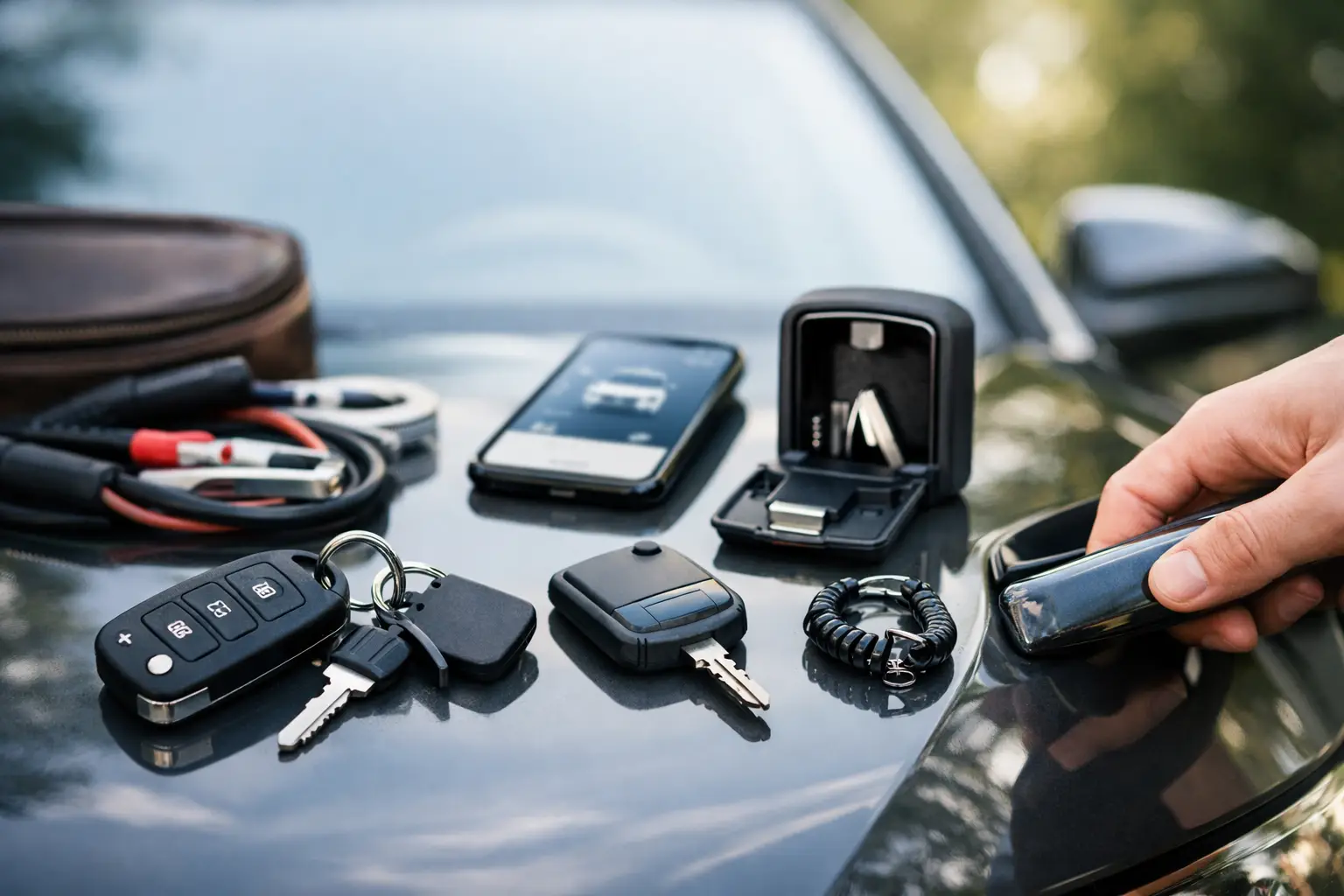
A car lockout often starts with an ordinary interruption: groceries in one hand, a phone call in the other, a quick stop at the gas station, or a child needing attention. The door closes, and the keys are still inside. The best way to prevent car lockouts is not complicated, but it does require a few habits that work even when you are distracted, rushed, or dealing with South Florida heat.
Modern vehicles add another layer. A key fob may be inside the vehicle but not detected correctly, a weak fob battery can create confusing symptoms, and some cars can automatically relock after a brief period. A practical prevention plan should account for both traditional keys and electronic access systems.
Build a Key Routine Before You Close the Door
The most reliable habit is simple: make the keys part of your exit routine. Before closing the driver’s door, touch the keys, key fob, or the pocket or bag where you keep them. This small physical check is more dependable than assuming you picked them up.
Many drivers place keys in the cup holder, on a seat, or in a jacket that gets tossed into the back seat. Those are the situations that create lockouts. Give your keys one consistent location when you are driving, such as a front pocket, a zippered purse compartment, or a dedicated spot in the center console that you check before exiting.
If you drive a push-button-start vehicle, do not rely only on the vehicle’s warning chime. Warning systems are helpful, but they can be missed in traffic, during rain, or when the cabin is noisy. Treat the fob as you would a physical key: confirm it is in your hand or on your person before the door shuts.
Keep a Spare Key Available, Not Just Owned
A spare key is useful only if you can access it when the original is locked in the car. Keeping both keys on the same key ring or storing the spare in the glove box does not solve the problem.
For many households, the best option is to leave a spare with a trusted family member who is usually nearby. If that is not practical, keep it in a secure location at home where another household member can retrieve it. Some drivers choose a vehicle-mounted key box, but this option has trade-offs. A visible or poorly secured box can attract attention and reduce vehicle security, so it should be used carefully and only with a quality product installed in a discreet location.
A programmed spare fob is especially valuable for newer vehicles. A basic metal emergency key may open the door, but it may not start a vehicle that requires a transponder chip or programmed remote. When having a spare made, confirm that it can both access and operate your vehicle.
Do Not Wait Until the Last Key Is Missing
Replacing a key after all originals are lost is usually more involved than duplicating an existing working key. Depending on the make, model, and year, the replacement may require cutting a key blade, programming a transponder, syncing a remote, or diagnosing an ignition issue. Arranging a spare while you still have a working key usually gives you more options and less pressure.
Replace Weak Key Fob Batteries Early
A fading key fob battery can look like a lockout problem even when the fob is in your hand. You may need to stand closer to the vehicle, press the button several times, or find that only some functions work. Florida heat can also be hard on electronics left in a vehicle for long periods.
Replace the fob battery when you first notice inconsistent operation. Check your owner’s manual for the recommended battery type and the correct way to open the fob. Forcing the case open with the wrong tool can damage the housing, buttons, or internal contacts.
It also helps to learn your vehicle’s emergency procedure before you need it. Many push-button-start cars include a hidden mechanical key inside the fob and a designated spot where the fob can be held to start the vehicle when its battery is low. The process varies by manufacturer, so do not assume another vehicle’s method applies to yours.
Be Careful With Auto-Lock and Remote Features
Automatic locking features can improve security, but they can also create surprises. Some vehicles relock if you press the remote’s unlock button but do not open a door within a set time. Others lock automatically after shifting into gear or after the driver exits. Rental cars, work vehicles, and recently purchased vehicles are particularly likely to have settings you have not yet learned.
Take a few minutes to test how your car behaves in a safe place. Find out whether it locks when the engine is running, whether it recognizes a fob left in the cabin, and how its auto-relock setting works. If the settings are configurable, choose the option that balances convenience with your security needs.
Remote-start and smartphone-app features are also helpful but should not be your only backup plan. They depend on battery power, cell service, account access, and correct app setup. A physical spare key or programmed backup fob remains the more dependable answer when technology is unavailable.
Make Stops and Drop-Offs Less Risky
Lockouts commonly happen during quick errands because people assume they will be away from the vehicle for only a few seconds. That is exactly when keys get left on a seat while unloading packages, setting up a child seat, or moving items from the trunk.
At a gas station, car wash, beach parking area, or school pickup line, keep your keys on your body rather than placing them on the console. If you need both hands, put the fob in a secure pocket or bag before stepping out. Avoid leaving it on the roof, trunk lid, or bumper while loading items. It can fall, be misplaced, or be driven away with the vehicle.
For drivers who share a vehicle, agree on a simple handoff procedure. The person taking the car should physically receive the keys and confirm possession before the other person walks away. This matters even more for business vehicles, where multiple drivers and busy schedules can make key responsibility unclear.
Protect Keys From Damage, Water, and Heat
A key that is bent, cracked, water-damaged, or intermittently working should be addressed before it fails completely. Do not force a damaged key into the door lock or ignition. It can break inside, turning a manageable key issue into a more urgent extraction and repair job.
Key fobs are not always as water-resistant as they appear. Keep them out of wet swimsuit pockets, avoid leaving them in direct sun on the dashboard, and do not wash them in clothing. If a fob gets wet, remove the battery when possible and have it inspected if buttons stop responding or the vehicle does not recognize it consistently.
A bulky keychain can also place extra strain on older ignition cylinders. If you use a traditional ignition key, carry only the keys and items you need. Reducing weight can help protect the ignition over time.
What to Do if You Are Locked Out Anyway
Even careful drivers can have a bad day. If you are locked out, take a breath and check every door and the trunk only if it can be done safely and without forcing anything. Confirm whether another authorized driver has the spare key and whether your vehicle app can provide access.
Do not pry the door, use a coat hanger, break a window, or attempt to defeat the lock yourself. Modern vehicles have side airbags, wiring, weather seals, and electronic components that can be damaged easily. A forced entry can cost far more than professional lockout service and may create a security issue afterward.
If you are stranded in an unsafe location, move to a well-lit public area if possible and contact emergency services when there is an immediate safety concern. Otherwise, a qualified automotive locksmith can assess the vehicle, open it using appropriate methods, and help with key, fob, transponder, remote, or ignition concerns when needed.
For drivers in Broward and Palm Beach Counties, Access Locksmith & Security provides automotive locksmith assistance around the clock, with clear communication and experienced local service when a lockout cannot wait.
A Short Lockout Prevention Check Before You Leave
Before walking away from your vehicle, make these four checks part of your routine:
- Keys or fob are in your hand, pocket, or secured bag.
- Doors are locked intentionally, not automatically by surprise.
- Your phone has enough battery to call for help if necessary.
- A working spare key is available somewhere you can actually reach it.
That last check brings real peace of mind. A spare key, a fresh fob battery, and one consistent habit before closing the door can turn a stressful lockout risk into a problem you are prepared to handle.

