
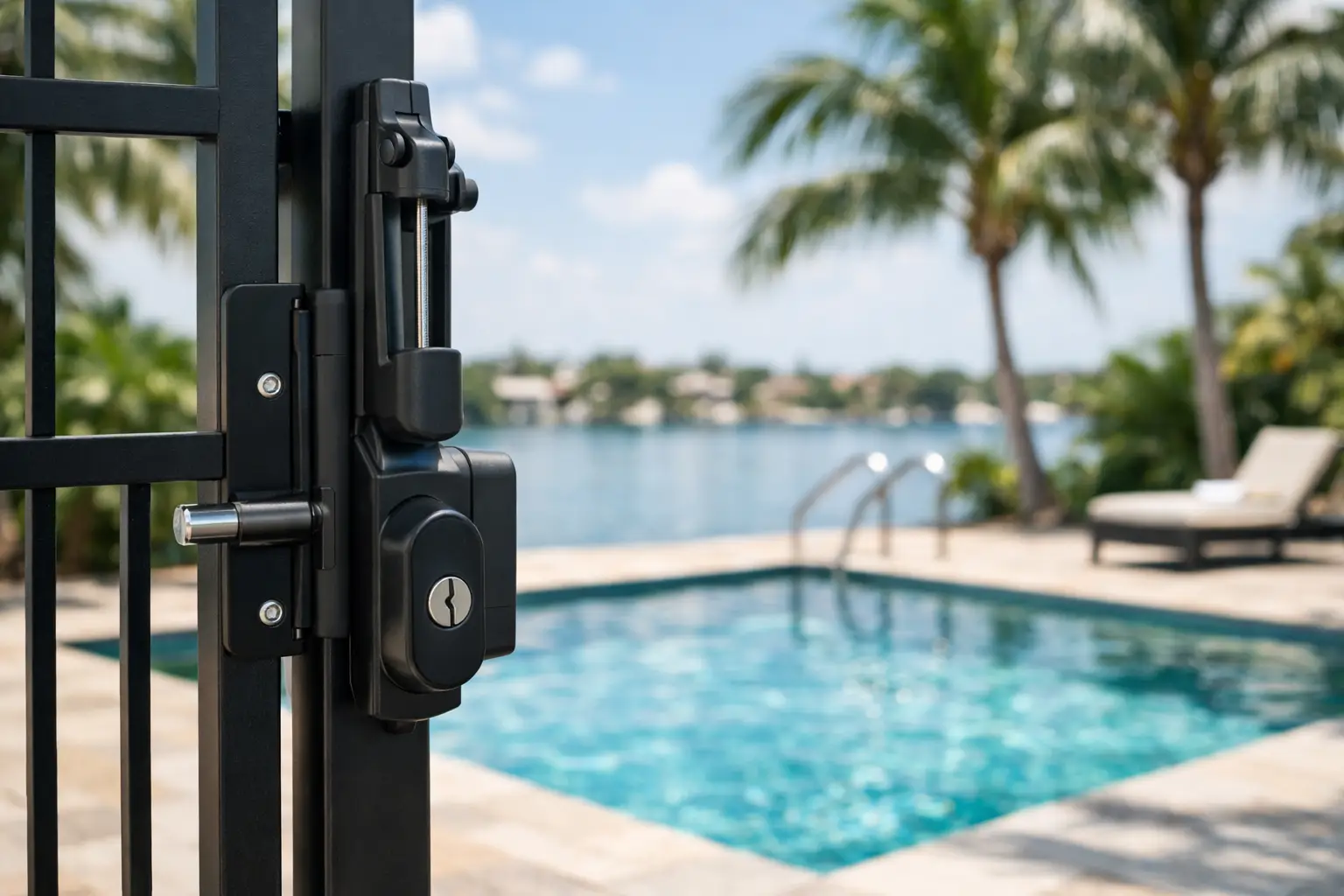
A pool gate lock has one job that cannot be treated as optional: it must help keep unsupervised children and unauthorized visitors out of the pool area while still giving responsible adults dependable access. The best locks for pool gates are not simply the strongest locks on the shelf. They are weather-resistant, difficult for a child to defeat, compatible with the gate, and installed so the gate closes and latches every time.
For homeowners, landlords, and property managers in Broward and Palm Beach Counties, the right choice also has to stand up to salt air, heavy rain, heat, and frequent use. A lock that works perfectly in a dry showroom can become stiff, corroded, or unreliable after a Florida summer outdoors.
What Makes the Best Locks for Pool Gates?
A pool gate needs more than a basic keyed padlock or a residential gate latch. The locking hardware should support a self-closing, self-latching gate system, with the release placed where a young child cannot easily reach it. Local pool-barrier rules and property requirements may dictate the exact arrangement, so the complete gate, fence, hinges, latch, and lock should be considered together.
The strongest option depends on who needs access. A family may want a high-mounted, lockable magnetic latch that provides simple day-to-day entry. A rental property may need a keyed lock with controlled key distribution. A condominium, clubhouse, hotel, or commercial property may need an electronic access-control solution that records entries and limits access by credential.
Do not confuse convenience with security. A gate that can be opened from the outside with a common tool, a latch that fails to catch when the gate swings shut, or a key that has been shared with too many people can create a serious safety issue. The lock should add control without compromising safe egress when an emergency requires someone to leave the pool enclosure.
The Most Reliable Lock Types for Pool Gates
Lockable magnetic safety latches
For many residential pool gates, a lockable magnetic latch is the practical first choice. The magnetic mechanism helps pull the latch into a secure position when the gate closes, reducing the chance that a slightly misaligned gate will remain unlatched. Models designed for pool barriers typically place the release at the top of the gate or fence post, away from small hands.
A key cylinder can provide an added layer of control, especially for homes with visiting children, short-term rental activity, or service personnel who need scheduled access. The trade-off is that the gate and hinges must be aligned correctly. If a sagging gate drags on the ground or does not close fully, even a quality magnetic latch cannot perform as intended.
Keyed deadbolts and gate locks
A mechanical keyed gate lock can work well for side entrances or metal gates where stronger access control is needed. These locks are familiar, durable, and easy to rekey when keys are lost, tenants move out, or a contractor no longer needs access.
For a primary pool gate, a keyed lock should not be the only consideration. It must work with a self-closing, self-latching arrangement that keeps the gate secured without relying on someone to manually lock it each time. A deadbolt that requires a person to remember to turn a key after every entry is not a reliable pool-safety strategy by itself.
Keyed locks are often best for secondary access points that need tighter control, such as a service gate, equipment-yard entrance, or a perimeter gate leading toward the pool area. A locksmith can match compatible locks to an existing key system when reducing the number of keys is a priority.
Keyless mechanical locks
Mechanical keypad locks allow authorized users to enter without carrying keys or relying on batteries. They are useful for shared properties where a homeowner, grounds crew, cleaner, or approved guest needs access but key control has become difficult.
The downside is code management. A keypad code can be shared, observed, or forgotten, and it should be changed whenever access needs change. Not every keypad lock is suitable for a pool barrier, either. Confirm that the product is rated for exterior gate use and that its placement does not make it easier for a child to operate the latch.
For some properties, a keypad is a good access layer on an exterior perimeter gate, while the pool enclosure itself uses a dedicated safety latch. Separating convenience access from the pool barrier can be the safer design.
Electronic access control and electric strikes
Commercial pool areas, fitness centers, apartment communities, and private clubs often benefit from managed access. An electric strike, magnetic lock, card reader, keypad, fob system, or mobile credential can limit pool entry to approved residents, members, or staff.
These systems need careful planning. Exterior hardware must be appropriate for wet conditions, wiring must be protected, and the system must be configured for safe emergency exit and applicable code requirements. A power failure, damaged reader, or failed gate closer should not leave the pool gate unsecured or trap occupants inside the enclosure.
Electronic access can be highly effective, but it should not replace the mechanical safety features that keep a pool gate closed and latched. For most facilities, the best design combines managed entry with reliable physical gate hardware and a documented maintenance plan.
Choosing a Pool Gate Lock for Your Property
Start with the gate itself. Aluminum, vinyl, wood, wrought iron, glass, and chain-link gates all require different mounting methods and hardware. A heavy steel gate may need commercial-grade hinges and a closer before a new lock will operate correctly. A glass pool fence may require hardware designed specifically for glass panels rather than an improvised latch installation.
Next, consider exposure. In coastal South Florida, corrosion resistance is not a luxury. Choose exterior-rated hardware with materials and finishes suited for humidity, rain, chlorine exposure, and salt air. Stainless steel components and quality coated finishes generally provide better long-term value than inexpensive hardware that begins rusting after a season.
Then consider who needs access and how often. A private backyard pool has different needs than a property with tenants, vendors, staff, or frequent guests. Key control is often overlooked until keys are copied or lost. Rekeyable hardware, restricted key systems, keypad codes, and credential-based access can all reduce that problem, depending on the property.
Finally, look at the full route to the pool. A secure latch on one gate does little if another access point has a broken closer, loose hinge, climbable opening, or damaged fence section. Pool safety is a system, not a single piece of hardware.
Installation Details That Affect Safety
Even the right lock can fail when installation is rushed. Gate alignment is critical. The gate should swing freely, close on its own, and latch consistently from a normal opening angle. It should not need to be pushed, lifted, or slammed to engage the latch.
Mounting height and latch location matter as well. Pool-barrier requirements can vary by municipality, property type, and fence design, so it is wise to verify local requirements before modifying a pool enclosure. Property managers should also check association rules, insurance requirements, and any inspection standards that apply to the site.
A professional installation can identify related issues before they become expensive. Loose posts, worn hinges, bent frames, failing closers, and incorrect latch spacing are common reasons a gate stops securing properly. Correcting the underlying problem is usually more dependable than forcing a new lock onto a gate that is already out of alignment.
Keep the Lock Working After Installation
Test the gate regularly, especially after storms, landscaping work, pressure washing, or periods of heavy use. Open it, let it close without assistance, and confirm the latch catches every time. Check for corrosion, loose fasteners, sticking mechanisms, and gate sag.
Keep keys and codes under control. If a key is lost or a tenant, employee, vendor, or former guest should no longer have access, rekey or change credentials promptly. Do not leave gate keys hidden near the pool area, and avoid propping a pool gate open for convenience.
When a pool gate does not close or latch consistently, treat it as a timely repair issue rather than a minor annoyance. Access Locksmith & Security can help evaluate gate locks, rekeyable hardware, access-control options, and related door hardware for properties throughout South Florida. A properly secured pool gate gives responsible adults access while helping protect the people who matter most.

