
A former tenant may have returned every key, but that does not mean they never copied one. For landlords, property managers, and renters, secure rental locks are not just a convenience at move-in. They are a practical first line of protection for the people, belongings, and property behind the door.
Rental security has to balance several needs at once: a tenant needs to feel safe, an owner needs control over access, and a property manager needs a dependable process that works every time a resident moves out. The right solution depends on the door, the building, the lease, and who needs access during an emergency or maintenance visit.
Why secure rental locks matter at every turnover
A lock that works is not necessarily a lock that is secure. If a rental unit has the same keying it had under the prior resident, there is no reliable way to know how many copies are still in circulation. Keys may have been shared with family, dog walkers, cleaners, contractors, or former roommates. A returned key ring only tells part of the story.
Rekeying between tenancies changes the internal pin configuration of the existing lock so prior keys no longer operate it. In many cases, it is faster and more cost-effective than replacing every lock. It also gives the incoming tenant a clear starting point: their keys are the keys that work.
For property owners with several units, a documented turnover process is just as valuable as the hardware itself. The process should identify when locks are rekeyed, who receives keys, whether a spare is held by management, and when access codes are changed. That record helps avoid confusion after maintenance calls, staff changes, or a lockout.
Rekey, replace, or upgrade the rental lock?
Rekeying is often the right answer when the existing hardware is in good condition, the lock is compatible with the door, and the concern is unknown key copies. It preserves the current lock appearance while removing access from old keys.
Replacement makes more sense when a lock is worn, damaged, difficult to operate, or low quality. A loose deadbolt, a latch that does not fully engage, or a key that frequently sticks should not be treated as a minor inconvenience. Those conditions can lead to a lockout, a broken key, or a door that does not secure properly.
An upgrade may be the better long-term choice for a rental property with frequent turnover or recurring key-control problems. High-security cylinders, restricted key systems, reinforced deadbolts, and electronic access options can reduce the risk of unauthorized entry while making management more organized.
The best decision is not always the most expensive lock. A high-end deadbolt installed on a weak door frame will not perform as intended. Security depends on the entire opening: the door, hinges, latch, strike plate, screws, frame condition, and the way the lock is installed.
The door frame deserves attention
Many forced-entry attempts target the strike side of the door, not the cylinder. If the strike plate is thin, loose, or secured only with short screws, the frame can fail before the deadbolt does. A properly fitted heavy-duty strike plate with long screws anchored into the framing can make a meaningful difference.
Exterior doors should also close and latch cleanly. If a tenant has to push, pull, lift, or slam the door to lock it, the issue may be alignment rather than the lock itself. Correcting alignment early helps prevent premature hardware failure and makes it easier for residents to secure the unit consistently.
Smart locks in rentals: useful, but not automatic
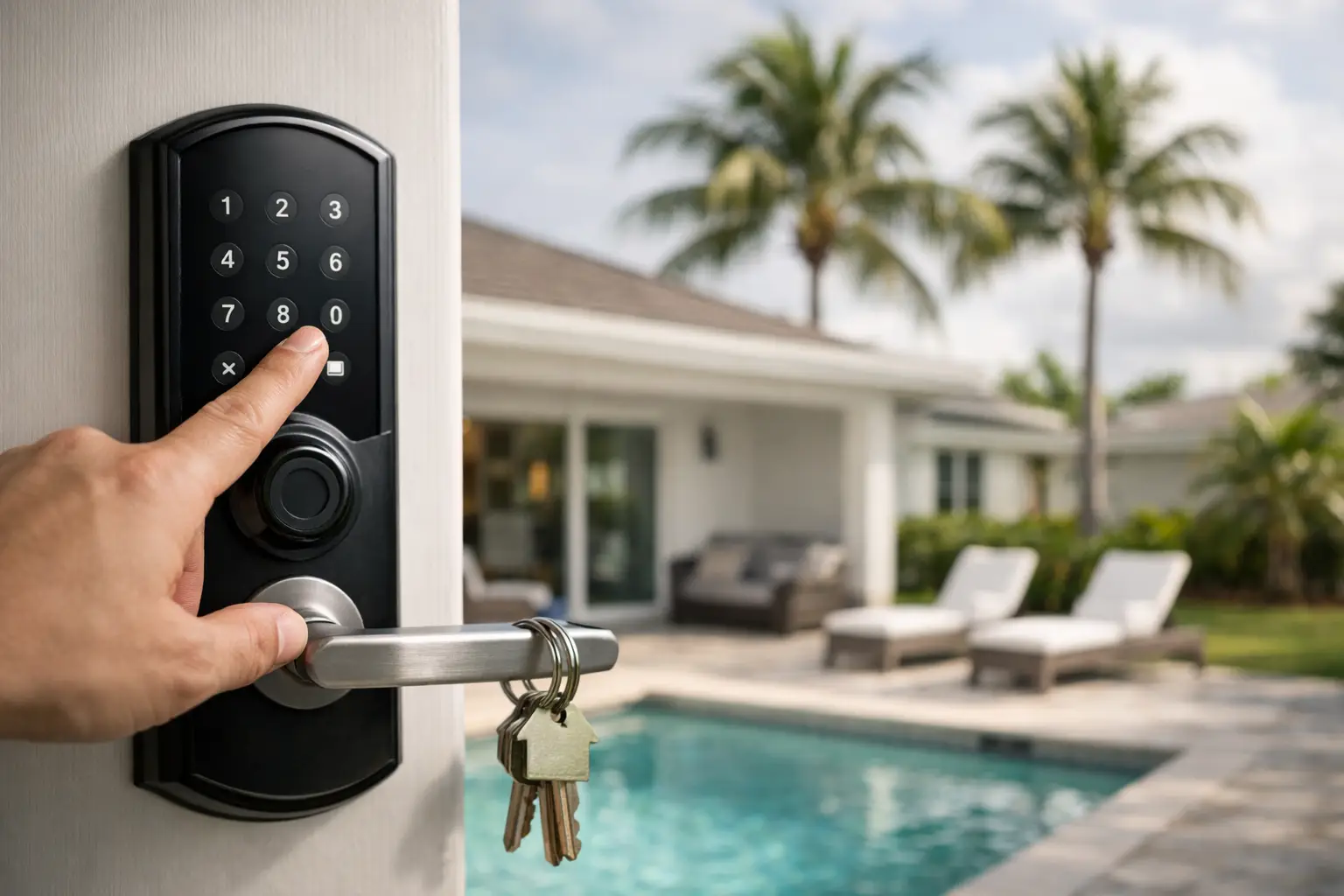
Keyless locks can be an excellent option for some rental properties. They can eliminate physical key handoffs, allow a manager to change a code between residents, and provide temporary access for approved vendors. For furnished rentals and properties with high turnover, those benefits can save time and reduce the need for emergency rekeys.
They are not the right fit for every door or every building. Electronic locks need reliable installation, appropriate weather resistance for exterior use, and a clear plan for batteries, backup access, and code management. A dead battery should not leave a tenant stranded, and an old code should never remain active after a move-out.
Before choosing a smart lock, decide who will manage it. If a landlord or management office is responsible for codes and batteries, the system should be standardized across units where possible. If tenants are allowed to create personal codes, the lease should clearly state how codes are removed at move-out and what access rights management retains for lawful maintenance or emergencies.
For many long-term rentals, a quality mechanical deadbolt paired with disciplined rekeying remains a simple, dependable choice. For other properties, keyless entry can be worth the added management responsibility. The right answer depends on how the property operates, not just what looks modern.
Key control protects more than the front door
A rental unit may have more access points than its main entrance. Patio doors, garage entries, side gates, storage rooms, mailbox locks, and utility areas can all create gaps if they are overlooked during turnover. A security review should account for every door that gives access to the home, unit, or protected property.
Landlords and property managers should also consider who truly needs a physical key. Maintenance staff may need controlled access, while vendors may only need entry during a scheduled time window. A master key system can simplify access to multiple units, but it must be designed carefully. If a master key is lost, the cost and scope of rekeying can be significant.
Restricted keyways are another option for properties that need tighter control over duplication. Unlike common hardware-store keys, restricted keys are harder to copy without authorization. This can be especially useful for offices, multifamily properties, and rental homes with several staff members who require managed access.
Tenants have a role as well. Do not hide a key under a mat, planter, or loose rock near the entry. Avoid labeling keys with the unit address. If keys are lost, reported stolen, or not returned by a roommate, notify the landlord or manager promptly so the appropriate rekeying decision can be made.
What renters should ask before changing a lock
A tenant may want to change locks after a breakup, a lost key, a concerning encounter, or simply to feel safer in a new home. Those concerns are valid, but renters should review their lease and communicate with the landlord or property manager before making changes. Many leases have rules about alterations, approved hardware, key copies, and management access.
Ask whether the owner will rekey the unit, whether a tenant can request an upgrade, and whether the tenant may add a secondary device that does not damage the door. Also ask what happens at move-out. A lock installed without approval may need to be removed, and a landlord may need a working key or authorized access method consistent with the lease and applicable requirements.
If there is an immediate safety issue, a damaged lock, or a break-in, the priority is restoring security quickly. Take photos of visible damage, notify the appropriate parties, and arrange qualified lock service. Waiting until business hours can leave a unit exposed when the door will not lock or the key has been compromised.
Common rental lock problems that need prompt service
Some issues are clear emergencies, while others are early warnings. A key that turns but will not unlock the door, a deadbolt that no longer extends fully, a broken key inside the cylinder, or a door that will not close securely should be addressed without delay.
Property managers should not rely on temporary fixes such as forcing the door, spraying random lubricants into the cylinder, or leaving a unit unsecured until a later visit. Those choices can worsen the damage and increase liability. A qualified locksmith can assess whether the problem requires repair, rekeying, replacement, door adjustment, or a broader security upgrade.
For occupied units, clear communication matters. Residents should know when service is scheduled, what work will be performed, and whether they need new keys or codes. For vacant units, service should be completed before keys are released to the next resident whenever possible.
Build a dependable rental security routine
The strongest rental security plan is usually a repeatable one. At every turnover, inspect exterior doors, test locks and latches, rekey or replace hardware as needed, review all issued keys and codes, and confirm that spare-key procedures are current. After a break-in, lost master key, employee departure, or disputed access event, revisit the same process rather than treating the issue as isolated.
Access Locksmith & Security provides licensed and insured locksmith service for rental homes, multifamily properties, and commercial spaces throughout Broward and Palm Beach Counties. With more than 19 years of experience and 24/7 emergency availability, the team can help with rekeying, lock repair, high-security hardware, keyless entry, master key systems, and door security concerns.
A secure rental begins with a door that closes correctly and access that is under control. Whether you are handing over a unit, responding to a lost key, or improving a property before the next lease begins, acting promptly gives everyone on the other side of that door greater peace of mind.

