
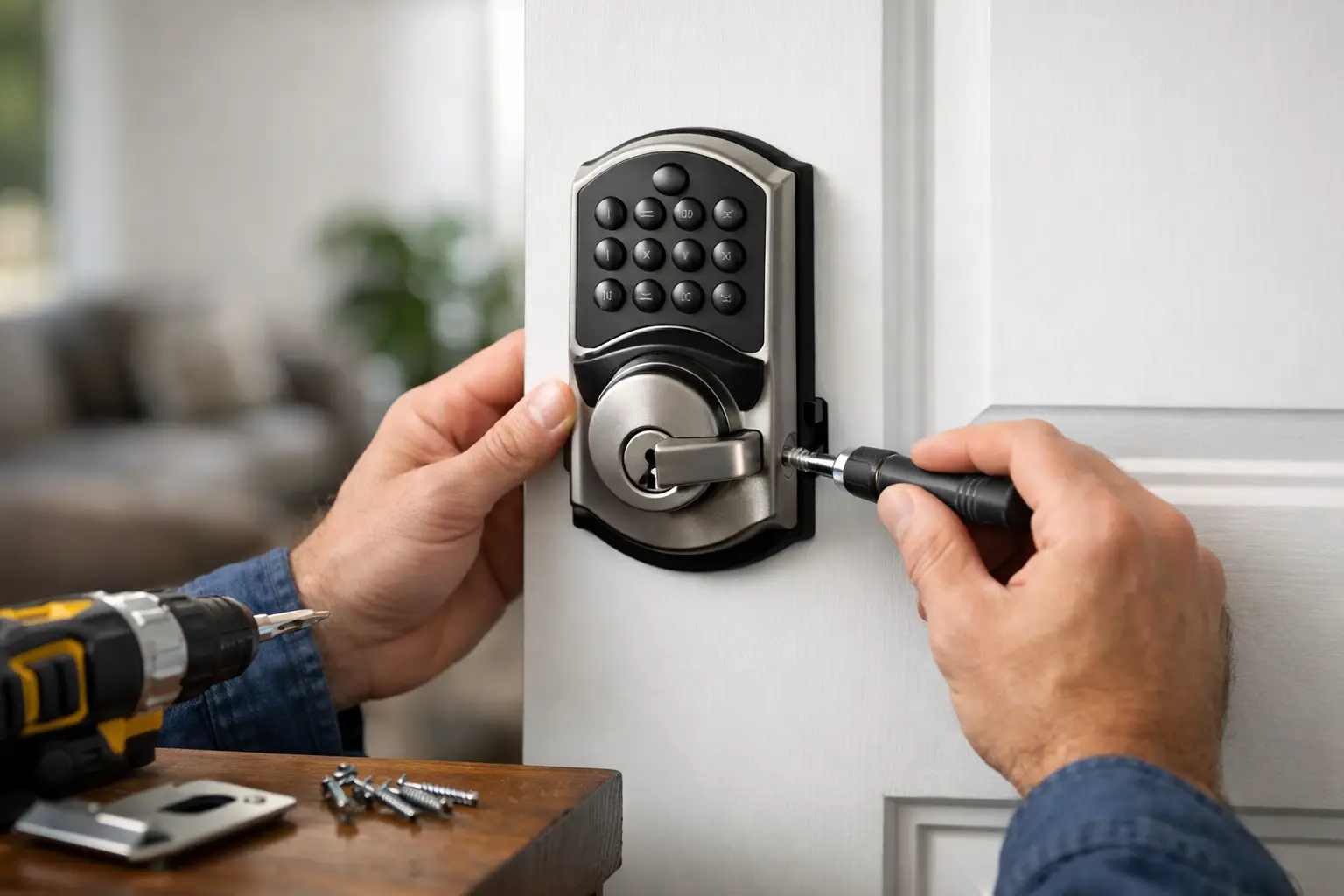
A keypad lock that works perfectly at the store can become a daily frustration if it is installed on the wrong door, paired with weak hardware, or programmed without a clear access plan. Proper keypad door lock installation is about more than replacing a key cylinder. It should make entry easier for authorized people while keeping the property protected when a code is shared, forgotten, or no longer needed.
For South Florida homes and businesses, the right solution also has to stand up to humidity, salt air near the coast, heavy use, and the reality of hurricane-season preparation. A professional installation starts by evaluating the door, the existing lockset, and the people who need access.
Start With the Door, Not the Keypad
Not every keypad lock fits every door. Before choosing a model, confirm the door thickness, backset measurement, bore-hole size, handing, and the condition of the frame. A lock can be electronically sound yet still fail to secure the opening if the latch does not fully enter the strike plate or the door has sagged on its hinges.
Most residential keypad deadbolts are designed for standard exterior doors. They are often a good fit for a front door, garage entry door, side entrance, rental property, or vacation home. A keypad lever may be more practical for an interior office, storage room, or door that needs easier one-hand operation.
Commercial doors need closer attention. Aluminum storefront doors, metal doors, glass-door systems, panic exit doors, and fire-rated openings may require specialized hardware. A keypad alone is not automatically an access-control system, and adding the wrong device can interfere with emergency egress, door closing, or fire-code requirements. The door and its hardware have to work as one system.
Choose the Right Type of Keypad Lock
The best lock depends on how the property is used. For a homeowner who wants to stop hiding spare keys, a standalone keypad deadbolt may be enough. For a landlord managing tenant turnover, a lock that supports multiple user codes and easy code deletion can save time between occupants.
For a business, consider how many users require access and whether management needs an audit trail. Basic keypad locks store codes locally. More advanced electronic locks can record entries, allow scheduled access, or connect to a broader access-control setup. Those features can be useful for offices, medical suites, warehouses, retail back rooms, and multi-tenant properties, but they add setup and maintenance responsibilities.
Battery-operated keypad locks are common because they do not require door wiring. They are convenient, but batteries must be checked on schedule. Hardwired electrified hardware can be a better fit for high-traffic commercial openings, especially where controlled entry must work with electric strikes, magnetic locks, buzzer systems, or credential readers.
A few questions help narrow the choice:
- Is this a residential exterior door, a rental, or a commercial opening?
- Will one person use the lock, or will codes be assigned to employees, guests, vendors, or tenants?
- Does the door need to remain code-compliant for emergency exit?
- Is remote management useful, or would a simple local keypad be more reliable for the situation?
More features are not always better. A straightforward keypad deadbolt can be dependable for a family home. A busy business may benefit from a professionally designed system that can remove access immediately when an employee leaves.
What Proper Installation Includes
A clean keypad door lock installation begins with confirming that the door closes and latches correctly before any electronic hardware is added. If the hinges are loose, the frame is damaged, or the deadbolt binds, those mechanical issues should be corrected first. Electronics cannot compensate for a misaligned door.
The installer then checks the manufacturer’s template and prepares the door only as needed. Drilling a hole in the wrong location can weaken the door or leave the lock permanently misaligned. On some doors, existing holes can be used. On others, modifications are necessary to position the keypad, latch, tailpiece, and interior assembly correctly.
The strike plate deserves equal attention. A strike secured only to trim or a shallow frame offers limited protection, even with a quality deadbolt. For exterior doors, longer screws anchored into the framing can improve resistance to forced entry when the door construction allows it. The lock should extend and retract smoothly with the door open and closed, without needing to lift, pull, or force the door.
Once mounted, the keypad must be programmed carefully. This includes changing the default programming code, creating separate user codes where appropriate, verifying the mechanical key override if present, and testing the lock from both sides of the door. The final check should include low-battery alerts, auto-lock settings, interior thumb-turn operation, and every authorized code.
Protect the Codes as Carefully as the Lock
A keypad lock provides control only when the codes are managed well. Avoid using an address, birthday, phone number, or a simple sequence such as 1234. Use unique codes rather than one shared number for everyone who comes and goes.
For a residence, separate codes for family members, a trusted caregiver, or a recurring service provider make it easier to remove access without changing the entire lock. For rentals, delete old tenant and vendor codes promptly. For a business, assign individual codes whenever possible. Shared employee codes create confusion after a staffing change because there is no clear way to identify who still has access.
Keep the physical backup key in a secure location rather than under a mat, planter, or nearby decorative item. If the lock is connected to an app, use a strong account password and enable available account security features. A connected lock can be convenient, but it still needs responsible digital management.
South Florida Conditions Can Change the Plan
Heat, moisture, blowing rain, and salt exposure can shorten the life of exterior hardware. Choose products rated for exterior use and keep the keypad, latch, and strike clean. Avoid spraying oil or household cleaners into electronic components. If a lock begins sticking, beeping unexpectedly, or losing battery power faster than expected, address the issue early instead of waiting for a lockout.
Properties near the coast may need more frequent inspection because corrosion can affect screws, strike plates, and exposed hardware. Doors that swell, shift, or receive repeated wind pressure can also fall out of alignment. During hurricane preparation, confirm that exterior doors latch securely and that every authorized person has a reliable way to enter if keys are misplaced or access is restricted.
For commercial properties, emergency exit doors require special caution. A keypad controlling entry cannot prevent people from exiting when required. Panic hardware, exit devices, door closers, electric strikes, and magnetic locks must be selected and installed with life-safety requirements in mind. This is not a place to improvise with residential hardware.
When Professional Installation Is the Better Choice
A handy property owner may be comfortable installing a standard keypad deadbolt on a solid, properly aligned residential door. Even then, careful measuring and testing matter. Professional help is often the better choice when the door needs drilling or repair, the lock is being installed on a metal or commercial door, the opening is fire-rated, or the keypad needs to work with other security equipment.
It is also wise to call a locksmith when replacing hardware after a break-in, tenant change, employee departure, or lost key concern. The right response may involve rekeying, reinforcing the strike, replacing damaged hardware, or changing how access is controlled, not simply adding a keypad.
Access Locksmith & Security helps property owners and businesses throughout Broward and Palm Beach Counties evaluate the full opening before installing or upgrading keypad hardware. With licensed and insured service, clear communication, and experienced support for residential and commercial doors, the goal is dependable access without creating a new security gap.
A keypad lock should remove one more worry from your day, not add another one. Choose hardware that fits the door, keep codes under control, and have the installation checked when the opening is high-traffic, exposed to the weather, or responsible for protecting people and property.

