
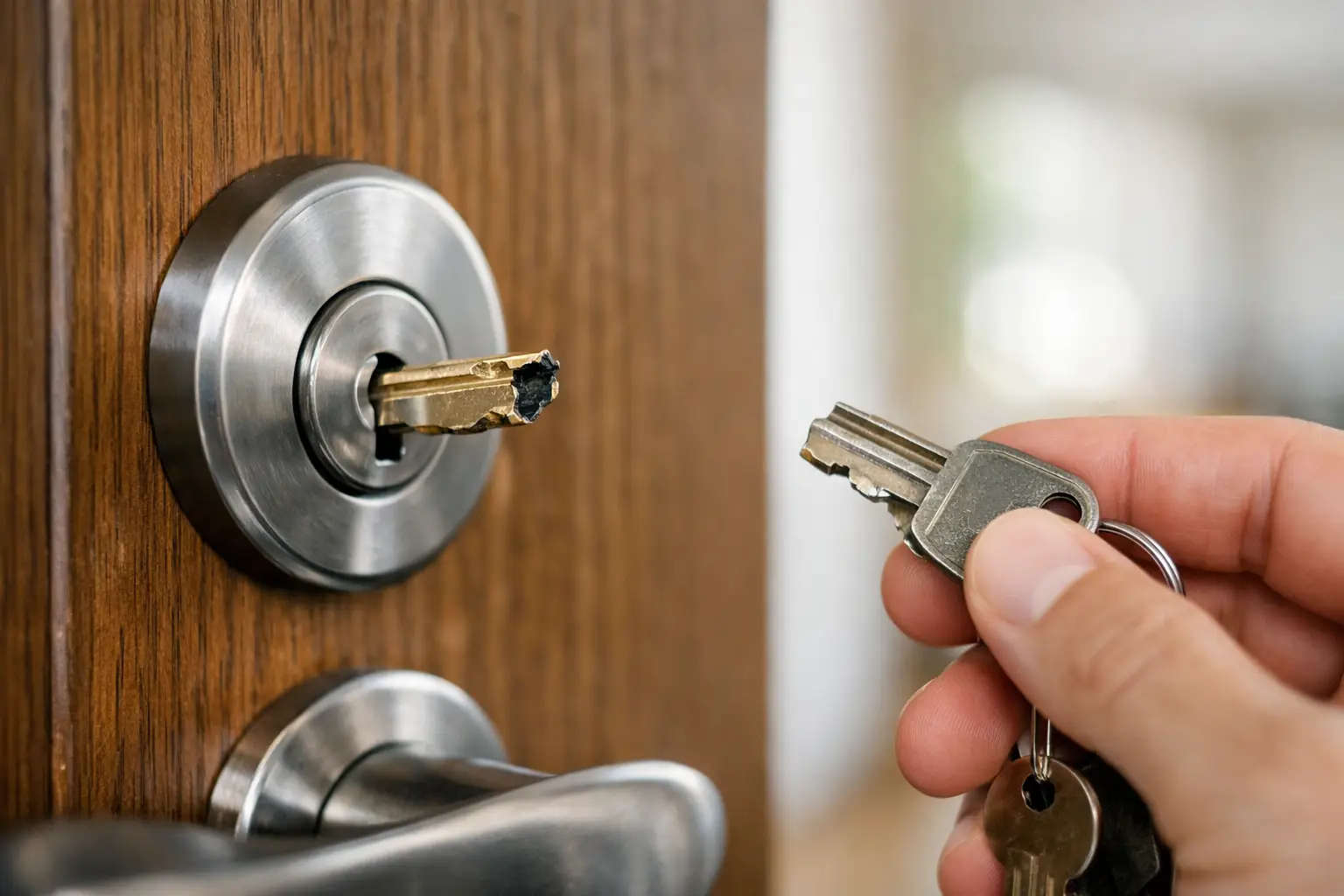
A key can break with no warning: one moment you are opening your front door, office, storage room, or vehicle, and the next the key head is in your hand while the blade is stuck inside. If you need to remove a broken key from a lock, the priority is not forcing it out. A rushed attempt can push the fragment deeper, damage the keyway, or leave you with a lock that will no longer turn even after the key is removed.
For homeowners, business owners, property managers, and drivers in Broward and Palm Beach Counties, a broken key is more than an inconvenience. It can delay employees, leave a property unsecured, interrupt a tenant move-in, or strand you outside your vehicle. The right response depends on where the key broke, how far the fragment is lodged, and whether the lock is still under pressure.
First, Stop Turning and Assess the Lock
The most common cause of a broken key is pressure. A worn key, a stiff lock cylinder, a misaligned door, or a damaged ignition can all make the key harder to turn. When extra force is applied, the key blade may snap.
As soon as it breaks, stop twisting the lock. Do not insert the remaining key head back into the cylinder and do not turn a screwdriver in the keyway. Both actions can shift the internal pins or push the broken piece beyond the point where it can be safely extracted.
Look closely at the lock. If part of the key is sticking out far enough to grasp, there may be a simple removal option. If the break is flush with the face of the lock or deep inside the cylinder, home remedies become much less reliable. The same is true if the key broke while turned to the side. A turned key can trap the pins in a position that makes extraction more difficult.
Before touching the lock, relieve pressure on the door if possible. On a residential or commercial door, gently push or pull the door near the latch while trying to return the key fragment to a straight, vertical position. A door that has sagged or shifted against the strike plate can bind the lock and cause a key to break in the first place.
When You Can Safely Try to Remove a Broken Key From a Lock
A careful do-it-yourself attempt may be reasonable when the broken key is visible, the lock is not damaged, and you are not dealing with an urgent security issue. Use patience and light pressure. If the fragment resists, stop rather than escalating the force.
Needle-nose pliers or tweezers can work only when enough of the key blade extends beyond the keyway to get a firm grip. Pull straight outward. Avoid twisting, because the teeth of the key may catch on the pins inside the cylinder.
A proper broken-key extractor is a better option for a fragment that sits just inside the keyway. This thin tool slides alongside the broken blade, catches a groove or tooth, and draws the piece out. It takes a steady hand and enough room in the keyway to avoid shoving the fragment farther inward. Many lock failures occur after several unsuccessful extraction attempts, not from the original break.
Dry lock lubricant may also help if the key broke because the cylinder was sticking. Apply a small amount designed for locks, then give the mechanism a moment to settle. Do not flood the lock with household oil, grease, or penetrating spray. Those products can attract dust and grime, creating a larger problem later.
Methods That Commonly Make the Problem Worse
Online advice can make broken-key removal sound easier than it is. Some techniques create avoidable damage, particularly on newer residential locks, commercial door hardware, and automotive ignitions.
Do not use super glue. Glue can seep into the lock cylinder and bond the pins, springs, and key fragment together. Even if the key comes out, the lock may require replacement. Glue is especially risky on high-security keyways and vehicle ignitions, where a contaminated cylinder can become a far more expensive repair.
Avoid inserting bobby pins, paper clips, nails, blades, or improvised hooks. These items are usually too thick, too flexible, or too blunt to catch the key properly. They can also scrape the cylinder, bend internal components, or wedge the fragment deeper.
Do not drill the lock unless replacement is already the intended solution and you understand the door hardware involved. Drilling can damage more than the cylinder. On commercial doors, it may affect the lever set, panic hardware, access-control components, or door alignment. It also creates a security gap until the lock is professionally repaired or replaced.
Finally, resist the temptation to use a second key to push the broken piece out from behind. Most standard lock cylinders do not allow this, and the attempt can cause the fragment to move farther into the chamber.
Why Keys Break in Doors, Offices, and Vehicles
Key extraction solves the immediate problem, but it should also lead to a quick diagnosis. Otherwise, the replacement key may break in the same lock.
A visibly bent, worn, or cracked key should be replaced before it fails. Older copies made from copies can lose their original shape over time, producing a key that works inconsistently and places stress on the cylinder. A locksmith can cut a fresh key from the correct code or a properly functioning original when available.
The lock itself may be the issue. A residential deadbolt that needs to be lifted, pulled, or slammed to turn often has an alignment problem. Door movement from humidity, settling, loose hinges, or worn hardware can place pressure on the latch or bolt. The key is then forced to do work the door hardware should be handling.
For businesses, repeated key failures may point to a high-use cylinder nearing the end of its service life. Storefront doors, office entry doors, common-area locks, and employee entrances experience constant use. A timely cylinder repair, rekey, or hardware upgrade can prevent a disruption during business hours.
Automotive keys can break for different reasons. A metal key blade may be worn, while a key fob or transponder key may have additional electronic components that need programming after replacement. If the key breaks in the ignition, forcing it can damage the ignition cylinder or steering-column components. Vehicle key extraction and ignition repair are best handled with the correct automotive tools.
When to Call a Professional Locksmith
Call a locksmith promptly when the key fragment is flush or deep inside the lock, the lock is turned, the door will not open or secure, or an attempted extraction has already failed. Professional extraction tools are designed to remove the fragment while protecting the cylinder whenever possible.
You should also call for help if the broken key is in a commercial door, an emergency exit device, a magnetic lock setup, an access-control door, or a vehicle ignition. These systems have security, safety, and operational implications that go beyond a standard house key. A damaged commercial entry can affect employee access, after-hours security, and emergency egress requirements.
A qualified locksmith will assess the condition of the keyway, remove the fragment, test the lock with a properly cut key, and identify whether the cylinder, door alignment, or surrounding hardware needs attention. If the lock cannot be restored reliably, replacement or rekeying may be the safer choice. It depends on the lock type, the extent of damage, and whether keys may be missing or compromised.
Access Locksmith & Security provides licensed and insured key extraction, lock repair, rekeying, automotive locksmith service, and 24/7 emergency support throughout the local area. Clear communication matters when you are locked out or responsible for securing a property, so the goal should be a working, dependable solution rather than a temporary workaround.
Protect the Lock After the Key Is Out
Once the broken key has been removed, do not assume the issue is over. Test the lock several times with a new, correctly cut key while the door is open. The key should insert and turn without resistance. Then test it again with the door closed to confirm the latch or deadbolt aligns properly with the strike plate.
If the lock still feels rough, catches, or requires pressure on the door to operate, schedule repair before the next failure. Replacing a worn key is inexpensive compared with an emergency lockout, a damaged ignition, or a storefront door that cannot be secured at closing time.
A broken key is a signal to slow down, protect the lock, and address the cause. Careful action now can keep one small piece of metal from becoming a much larger access and security problem.

