
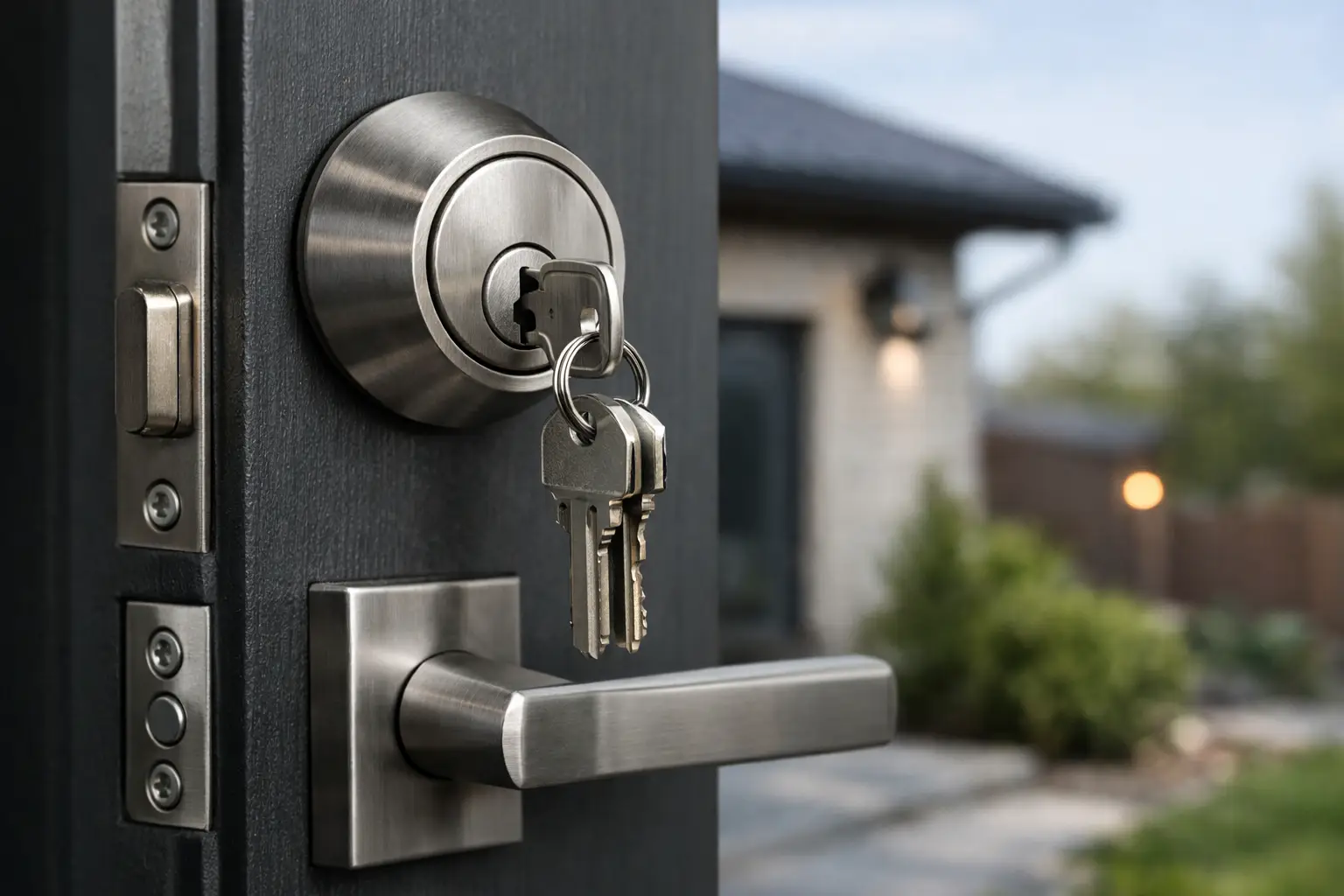
A front door can look secure while its lock is still the easiest part to defeat. A worn cylinder, widely copied key, loose strike plate, or poorly installed deadbolt can give an intruder an opening in seconds. High security locks for homes are designed to close those gaps, but the right choice depends on your door, who needs access, and the risks around your property.
For homeowners, landlords, and property managers in Broward and Palm Beach Counties, security should be practical. You need a lock that stands up to daily use, makes key control easier, and is installed correctly on a door that can support it. The goal is not to make a home feel complicated. It is to make unauthorized entry much harder while keeping dependable access for the people who belong there.
What Makes a Home Lock High Security?
A high-security lock is more than a lock with a heavier-looking deadbolt. Its cylinder, keyway, internal pins, bolt, and supporting hardware are built to resist common attack methods. That can include picking, bump-key entry, drilling, prying, and forced turning.
Protected keys limit unwanted copies
Standard house keys can often be copied at many hardware stores or key kiosks. That becomes a concern after a move, a contractor visit, a tenant turnover, or a lost key. Many high-security systems use restricted or patented keyways. Copies require authorization through the locksmith or a controlled process, giving the property owner a much clearer handle on who can obtain another key.
Key control does not mean keys can never be duplicated. It means duplication is managed. For a rental property, vacation home, or household with several service providers, that extra accountability can be one of the strongest reasons to upgrade.
Better resistance to picking, bumping, and drilling
Quality cylinders may include security pins that make picking more difficult, along with anti-bump features that help prevent a manipulated key strike from turning the lock. Hardened inserts or drill-resistant components can slow drilling attacks aimed at destroying the cylinder.
No mechanical lock is completely invulnerable. Given enough time, noise, and tools, determined forced entry is possible. The advantage of a high-security lock is that it increases the skill, time, and effort required. That delay can discourage an opportunistic intruder and create more opportunity for a neighbor, camera, alarm, or occupant to notice a problem.
A stronger bolt needs a stronger door frame
The lock cylinder gets much of the attention, but the deadbolt only performs as well as the door and frame around it. A long-throw deadbolt secured into a reinforced strike plate with properly sized screws has a better chance of resisting a kick or shoulder strike than a bolt anchored only in thin trim.
This is especially relevant for exterior doors exposed to South Florida humidity, rain, and heat. Doors can swell, frames can shift, and hardware can loosen over time. A lock that was once aligned may become hard to turn or fail to latch fully. That is a security issue, not just an inconvenience.
Choosing High Security Locks for Homes
Start with the entry points that matter most: the front door, garage-to-home door, side door, back door, and any door that gives direct access from an enclosed patio. Not every door needs the same hardware. A solid, frequently used front door may warrant the highest level of key control and a premium deadbolt, while a low-use service door may need a simpler but still dependable upgrade.
Consider how your household actually uses keys. If you have children coming home from school, caregivers, cleaners, contractors, or relatives who visit often, a restricted-key system can reduce uncertainty. If access needs change frequently, a keypad deadbolt or professionally selected keyless entry system may be the better fit. It lets you change a code instead of collecting keys from every person who has had access.
Electronic access has trade-offs. Keypads offer convenience and can eliminate hidden spare keys, but they require proper setup, battery checks, and a quality product installed on a correctly aligned door. Mechanical high-security locks do not depend on batteries, but they require disciplined key management. In many homes, the best answer is a strong mechanical deadbolt paired with a keypad or smart lock that fits the household’s routines.
For owners who want one key for several exterior doors, ask about a matched high-security key system. A locksmith can often configure compatible locks to work with one controlled key while maintaining the right level of protection. This can make daily access easier without sacrificing accountability.
Do not overlook the lock grade and door condition
A lock’s ANSI or BHMA grade provides useful information about its tested durability and performance. Grade 1 hardware is generally the strongest residential choice for frequently used or high-risk exterior doors. Grade 2 can be suitable for many homes, while Grade 3 is usually better reserved for lower-security applications.
Still, a top-grade lock cannot correct a hollow-core exterior door, rotted frame, cracked jamb, loose hinges, or short strike screws. Before selecting new hardware, inspect the entire opening. If daylight shows around the door, the bolt does not line up smoothly, or the door shifts when pushed, repair and reinforcement may be needed first.
Installation Is Where Security Is Won or Lost
A high-security cylinder installed carelessly can leave a home no better protected than before. The deadbolt should extend fully into the strike, the strike plate should be firmly anchored into structural framing, and the cylinder should be correctly fitted without protruding excessively. Exterior hardware must also operate smoothly from both sides without binding.
Professional installation matters when replacing an older lock, upgrading a multipoint door, adding keyless entry, or changing a lock after an attempted break-in. A qualified locksmith can assess whether the door needs reinforcement, whether the lock type fits the existing preparation, and whether all household keys should be controlled under one system.
At Access Locksmith & Security, licensed and insured technicians can help homeowners evaluate the door, lock, and frame as one security system. Clear recommendations are especially valuable after a move, lost keys, tenant turnover, or damage to an exterior lock. The right service call should leave you knowing what was changed, who has keys, and how to use the hardware correctly.
When Rekeying Is Enough and When Replacement Makes Sense
Rekeying changes the internal configuration of a compatible lock so old keys no longer work. It is often a smart, cost-conscious choice after buying a home or when keys may be in the hands of former occupants, vendors, or neighbors. If the lock is in good condition and provides the level of security you need, rekeying may be all that is required.
Replacement makes more sense when the existing lock is worn, damaged, easy to bypass, poorly installed, or based on a keyway with no meaningful copy control. It is also worth considering when you want to upgrade the deadbolt, add a keypad, create a one-key system, or improve resistance to drilling and forced entry.
If there has been an attempted break-in, do not assume the lock is fine because the door still closes. Check for a bent bolt, damaged cylinder, loose strike plate, split jamb, or marks around the latch. Those signs can indicate that the door’s ability to resist another attempt has been reduced.
A Practical Security Upgrade Plan
For most homes, begin with the primary exterior door and work outward. Upgrade the deadbolt and strike hardware, control the keys, and make sure the door frame is sound. Then review secondary doors, garage access, sliding-door locks, and the visibility around the property. A lock works best as part of a layered approach that may also include exterior lighting, cameras, alarm monitoring, and the habit of keeping doors locked even during short trips outside.
Avoid choosing solely by price or appearance. A discounted lock can cost more later if it fails early, accepts unrestricted copies, or does not fit the door correctly. A focused upgrade to the doors that protect your family and valuables is usually more effective than buying inexpensive hardware for every opening.
The most useful home security improvement is one you will use consistently. Choose hardware that your household can operate confidently, keep keys and codes under control, and address problems before a sticking lock becomes a late-night emergency.

